BKPyV—Co-Architect of the Fate of a Renal Transplant During a One-Year Observation Period
Jacek Furmaga, Marek Kowalczyk, Olga Furmaga-Rokou, Christos A. Rokos, Tomasz Zapolski, Agnieszka Styczeń, Anna Iwan, Dominika Matera, Beata Ewa Chrapko, Leszek Krakowski, Andrzej Jakubczak

TL;DR
This study tracks BKPyV in kidney transplant recipients over a year, showing that detecting BKPyV in urine early is more important for predicting complications than later blood-based detection.
Contribution
The study identifies DNAuria-BKPyV as a more sensitive and earlier predictive marker than BKPyV-DNAemia for post-transplant complications.
Findings
Genotype I was predominant after renal transplantation, with DNAuria-BKPyV peaking at three months.
DNAuria-BKPyV was detected in more patients and had higher viral loads than BKPyV-DNAemia.
Early detection of DNAuria-BKPyV is suggested as a key marker for clinical monitoring and intervention.
Abstract
To identify BKPyV, the VP1 protein sequence was analyzed and classified into genotypes in 246 RTRs before and after RTx from deceased donors during a one-year observation period. Quantitative assessment of BKPyV was conducted via qPCR. Prior to RTx, genotypes I and IV were identified in the urine (7.27 × 10⁶; 1.20 × 10⁵) and in serum (5.75 × 10⁴; 1.12 × 10⁴). After RTx, genotype I was predominant; identification of DNAuria-BKPyV (62.07%) and BKPyV-DNAemia (55.56%) peaked after three months, and the highest DNAuria-BKPyV titer was also observed after three months (6.48 × 10⁹), whereas the BKPyV-DNAemia titer did not peak until after six months (2.21 × 10⁷). The highest number of copies of genotype IV in the urine was observed after six months (9.54 × 10⁹), while the highest titer in the serum was not observed until after 12 months (3.88 × 10⁶). DNAuria-BKPyV precedes BKPyV-DNAemia,…
Genes, proteins, chemicals, diseases, species, mutations and cell lines named across the full text — each resolved to its canonical identifier and authoritative record.
Click any figure to enlarge with its caption.
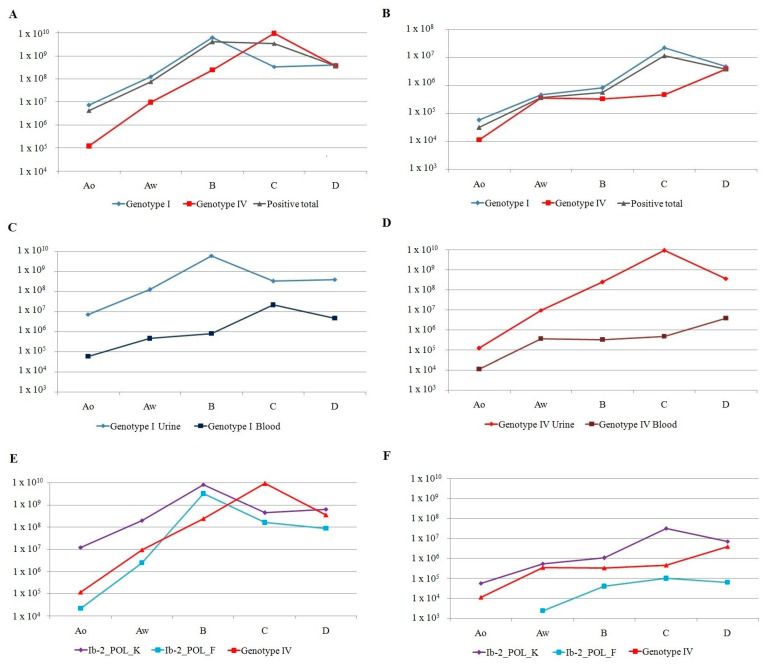 Figure 1
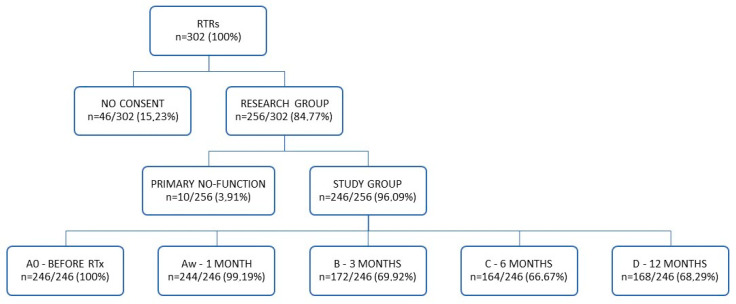 Figure 2
Peer Reviews
No public reviews on file for this paper yet. If you reviewed it on a platform where reviews are public (OpenReview, ICLR, NeurIPS, ICML), you can paste yours below so the community can read it here.
Videos
No videos yet. Explain this paper in a talk, walkthrough, or lecture? Add one.
Taxonomy
TopicsPolyomavirus and related diseases · Animal Virus Infections Studies · Virus-based gene therapy research