A Defined-Area Bonding Approach for Microtensile Testing: A Reliable Alternative to Monoblock Sectioning for High-Hardness Restorative Materials
Koji Yamashita, Chiharu Kawamoto, Yu Toida, Shimpei Kawano, Shuhei Hoshika, Hidehiko Sano, Atsushi Tomokiyo

TL;DR
A new method for preparing samples for bond strength testing in dental restorations is shown to be reliable for hard materials like zirconia.
Contribution
The defined-area bonding (DAB) method is introduced as a reproducible alternative to monoblock sectioning for high-hardness dental materials.
Findings
DAB bond strengths were equivalent to MST peripheral values for both cements.
Over 80% of failures occurred within the resin cement in all groups.
SEM showed uniform cement thickness and similar fracture patterns in DAB specimens.
Abstract
Background: The microtensile bond strength (μTBS) test is the gold standard for evaluating adhesive performance in restorative dentistry. However, the conventional non-trimming technique—referred to in this study as the monoblock sectioning technique (MST)—is difficult to apply to hard and brittle CAD/CAM materials such as zirconia and ceramics, thereby limiting test reproducibility. This study compared a newly developed defined-area bonding (DAB) method with MST to determine whether DAB could serve as a reliable specimen preparation technique for μTBS testing. Methods: CAD/CAM resin blocks and resin core materials were bonded using either ESTECEM II or Panavia V5. MST specimens were obtained by bonding the blocks first and subsequently sectioning them into individual beams. In contrast, DAB specimens were produced by pre-shaping the sticks and bonding them within a defined 1 mm2 area.…
Genes, proteins, chemicals, diseases, species, mutations and cell lines named across the full text — each resolved to its canonical identifier and authoritative record.
Click any figure to enlarge with its caption.
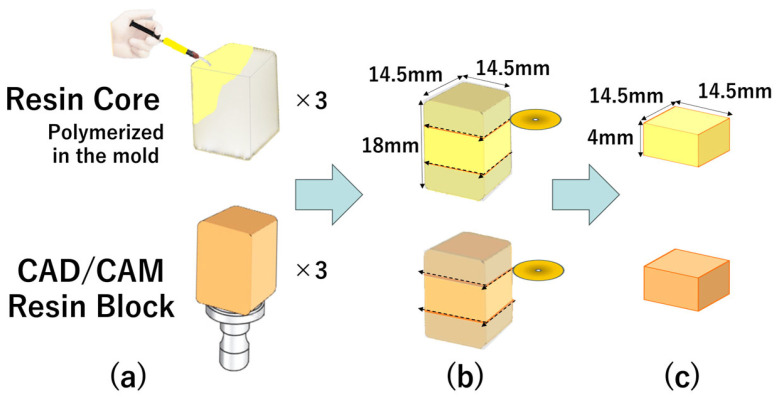 Figure 1
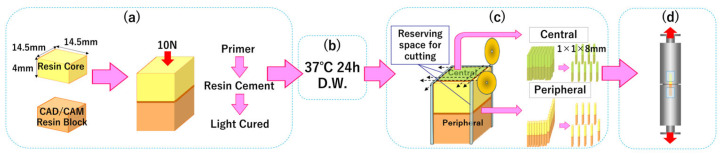 Figure 2
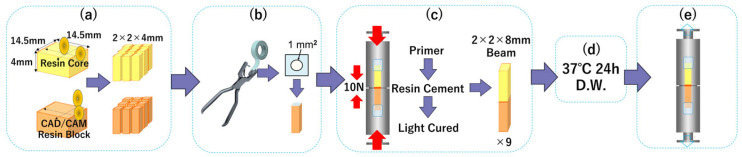 Figure 3
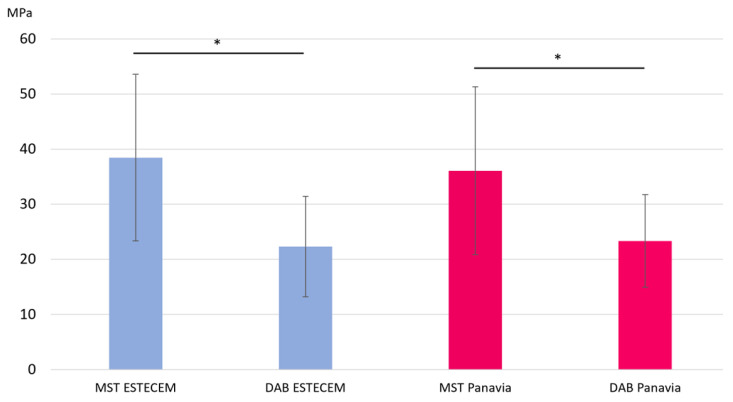 Figure 4
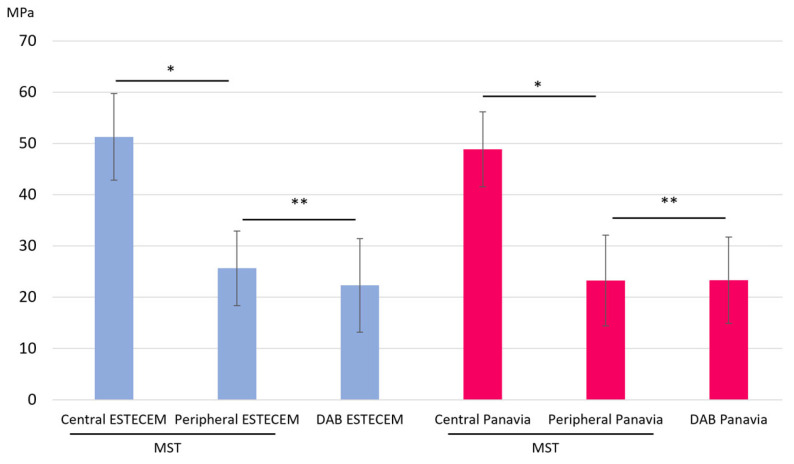 Figure 5
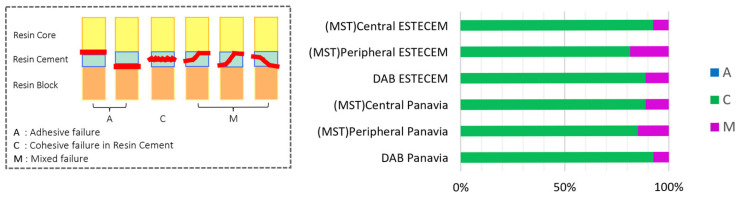 Figure 6
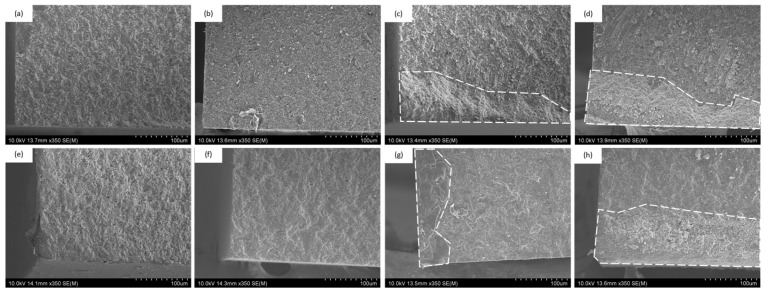 Figure 7
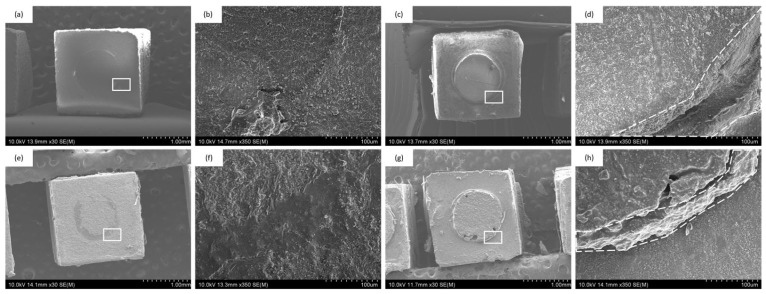 Figure 8
 Figure 9
Peer Reviews
No public reviews on file for this paper yet. If you reviewed it on a platform where reviews are public (OpenReview, ICLR, NeurIPS, ICML), you can paste yours below so the community can read it here.
Videos
No videos yet. Explain this paper in a talk, walkthrough, or lecture? Add one.
Taxonomy
TopicsDental materials and restorations · Endodontics and Root Canal Treatments · Dental Implant Techniques and Outcomes