Species-Specific Color Preferences During Foraging in Aedes aegypti, Aedes albopictus, and Culex quinquefasciatus Across Varying Light Conditions
Fanny Hellhammer, Hella Heidtmann, Fritjof Freise, Stefanie C. Becker

TL;DR
This study shows that different mosquito species and sexes prefer different colors when foraging, depending on the light conditions, which could help improve mosquito traps.
Contribution
The study reveals species- and sex-specific color preferences in mosquitoes under varying light conditions, offering insights for targeted vector control.
Findings
Aedes mosquitoes prefer red in dim light and black in bright light, with sex-specific differences.
Culex mosquitoes show strong attraction to black in dim light, with females shifting to red in bright light.
Color preferences are influenced by light intensity, species, and sex, impacting trap design for vector control.
Abstract
Mosquitoes are responsible for spreading many serious diseases, making it important to understand their behavior. In this study, we looked at how three mosquito species (yellow fever mosquito, Asian tiger mosquito, and southern house mosquito) respond to different colors while searching for food. Using a simple method of coloring food with ink, we observed how the mosquitoes reacted to food under different light conditions, like daytime and low light. In darkness, mosquitoes showed no clear color preference, relying only on smell. In dim light, the Aedes species started to prefer lighter colors, especially red, likely because it stood out more. This was most noticeable in Asian tiger mosquito males and females. In bright light, these mosquitoes switched to preferring black, possibly because of stronger contrast or camouflage. The Culex species behaved differently: both sexes preferred…
Genes, proteins, chemicals, diseases, species, mutations and cell lines named across the full text — each resolved to its canonical identifier and authoritative record.
Click any figure to enlarge with its caption.
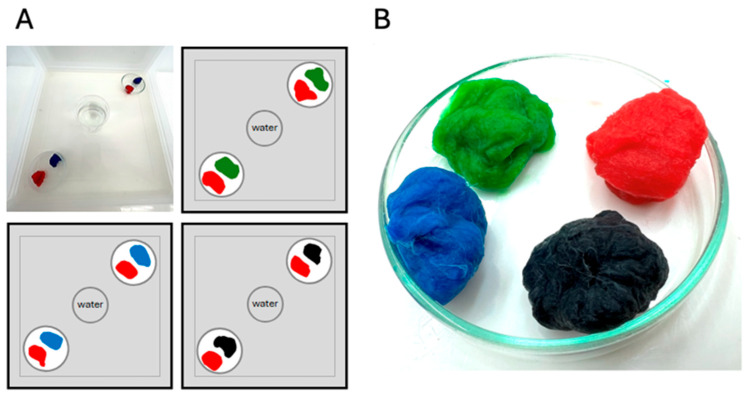 Figure 1
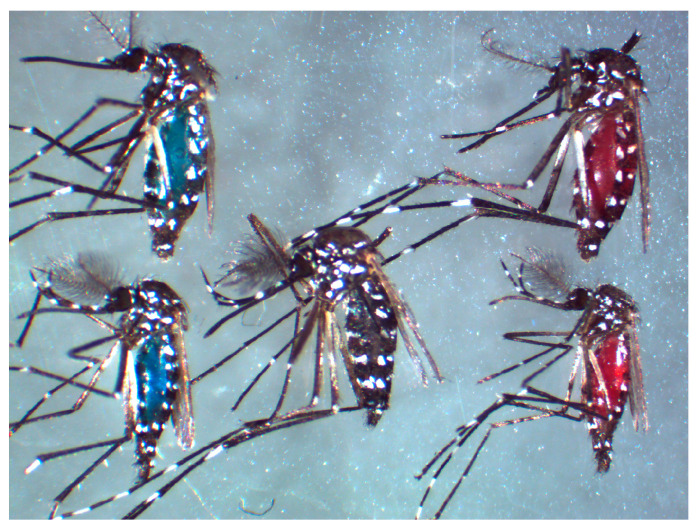 Figure 2
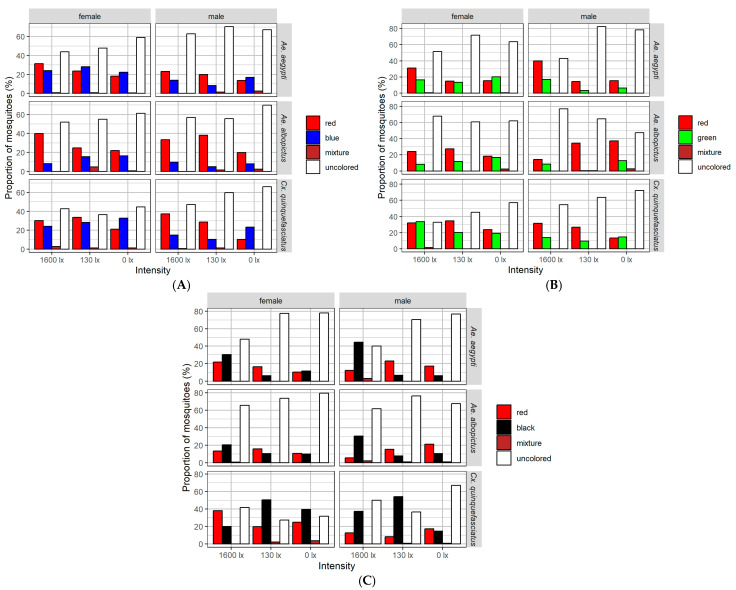 Figure 3
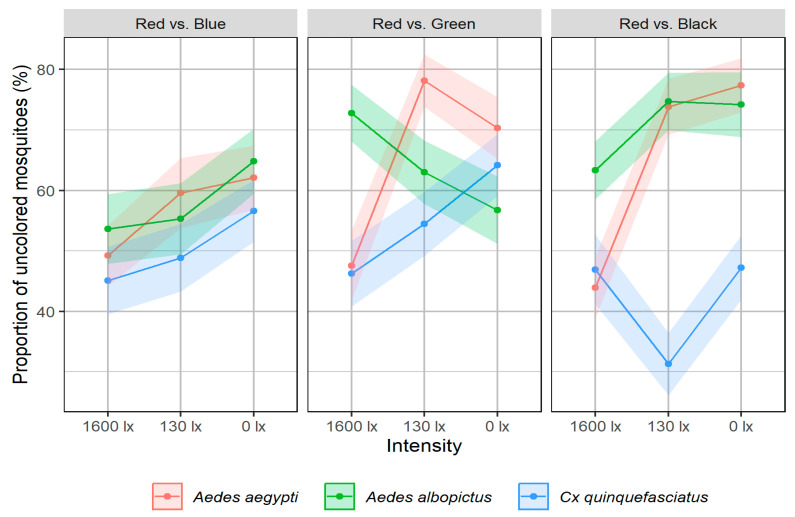 Figure 4
Peer Reviews
No public reviews on file for this paper yet. If you reviewed it on a platform where reviews are public (OpenReview, ICLR, NeurIPS, ICML), you can paste yours below so the community can read it here.
Videos
No videos yet. Explain this paper in a talk, walkthrough, or lecture? Add one.
Taxonomy
TopicsNeurobiology and Insect Physiology Research · Mosquito-borne diseases and control · Animal Behavior and Reproduction