Cone Beam Computed Tomography (CBCT) Prevalence and Morphometry of Foramen Vesalius: A Systematic Review, Meta-Analysis, and Update of the Literature
Abdullah Hasan A. Alshehri, Anwar Abdullah Alsaeed, Hajer Saeed Al-serhani, Hassan Ahmed Assiri, Abdullah Alqarni, Saeed Alassiri, Mohammad Alamri, Sonia Egido-Moreno, José López-López

TL;DR
This study reviews CBCT data to determine how often the foramen of Vesalius appears in the skull base and its size, finding significant variability across studies.
Contribution
The study provides updated prevalence and morphometric data of the foramen of Vesalius using CBCT and highlights the need for standardized reporting.
Findings
The prevalence of foramen Vesalius ranged from 28.1% to 73.1% across five CBCT studies.
The distance between foramen Vesalius and foramen ovale was typically 2–5 mm, while distances to foramen spinosum varied between 11–14 mm.
Current prevalence estimates are imprecise due to limited and inconsistent retrospective studies.
Abstract
Background: The foramen of Vesalius (FV; also known as the sphenoidal emissary foramen (SEF) or foramen venosum) is an inconstant skull-base foramen located near the foramen ovale. Its recognition may be relevant to percutaneous trigeminal procedures. Methods: This systematic review was registered in INPLASY (INOLASY2025100037; 11 October 2025) and conducted in accordance with PRISMA 2020. We searched PubMed, Scopus, and Web of Science from inception until December 2025 for English-language studies reporting the prevalence and/or morphometry of the foramen of Vesalius using cone-beam computed tomography (CBCT). Five reviewers screened and extracted data; prevalence studies were assessed for risk of bias using the Joanna Briggs Institute checklist. A random-effects meta-analysis of logit-transformed proportions was applied when ≥3 studies reported comparable prevalence outcomes. Results:…
Click any figure to enlarge with its caption.
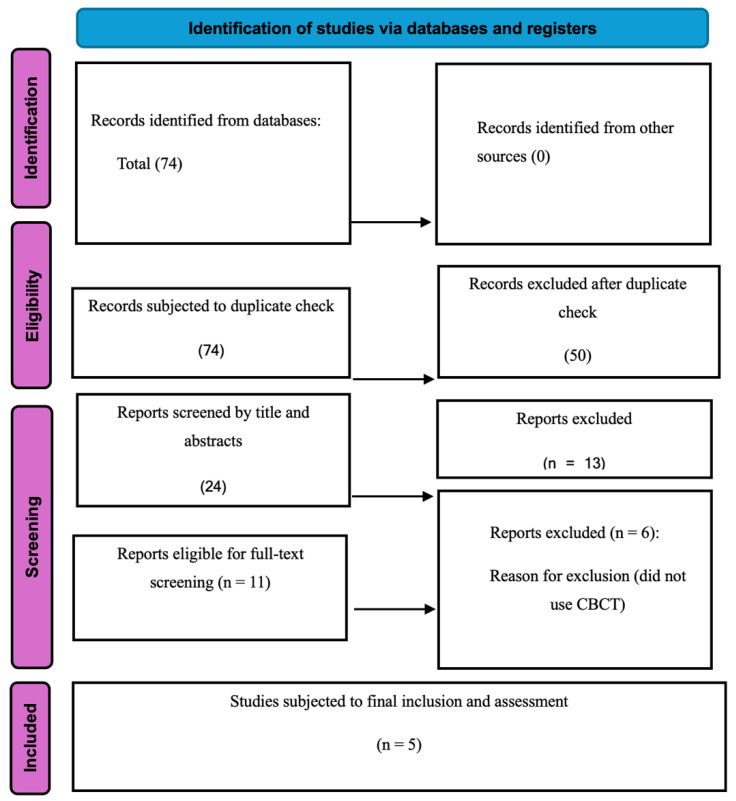 Figure 1
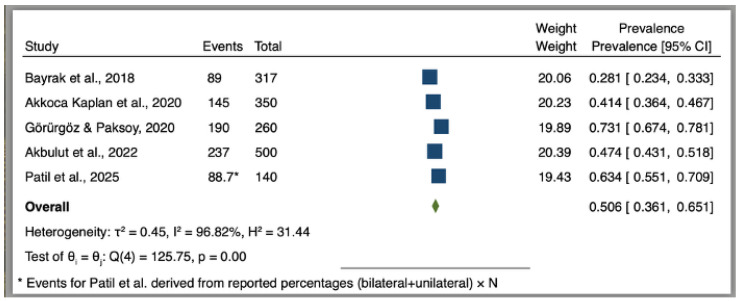 Figure 2
Peer Reviews
No public reviews on file for this paper yet. If you reviewed it on a platform where reviews are public (OpenReview, ICLR, NeurIPS, ICML), you can paste yours below so the community can read it here.
Videos
No videos yet. Explain this paper in a talk, walkthrough, or lecture? Add one.
Taxonomy
TopicsTrigeminal Neuralgia and Treatments · Cerebrospinal fluid and hydrocephalus · Obstructive Sleep Apnea Research