Stalling the Enemy: Targeting Nsp13 for Next-Generation SARS-CoV-2 Antivirals
Jose M. Castro, Ryan L. Slack, Yee T. Ong, Huanchun Zhang, Levi B. Gifford, Valentine V. Courouble, Riley M. Aiken, Vishal Shankar, Timothy R. O’Leary, Patrick R. Griffin, Shuiyun Lan, Yuhong Du, Haian Fu, Stefan G. Sarafianos

TL;DR
This paper explores targeting the SARS-CoV-2 protein nsp13 to develop new antiviral drugs, identifying compounds that inhibit viral replication.
Contribution
The study introduces nsp13 as a novel drug target and screens FDA-approved drugs to find potential inhibitors.
Findings
Forty inhibitors of nsp13 were identified with IC50 values between 1.4 and 10 μM.
Four compounds bind to nsp13 without affecting its ATPase activity or nucleic acid substrate.
Some compounds show antiviral activity against SARS-CoV-2 in cell lines.
Abstract
The SARS-CoV-2 public health challenges have highlighted the urgent need for coronavirus-targeting life-saving therapeutics. Given the emergence of drug-resistant strains, the development of antivirals against viral proteins beyond the commonly targeted main protease or RNA-dependent RNA polymerase is critical. The SARS-CoV-2 nonstructural protein 13 (nsp13) is a highly conserved RNA helicase and an essential component of the viral replication–transcription complex (RTC). It unwinds double-stranded RNA to facilitate viral transcription and replication, making it a strong target for drug development. To identify nsp13 inhibitors, we used an ultra-high-throughput nucleic acid unwinding assay to screen a library of FDA-approved drugs and bioactive compounds. We identified forty inhibitors with IC50 values ranging from 1.4 to 10 μM. Ten were further selected for biochemical and biophysical…
Genes, proteins, chemicals, diseases, species, mutations and cell lines named across the full text — each resolved to its canonical identifier and authoritative record.
Click any figure to enlarge with its caption.
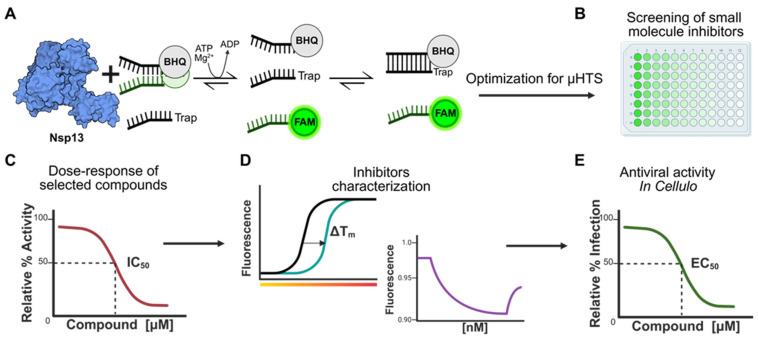 Figure 1
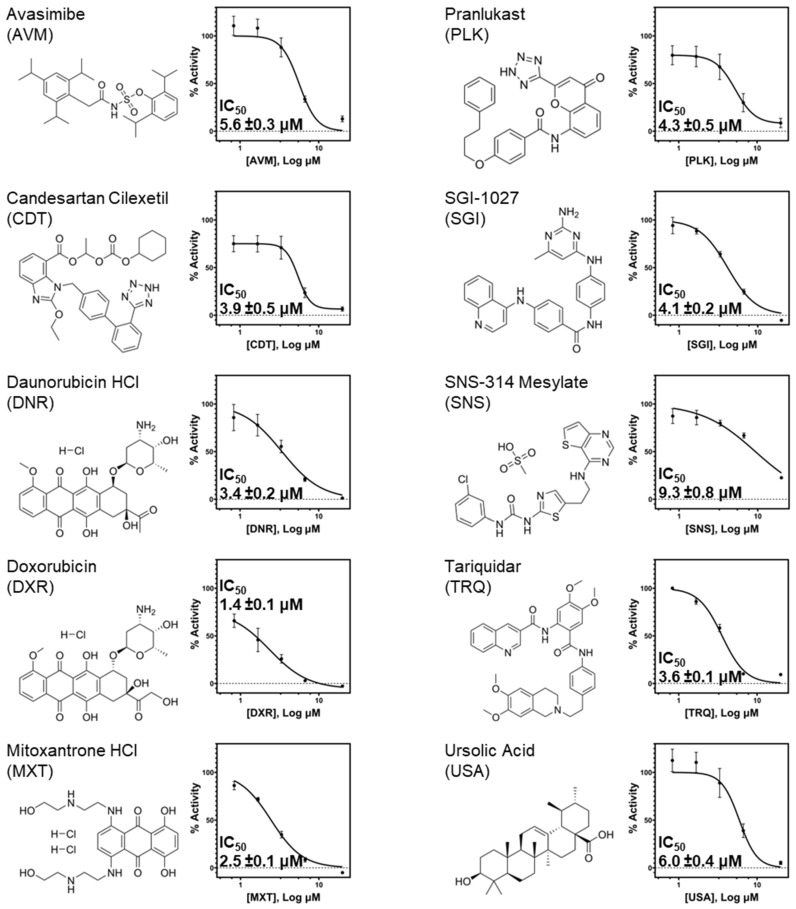 Figure 2
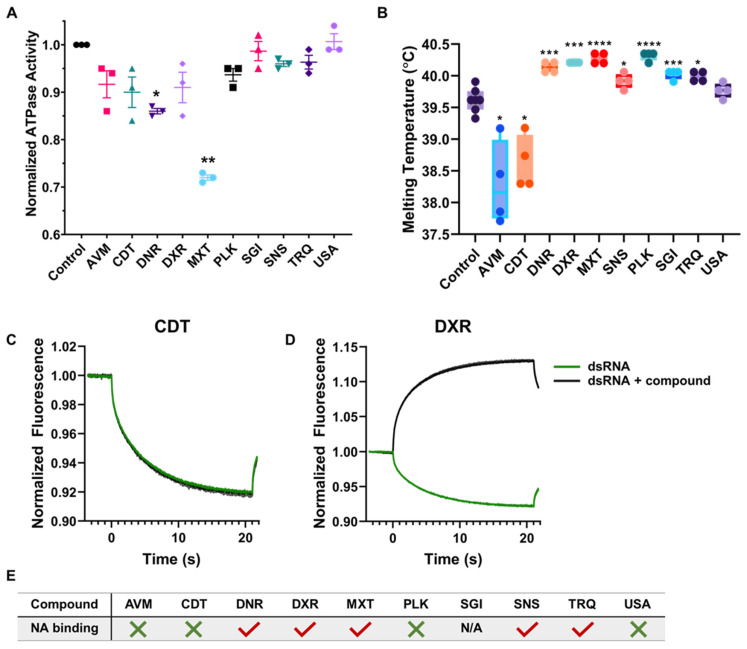 Figure 3
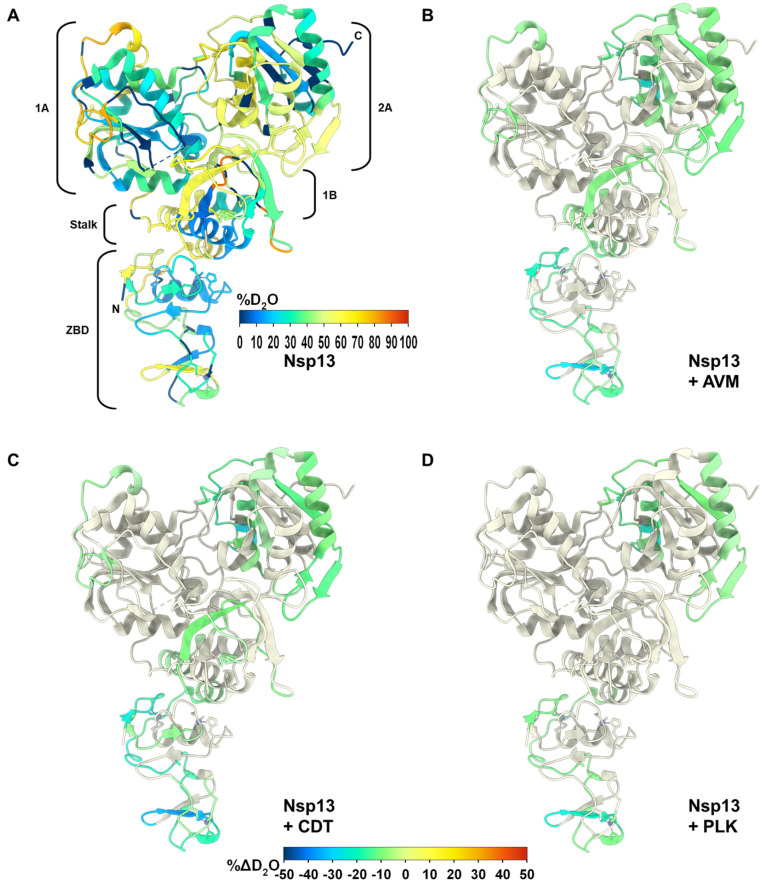 Figure 4
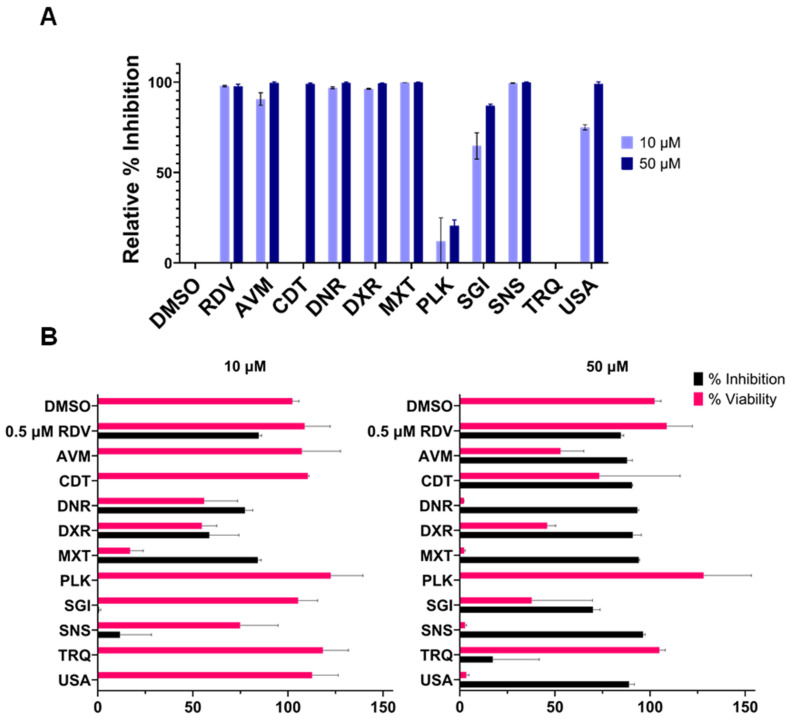 Figure 5
Peer Reviews
No public reviews on file for this paper yet. If you reviewed it on a platform where reviews are public (OpenReview, ICLR, NeurIPS, ICML), you can paste yours below so the community can read it here.
Videos
No videos yet. Explain this paper in a talk, walkthrough, or lecture? Add one.
Taxonomy
TopicsSARS-CoV-2 and COVID-19 Research · RNA Research and Splicing · Computational Drug Discovery Methods