Development of Glycoconjugated MAGL Inhibitors with Glucose-Dependent Antiproliferative Activity
Giulia Bononi, Federica Bertini, Samuele Masoni, Miriana Di Stefano, Rossella Mosca, Francesca Felice, Giovanni Signore, Filippo Minutolo, Carlotta Granchi, Tiziano Tuccinardi, Valeria Di Bussolo

TL;DR
Researchers developed new MAGL inhibitors that work better in low-glucose conditions, potentially targeting cancer cells more effectively.
Contribution
First-in-class glycoconjugated MAGL inhibitors with glucose-dependent antiproliferative activity in cancer cells.
Findings
Glycoconjugates 17 and 18 inhibited human MAGL with IC50 values of 43.3 and 68.8 μM.
Both compounds showed antiproliferative activity in low-glucose conditions but were inactive in high-glucose medium.
The glucose-dependent activity suggests uptake/competition mechanisms in pancreatic cancer cells.
Abstract
Monoacylglycerol lipase (MAGL) is a key regulator of lipid signaling networks implicated in tumor progression and represents an attractive anticancer target. To combine MAGL inhibition with potentially enhanced uptake by highly glycolytic cancer cells, we designed glycoconjugated analogs of a N-benzoylpiperidine MAGL inhibitor scaffold bearing a glucopyranose unit. An alkyne-functionalized benzoylpiperidine intermediate was prepared and coupled to azido sugars through a CuAAC “click” reaction to afford two triazole-linked glycoconjugates. In a colorimetric assay on human MAGL, the new compounds 17 and 18 inhibited the enzyme with IC50 values of 43.3 and 68.8 μM, respectively, confirming compatibility with MAGL inhibition albeit with reduced potency versus reference triazole-substituted benzoylpiperidine 13 (IC50 = 4.1 μM). In PANC-1 pancreatic cancer cells, both glycoconjugates were…
Genes, proteins, chemicals, diseases, species, mutations and cell lines named across the full text — each resolved to its canonical identifier and authoritative record.
Click any figure to enlarge with its caption.
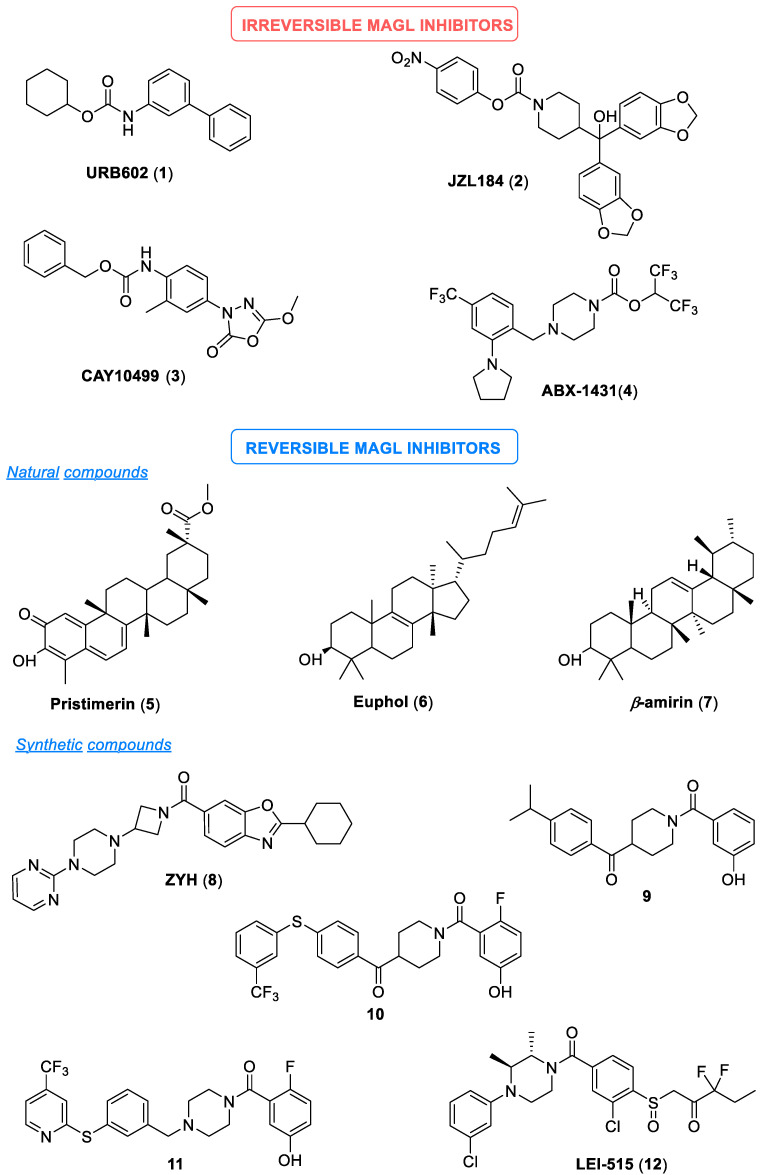 Figure 1
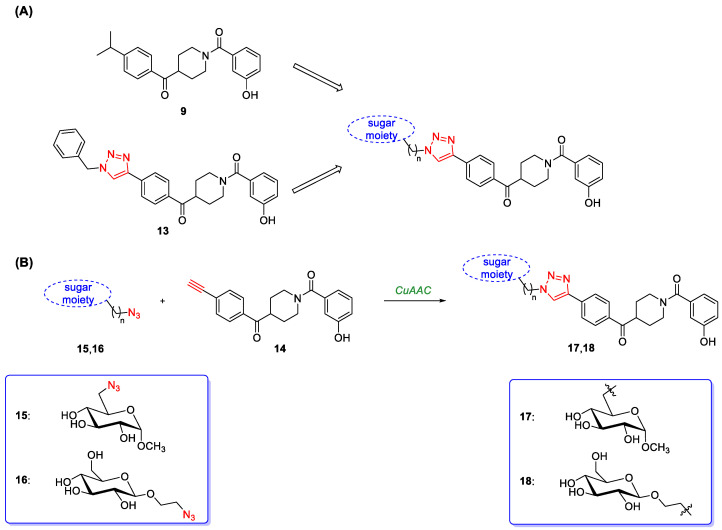 Figure 2
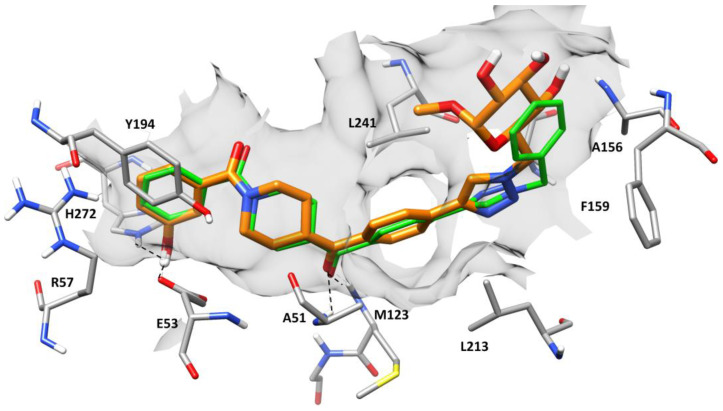 Figure 3
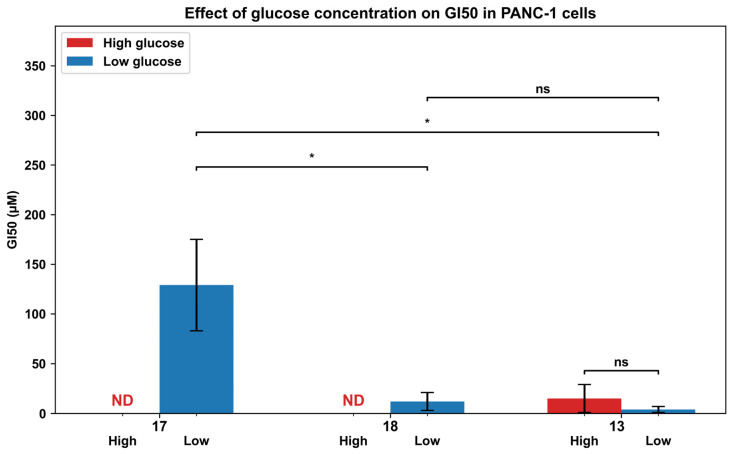 Figure 4
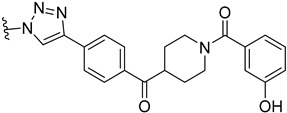 Figure 5
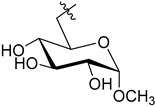 Figure 6
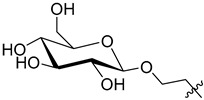 Figure 7
 Figure 8
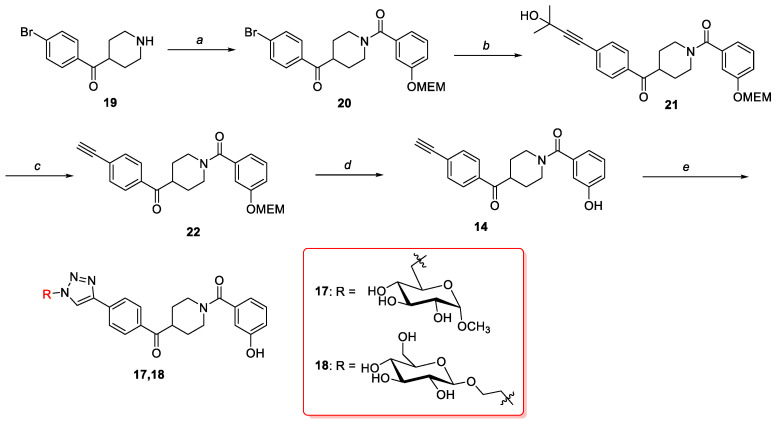 Figure 9
Peer Reviews
No public reviews on file for this paper yet. If you reviewed it on a platform where reviews are public (OpenReview, ICLR, NeurIPS, ICML), you can paste yours below so the community can read it here.
Videos
No videos yet. Explain this paper in a talk, walkthrough, or lecture? Add one.
Taxonomy
TopicsCannabis and Cannabinoid Research · Lipid metabolism and biosynthesis · Fatty Acid Research and Health