Comparative Diagnostic Accuracy of EUS-Guided Fine-Needle Biopsy Versus Aspiration for Pancreatic Serous Cystic Neoplasms: A Retrospective Cohort Study
Alan Chuncharunee, Kazuo Hara, Shin Haba, Takamichi Kuwahara, Nozomi Okuno, Shimpei Matsumoto, Hiroki Koda, Tomoki Ogata

TL;DR
EUS-guided fine-needle biopsy (FNB) is more effective than aspiration (FNA) for diagnosing pancreatic serous cystic neoplasms, with larger cysts and specific techniques improving success.
Contribution
Demonstrates that EUS-FNB outperforms EUS-FNA for diagnosing pancreatic serous cystic neoplasms and identifies key factors for successful diagnosis.
Findings
EUS-FNB had a significantly higher diagnostic yield (44.68%) compared to EUS-FNA (14.00%).
Larger cyst size, use of the Franseen FNB needle, and more needle passes were associated with better diagnostic success.
ROC analysis identified a cyst size cutoff of ≥17 mm as optimal for diagnosis.
Abstract
Background: Serous cystic neoplasm (SCN) is a common benign pancreatic lesion frequently encountered in practice. However, diagnostic confirmation by Endoscopic ultrasound (EUS)-guided fine needle aspiration (FNA) is often limited by inadequate tissue acquisition. Fine-needle biopsy (FNB) has been increasingly performed. We aimed to compare the diagnostic yield of SCN using FNB and FNA needles and to identify factors associated with successful diagnosis. Methods: We retrospectively analyzed 77 patients with pancreatic lesions suspected to be SCN who underwent either EUS-FNB (n = 47 procedures) or EUS-FNA (n = 50 procedures). The primary outcome was diagnostic yield. Secondary outcomes included predictors of diagnostic yield, which were evaluated using univariate and multivariate logistic regression analyses. Receiver operating characteristic (ROC) analyses were performed to identify the…
Genes, proteins, chemicals, diseases, species, mutations and cell lines named across the full text — each resolved to its canonical identifier and authoritative record.
Click any figure to enlarge with its caption.
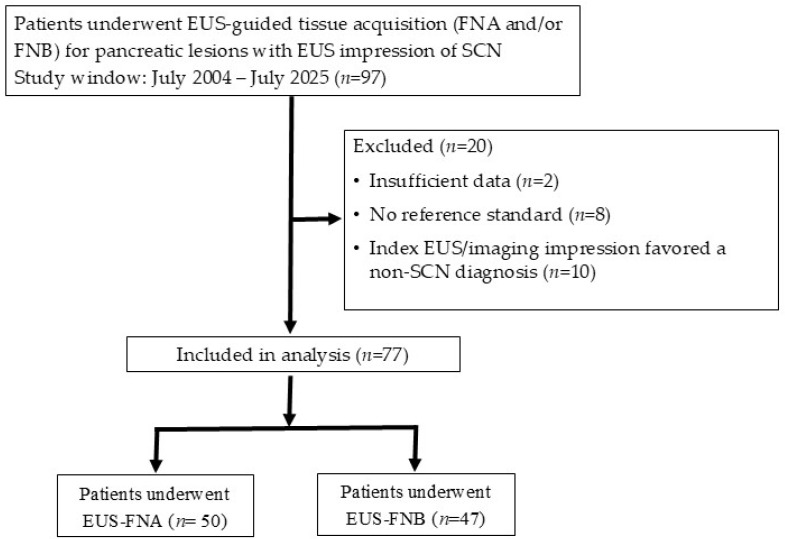 Figure 1
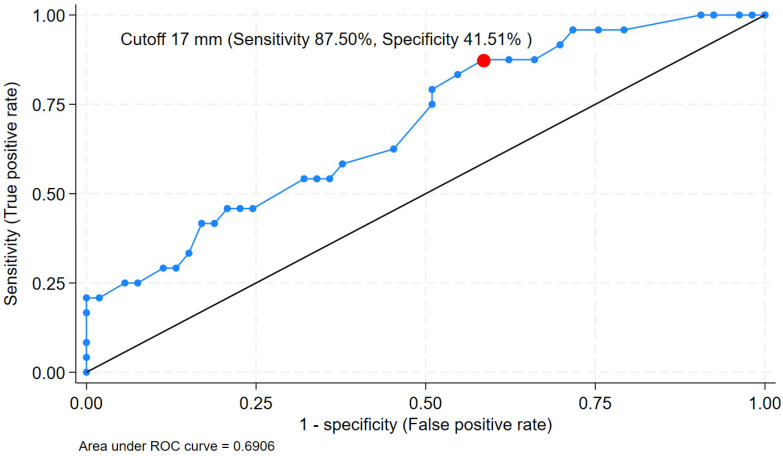 Figure 2
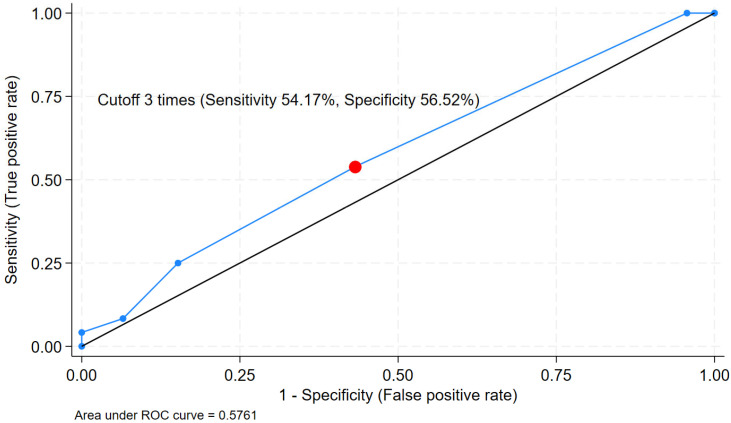 Figure 3
Peer Reviews
No public reviews on file for this paper yet. If you reviewed it on a platform where reviews are public (OpenReview, ICLR, NeurIPS, ICML), you can paste yours below so the community can read it here.
Videos
No videos yet. Explain this paper in a talk, walkthrough, or lecture? Add one.
Taxonomy
TopicsPancreatic and Hepatic Oncology Research · Cholangiocarcinoma and Gallbladder Cancer Studies · Pancreatitis Pathology and Treatment