Genotype-Encoded UV Sensitivity in iPSC-Derived Human Melanocytes Reveals MX2 as a Physiological Amplifier of p53/p38-Mediated DNA Damage Signaling
Eric Ramirez-Salazar, Ana Slipicevic, Marina Juraleviciute, Ling Li, Mark Harland, Sally O’Shea, Sinead Field, Julia Newton-Bishop, Meenhard Herlyn

TL;DR
This study uses iPSC-derived melanocytes to show how genetic differences affect UV sensitivity and identifies MX2 as a key player in DNA damage signaling.
Contribution
The study introduces a novel genotype-informed UV response model using iPSC-derived melanocytes and identifies MX2 as a physiological amplifier of DNA damage signaling.
Findings
iPSC-derived melanocytes with specific MC1R variants recapitulate donor-linked UV sensitivity traits.
MX2 amplifies UV-induced p53/p38 signaling and apoptosis independently of AKT.
The model supports iPSC systems as new approach methodologies for phototoxicology.
Abstract
Ultraviolet (UV) radiation induces DNA damage and oxidative stress in melanocytes, shaping pigmentation phenotypes and elevating photocarcinogenesis risk. Human models that capture donor-linked genetic determinants of UV sensitivity remain limited. Here, we establish a genotype-informed UV response model using induced pluripotent stem cell (iPSC)-derived melanocytes from donors carrying defined MC1R variants. Differentiated cells recapitulated melanocytic morphology, marker expression, and pigmentation consistent with donor sun-sensitivity traits. Following narrowband UVB exposure, melanocyte lines with higher UV sensitivity showed reduced survival, prolonged checkpoint activation, and CPD-associated DNA damage signaling dynamics. Mechanistic analysis suggests that the interferon-regulated GTPase MX2 is associated with amplification of UV-induced p53 and p38 activation while promoting…
Genes, proteins, chemicals, diseases, species, mutations and cell lines named across the full text — each resolved to its canonical identifier and authoritative record.
Click any figure to enlarge with its caption.
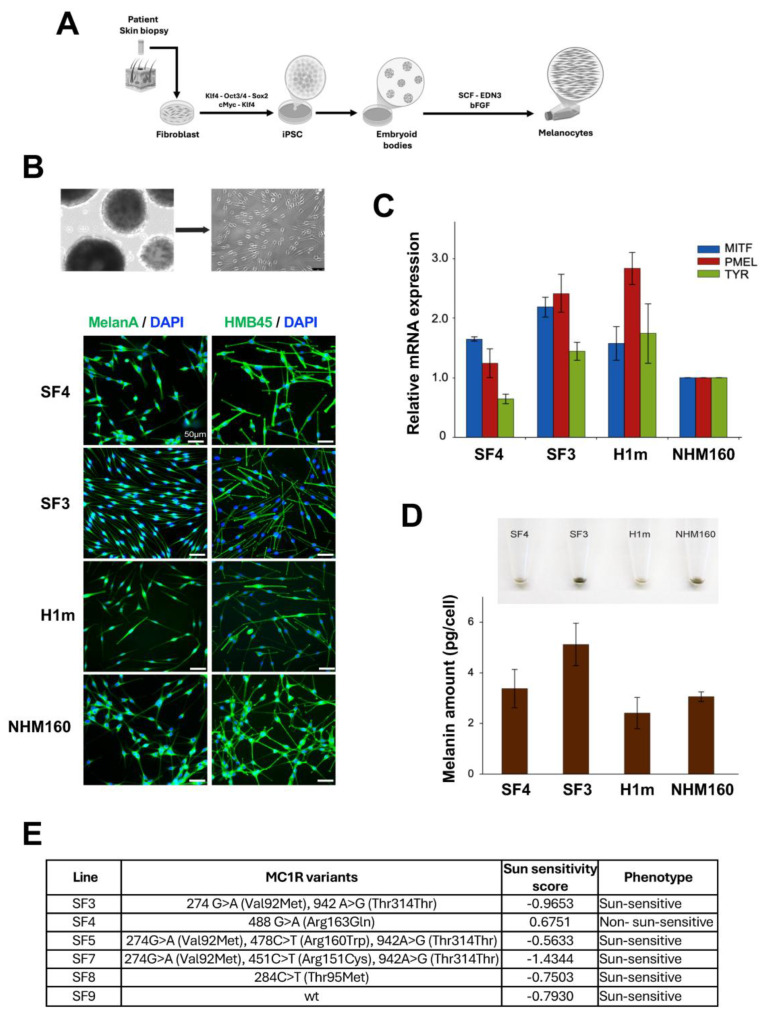 Figure 1
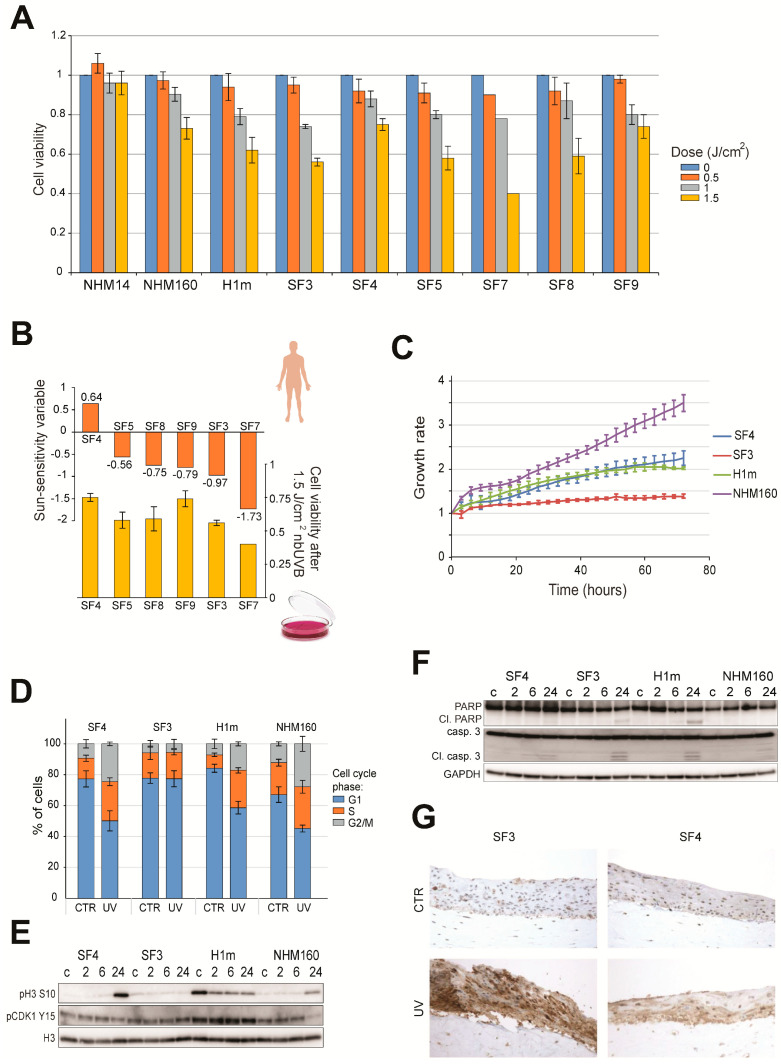 Figure 2
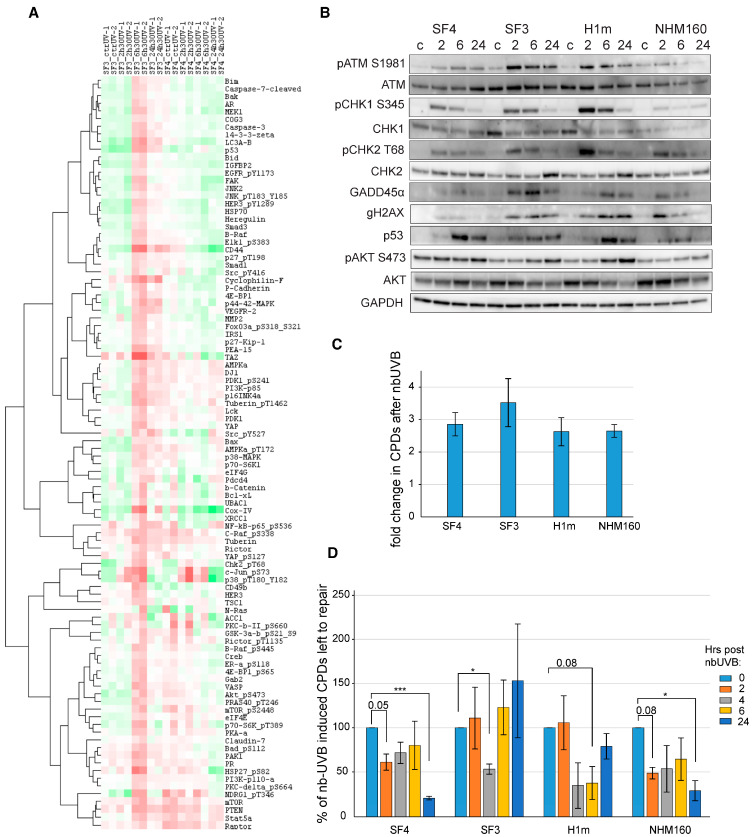 Figure 3
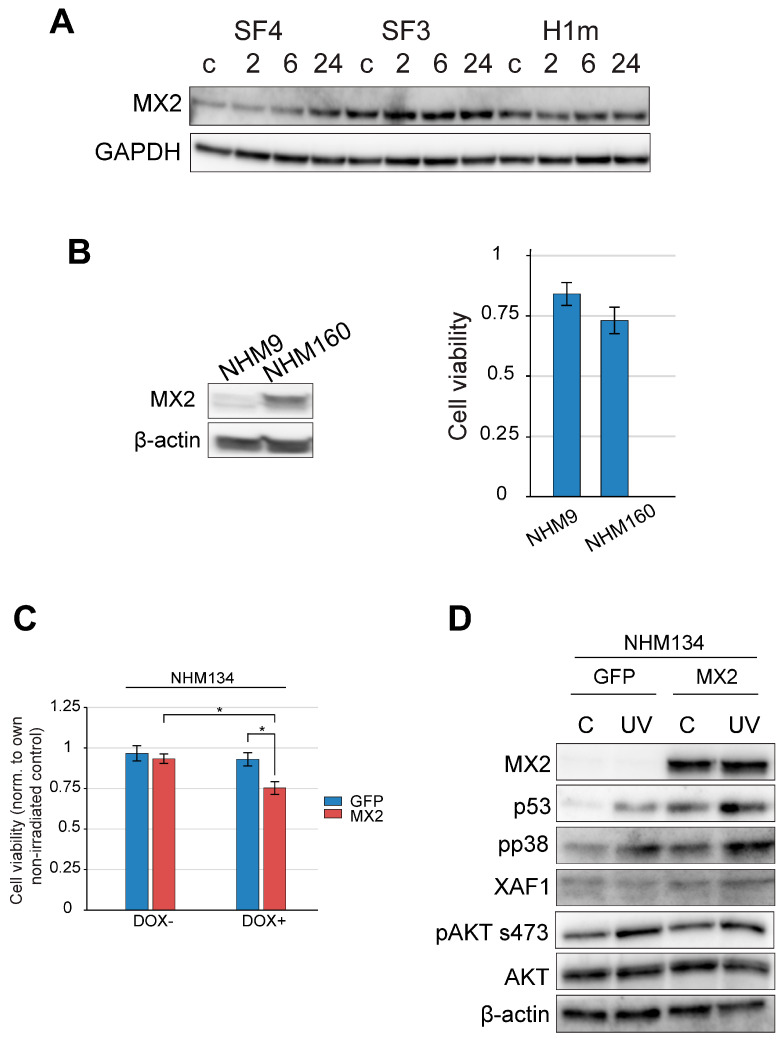 Figure 4
Peer Reviews
No public reviews on file for this paper yet. If you reviewed it on a platform where reviews are public (OpenReview, ICLR, NeurIPS, ICML), you can paste yours below so the community can read it here.
Videos
No videos yet. Explain this paper in a talk, walkthrough, or lecture? Add one.
Taxonomy
Topicsmelanin and skin pigmentation · DNA Repair Mechanisms · Skin Protection and Aging