Characterization of Monomeric and Dimeric Forms of the Lectin TFF1 in the Human Vagina: Possible Role for the Innate Immune Defence
Aikaterini Laskou, Sönke Harder, Eva B. Znalesniak, Hartmut Schlüter, Ines Künnemann, Svetlana N. Tchaikovski, Werner Hoffmann

TL;DR
This study explores the presence of different forms of the protein TFF1 in the human vagina and suggests it may help protect against infections, especially after menopause.
Contribution
The first characterization of monomeric and dimeric TFF1 forms in post-menopausal vaginal specimens and their potential role in innate immunity.
Findings
TFF1 exists in monomeric and dimeric forms in the human vagina.
TFF1 may contribute to vaginal microbiota homeostasis and innate immune defense.
TFF1's lectin activity could bind to vaginal pathogens, offering clinical relevance for treating infections.
Abstract
TFF1 is a secretory polypeptide that is typical of mucous epithelia belonging to the trefoil factor family (TFF) of lectins. Originally, TFF1 was discovered as an estrogen-responsive gene in breast cancer cell lines. However, its major physiological expression site is the stomach where it exists mainly in a monomeric form, with minor amounts of homodimeric as well as heterodimeric forms, such as a high-molecular-mass complex with IgG Fc binding protein (FCGBP). For the first time, we characterized different low-molecular-mass forms of TFF1 in human post-menopausal vaginal specimens, i.e., monomeric and dimeric forms. Attempts to identify high-molecular-mass forms of TFF1, such as TFF1-FCGBP, failed. Based on its known anti-inflammatory effects, TFF1 could play an important role in the homeostasis of vaginal microbiota, which is normally predominated by Lactobacillus spp. Due to its…
Genes, proteins, chemicals, diseases, species, mutations and cell lines named across the full text — each resolved to its canonical identifier and authoritative record.
Click any figure to enlarge with its caption.
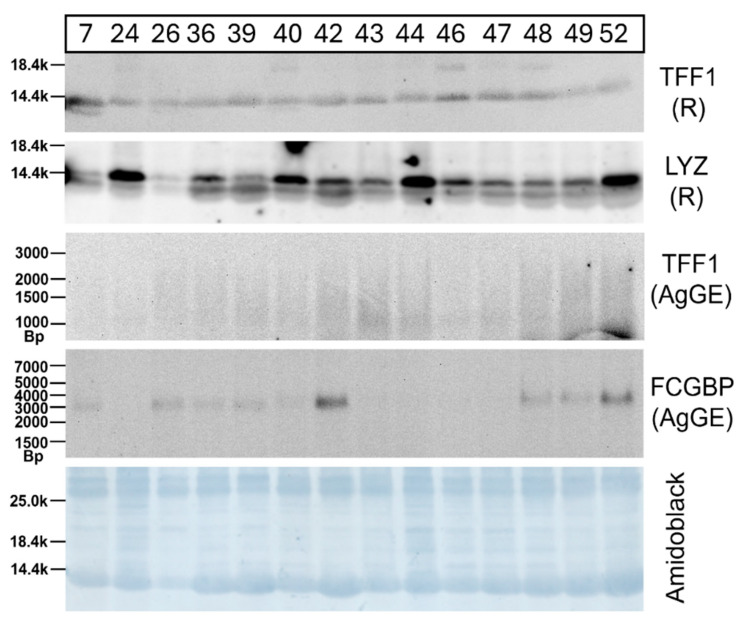 Figure 1
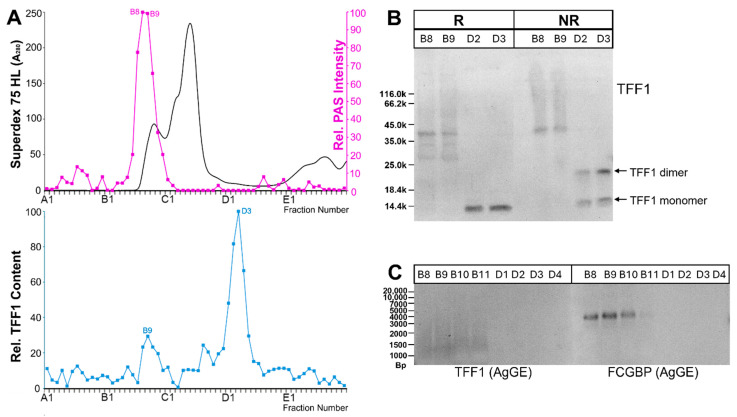 Figure 2
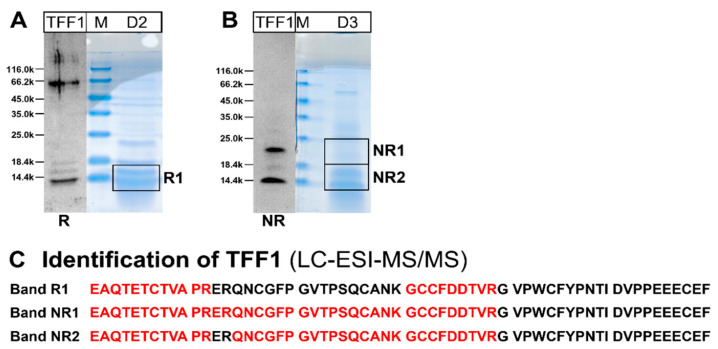 Figure 3
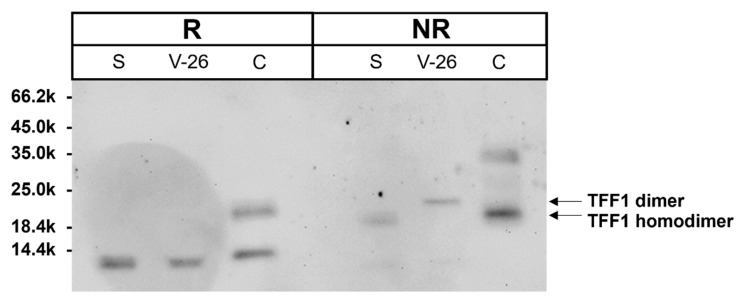 Figure 4
Peer Reviews
No public reviews on file for this paper yet. If you reviewed it on a platform where reviews are public (OpenReview, ICLR, NeurIPS, ICML), you can paste yours below so the community can read it here.
Videos
No videos yet. Explain this paper in a talk, walkthrough, or lecture? Add one.
Taxonomy
TopicsReproductive tract infections research · Glycosylation and Glycoproteins Research · Galectins and Cancer Biology