Recombinant Human KAI1/CD82 Attenuates Glucocorticoid-Induced Muscle Atrophy by Promoting Myogenic Differentiation
Dong Hwan Kim, Hyesook Lee, Jung-Hwa Han, Yun Jeong Kang, Roo Gam Jeong, Jin Hur, Hyun Sik Gong

TL;DR
This study shows that recombinant human KAI1 helps prevent muscle atrophy caused by steroids by promoting muscle cell development and improving muscle function.
Contribution
The study introduces rhKAI1 as a novel candidate for preventing glucocorticoid-induced muscle atrophy.
Findings
rhKAI1 promotes myogenic differentiation and increases myotube formation in both mouse and human cells.
rhKAI1 reduces dexamethasone-induced muscle atrophy by modulating Akt and AMPK phosphorylation.
rhKAI1 improves muscle function and fiber-type gene expression in a mouse model of glucocorticoid-induced atrophy.
Abstract
Sarcopenia and glucocorticoid-induced myopathy are significant forms of muscle atrophy that pose considerable public health challenges. In this regard, preventing muscle atrophy is crucial for enhancing quality of life and increasing life expectancy. In this study, we investigated the effect of recombinant human KAI1 (rhKAI1) on myogenic differentiation and its protective effect against dexamethasone-induced muscle atrophy. rhKAI1 enhanced myogenic differentiation in both murine C2C12 myoblasts and primary human endometrial stromal cells, as evidenced by upregulation of myogenic regulatory factors and increased myotube formation. These effects were accompanied by increased phosphorylation of Akt and AMPK. In a dexamethasone (Dex)-induced atrophy model, rhKAI1 increased myotube diameter, restored MyHC expression, and reduced the expression of the E3 ligase atrogin-1, accompanied by…
Genes, proteins, chemicals, diseases, species, mutations and cell lines named across the full text — each resolved to its canonical identifier and authoritative record.
Click any figure to enlarge with its caption.
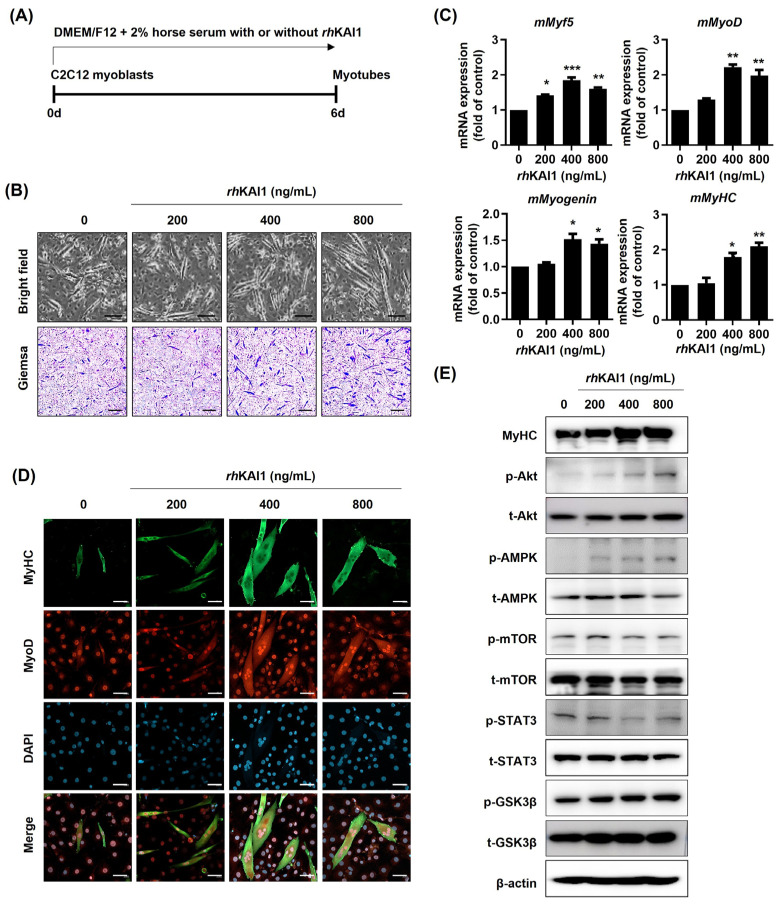 Figure 1
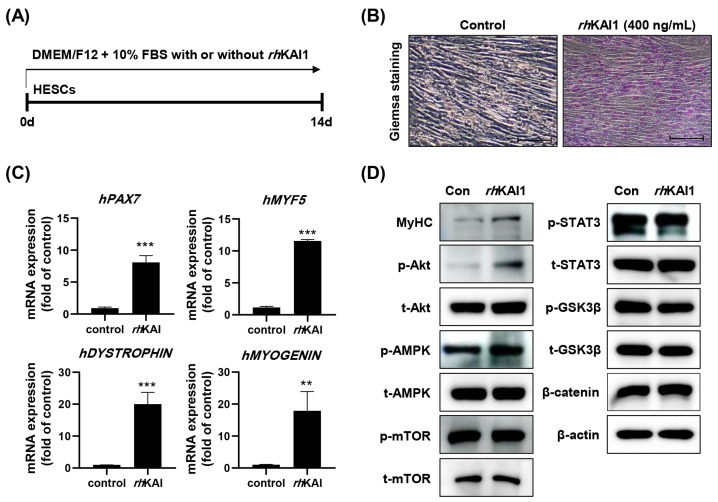 Figure 2
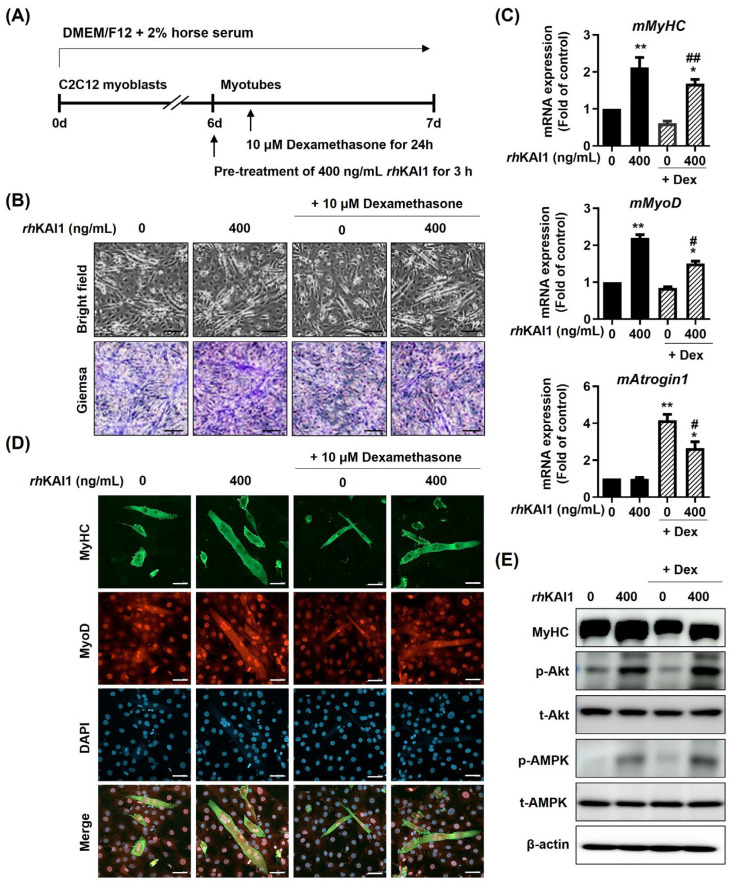 Figure 3
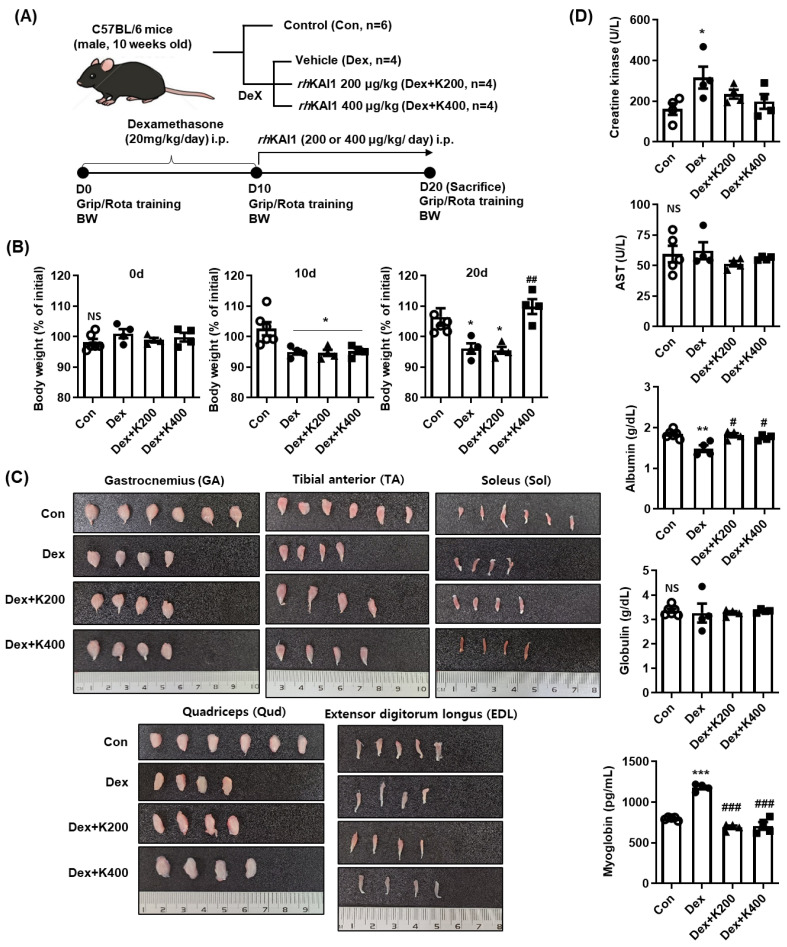 Figure 4
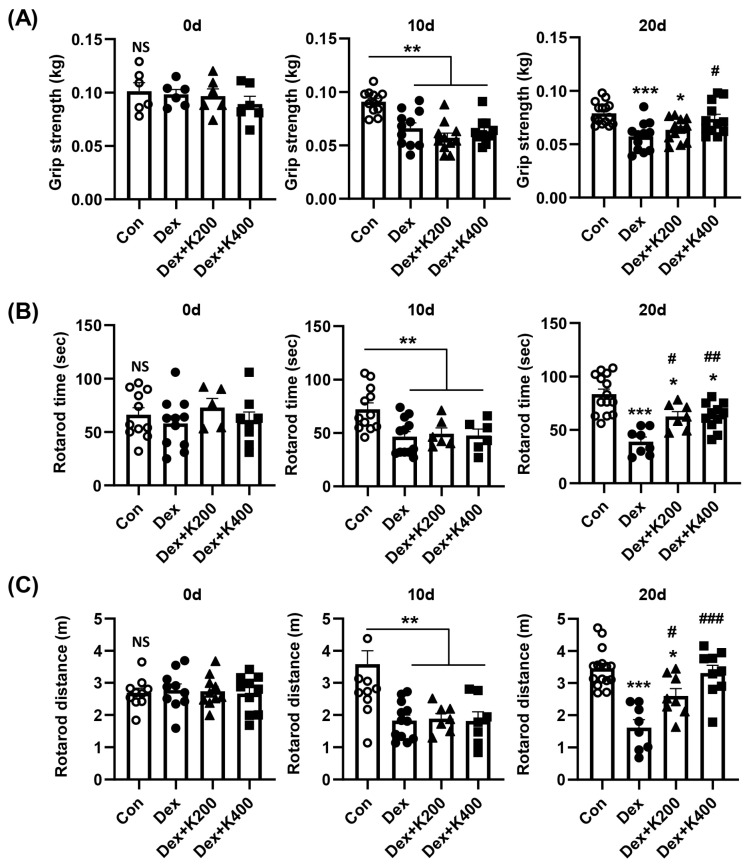 Figure 5
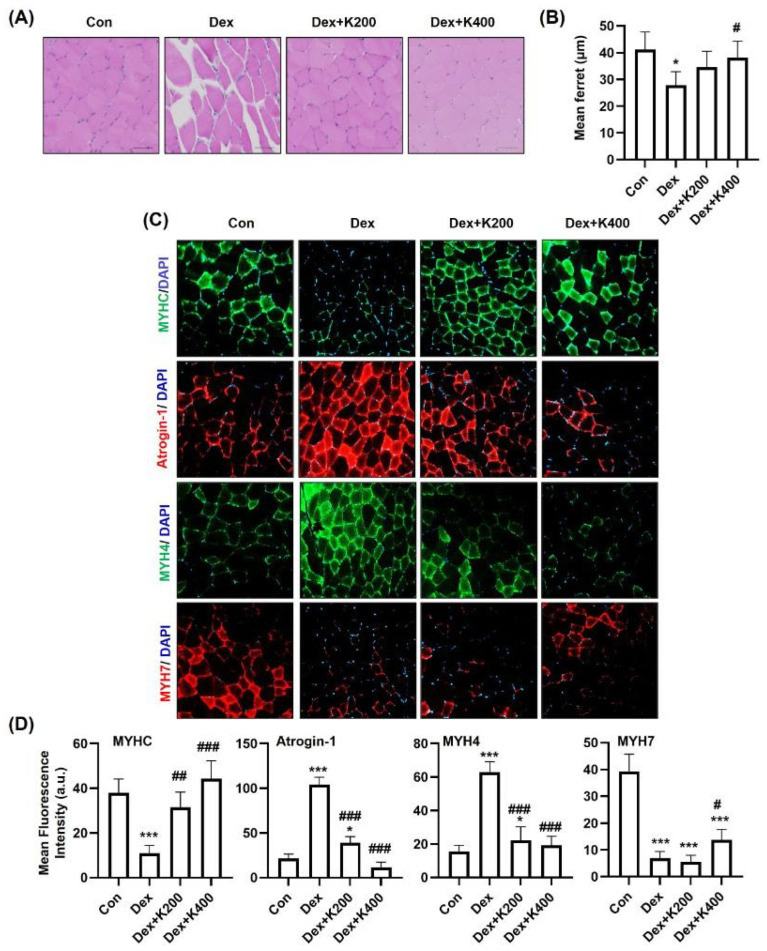 Figure 6
Peer Reviews
No public reviews on file for this paper yet. If you reviewed it on a platform where reviews are public (OpenReview, ICLR, NeurIPS, ICML), you can paste yours below so the community can read it here.
Videos
No videos yet. Explain this paper in a talk, walkthrough, or lecture? Add one.
Taxonomy
TopicsMuscle Physiology and Disorders · Caveolin-1 and cellular processes · Cell Adhesion Molecules Research