Pollen Protein Content and Developmental Success of the Solitary Bee Osmia bicornis: Amino Acid Thresholds for Larval Pollen Resources?
Jordan T. Ryder, Andrew Cherrill, Helen M. Thompson, Keith F. A. Walters

TL;DR
This study explores how the amino acid content in pollen affects the survival and development of Osmia bicornis larvae, finding that wild-foraged diets yield the best results.
Contribution
The study identifies amino acid thresholds for larval success in Osmia bicornis and evaluates the effectiveness of wild-foraged versus artificial pollen diets.
Findings
Wild-foraged pollen diets (Group III) showed the highest larval survival rates, while pine pollen diets (Group IV) had no survival.
Larval survival was not affected by diet composition within Groups I–III, nor was development time or pupal weight.
The findings support the existence of amino acid thresholds for larval success in Osmia bicornis.
Abstract
Bees provide a key ecosystem service as pollen vectors, and many flowering plants produce nutritionally rich pollen/nectar that offer a wide range of bee-essential nutritional components. The nutritional profile of pollen from different plant species varies, and selection by foraging adults is important when balancing the nutritional content of pollen fed to larvae. Improved understanding of their nutritional requirements is therefore important when selecting plant species for conservation habitats. Protein is an important component of bee diets and earlier work has linked amino acid levels in larval pollen diets with bee colony/population success. A threshold level has been proposed below which bumblebee colony development is poor, with significant improvement when exceeded, but little further advantage being gained by further increases thereafter. Dietary requirements differ between…
Genes, proteins, chemicals, diseases, species, mutations and cell lines named across the full text — each resolved to its canonical identifier and authoritative record.
Click any figure to enlarge with its caption.
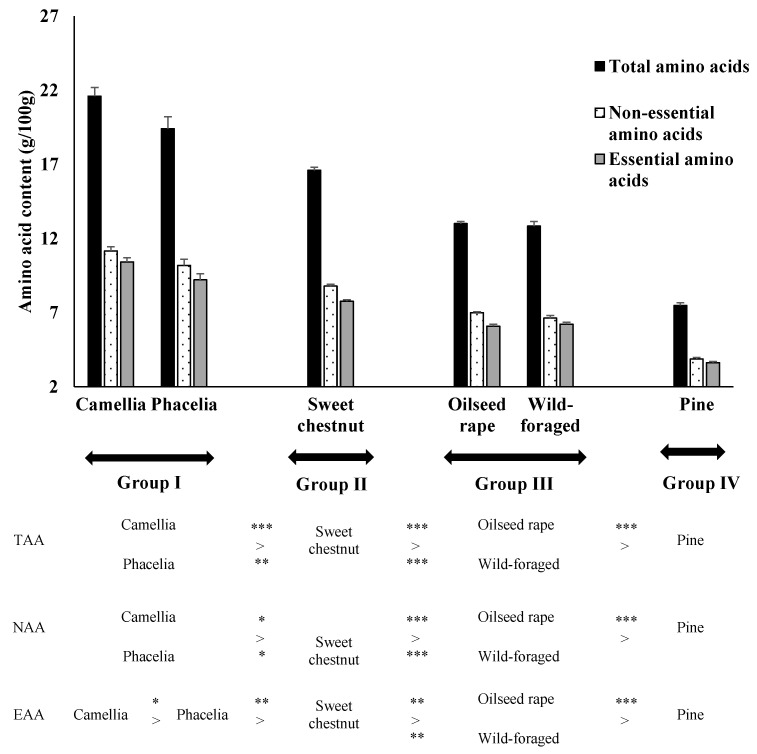 Figure 1
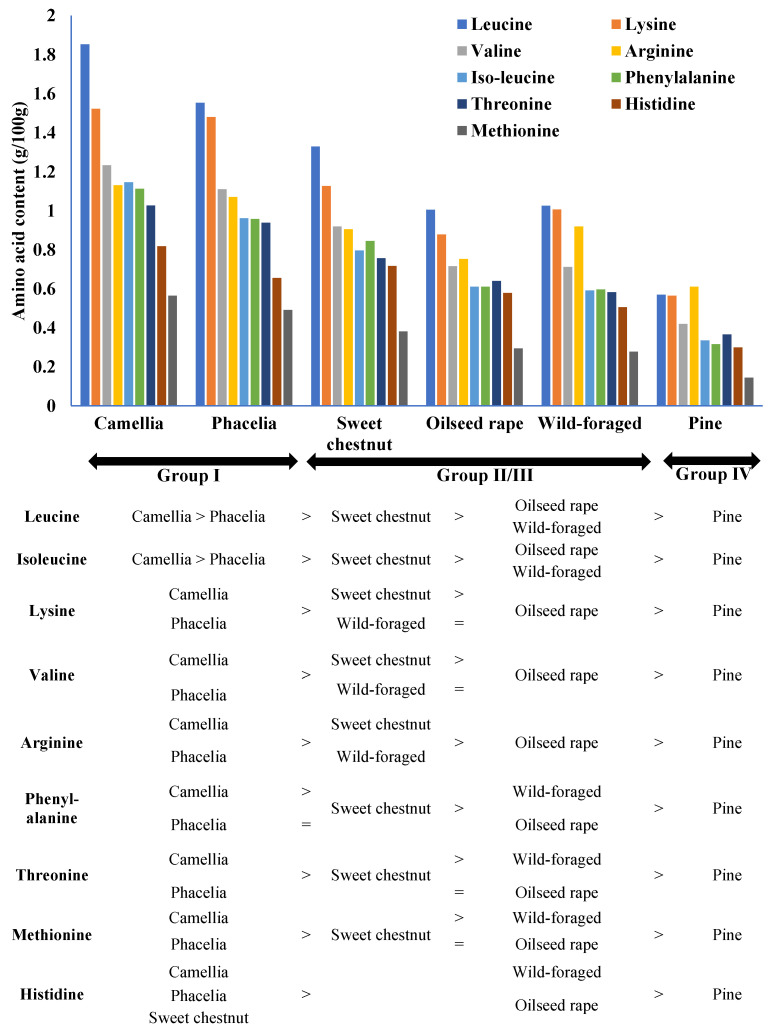 Figure 2
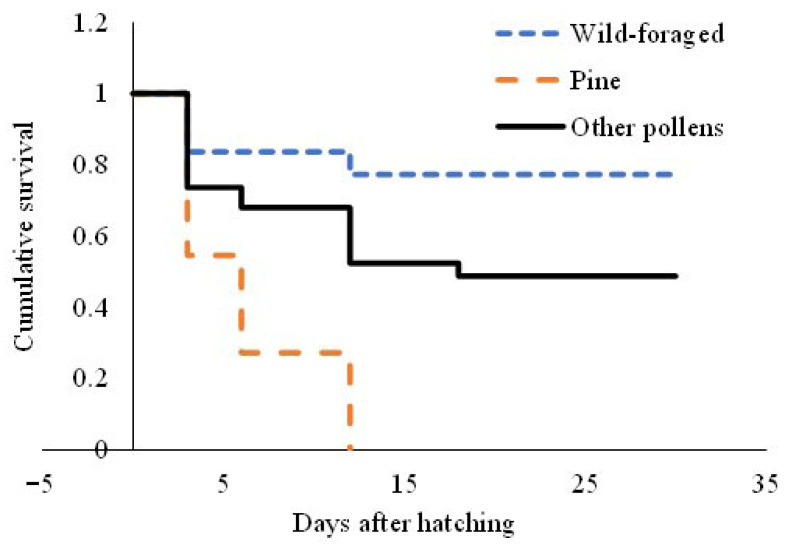 Figure 3
Peer Reviews
No public reviews on file for this paper yet. If you reviewed it on a platform where reviews are public (OpenReview, ICLR, NeurIPS, ICML), you can paste yours below so the community can read it here.
Videos
No videos yet. Explain this paper in a talk, walkthrough, or lecture? Add one.
Taxonomy
TopicsPlant and animal studies · Reproductive biology and impacts on aquatic species · Sperm and Testicular Function