Increased Production of Angiopoietin-like Protein 2 in a Ligature- and LPS-Induced Periodontitis Mouse Model May Promote Colorectal Tumor Progression
Mika Yamashita, Genta Yamamoto, Kodai Katsumata, Daiki Takeuchi, Nayu Tachikawa, Kota Ono, Tasuku Ohno, Eisaku Nishida, Tsuyoshi Fujita, Jun-Ichiro Hayashi, Takeshi Kikuchi, Yoshihiko Sugita, Akio Mitani

TL;DR
This study shows that periodontitis in mice increases a protein called ANGPTL2, which may help colorectal tumors grow faster.
Contribution
The study demonstrates a novel link between periodontitis-induced ANGPTL2 and colorectal tumor progression in mice.
Findings
Periodontitis in mice led to increased ANGPTL2 levels in periodontal tissues, serum, and colorectal tumors.
Mice with periodontitis had more and larger colorectal tumors compared to controls.
Elevated ANGPTL2 was associated with increased tumor cell proliferation and inflammation.
Abstract
Background/Objectives: Recent studies suggest that angiopoietin-like protein 2 (ANGPTL2) is one of the factors contributing to disease progression in distant organs associated with periodontitis. We previously reported that periodontitis promotes hepatocellular carcinoma and that ANGPTL2 may be involved in tumor progression. Based on these findings, we herein investigated the role of periodontitis-induced ANGPTL2 in the progression of colorectal cancer (CRC) in mice. Methods: Male C57BL/6 mice were divided into control and periodontitis groups. Colorectal tumors were induced using azoxymethane (AOM) and dextran sulfate sodium (DSS). Periodontitis was induced by silk ligation. In addition, the model was enhanced by repeated gingival administration of lipopolysaccharide (LPS) derived from Porphyromonas gingivalis, a periodontal pathogen, to better mimic clinical conditions. Tumor…
Genes, proteins, chemicals, diseases, species, mutations and cell lines named across the full text — each resolved to its canonical identifier and authoritative record.
Click any figure to enlarge with its caption.
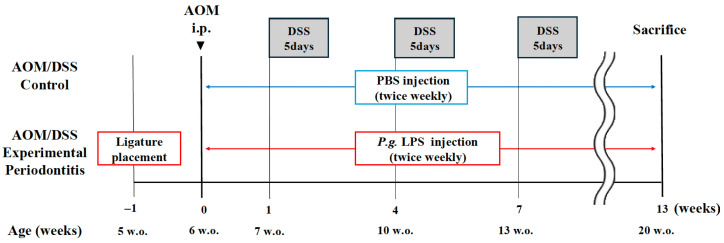 Figure 1
 Figure 2
 Figure 3
 Figure 4
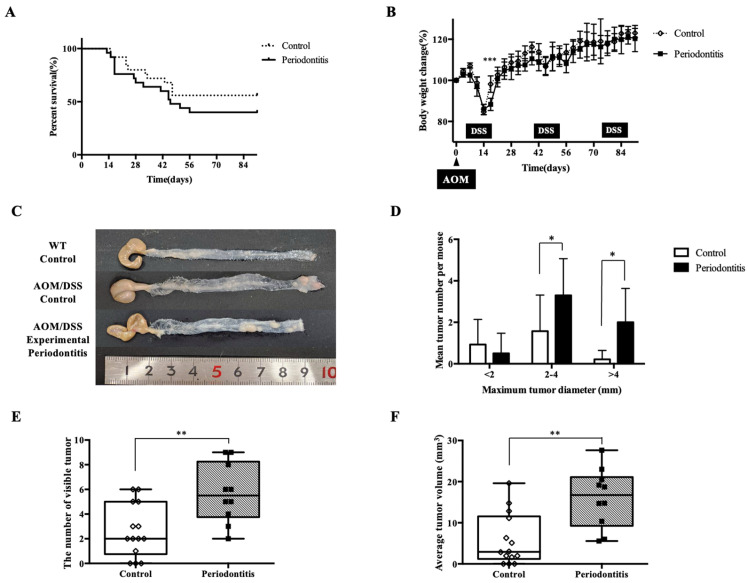 Figure 5
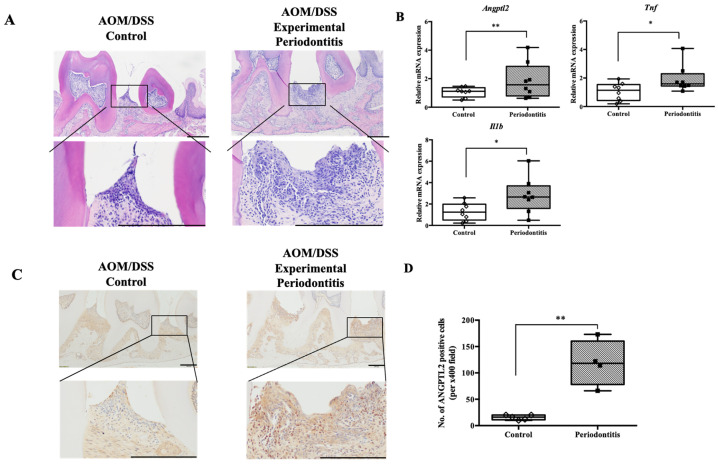 Figure 6
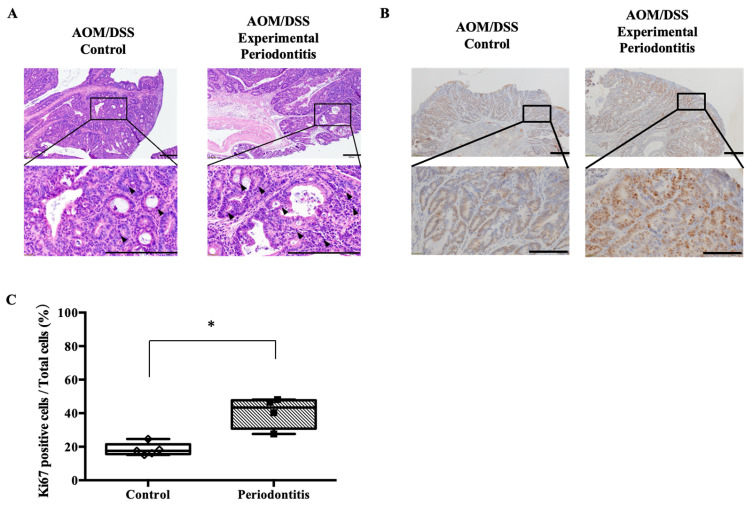 Figure 7
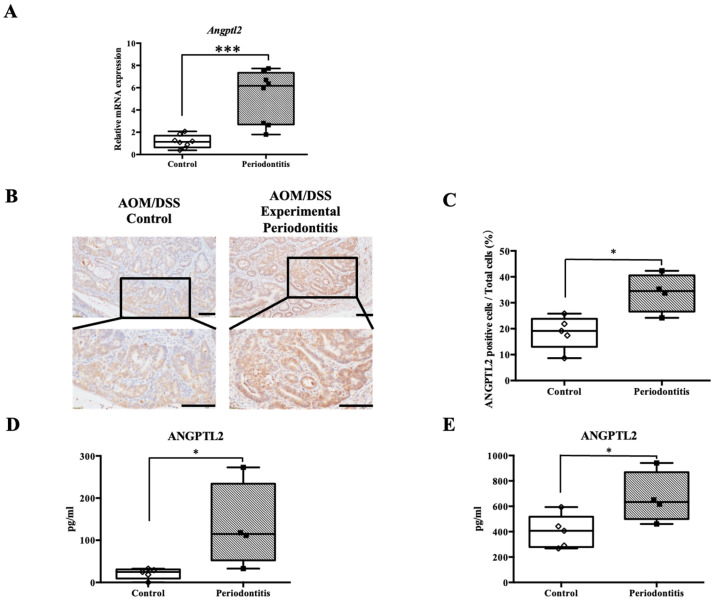 Figure 8
Peer Reviews
No public reviews on file for this paper yet. If you reviewed it on a platform where reviews are public (OpenReview, ICLR, NeurIPS, ICML), you can paste yours below so the community can read it here.
Videos
No videos yet. Explain this paper in a talk, walkthrough, or lecture? Add one.
Taxonomy
TopicsLipid metabolism and disorders · Salivary Gland Disorders and Functions · Clusterin in disease pathology