Steroid-Resistant Focal Segmental Glomerulosclerosis with Alport-like Glomerular Basement Membrane Lesions Due to a MYO1E Mutation: A Pediatric Case Report
Andrea Angioi, Doloretta Piras, Nicola Lepori, Paola Bianco, Matteo Floris, Gianfranca Cabiddu, Antonella Barreca, Antonello Pani

TL;DR
A 4-year-old boy with steroid-resistant kidney disease was found to have a rare genetic mutation in MYO1E, causing focal segmental glomerulosclerosis with Alport-like basement membrane changes.
Contribution
This case expands the clinicopathologic understanding of MYO1E-associated nephropathy and clarifies that Alport-like basement membrane changes can signal podocyte cytoskeletal defects.
Findings
Compound-heterozygous MYO1E variants were identified in a child with steroid-resistant nephrotic syndrome.
Electron microscopy revealed Alport-like glomerular basement membrane changes without immune-complex deposits.
The patient's renal function remained stable with supportive therapy despite persistent sub-nephrotic proteinuria.
Abstract
Steroid-resistant nephrotic syndrome (SRNS) in childhood frequently reflects monogenic podocytopathies in which immunosuppression is ineffective. Biallelic variants in MYO1E, encoding the class I myosin Myo1E, cause a distinctive form of focal segmental glomerulosclerosis (FSGS) often accompanied by “Alport-like” multilamination of the glomerular basement membrane (GBM). Early recognition has therapeutic and prognostic implications. A previously healthy 4-year-old boy presented with generalized edema and nephrotic-range proteinuria. Glucocorticoids induced no remission; sequential calcineurin inhibition (cyclosporine, then tacrolimus) and a single dose of ofatumumab yielded only transient, partial reductions in proteinuria. A first biopsy elsewhere showed FSGS with nonspecific IgM/C3 trapping; electron microscopy (EM) was not performed. At age 10, repeat biopsy with EM revealed ~30%…
Genes, proteins, chemicals, diseases, species, mutations and cell lines named across the full text — each resolved to its canonical identifier and authoritative record.
Click any figure to enlarge with its caption.
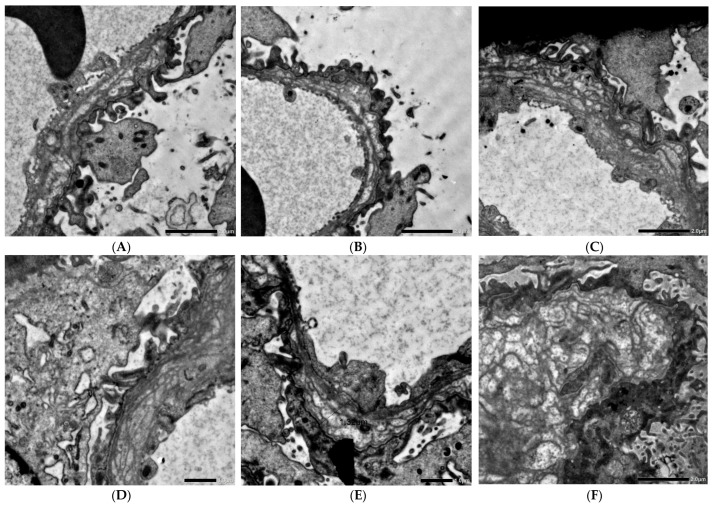 Figure 1
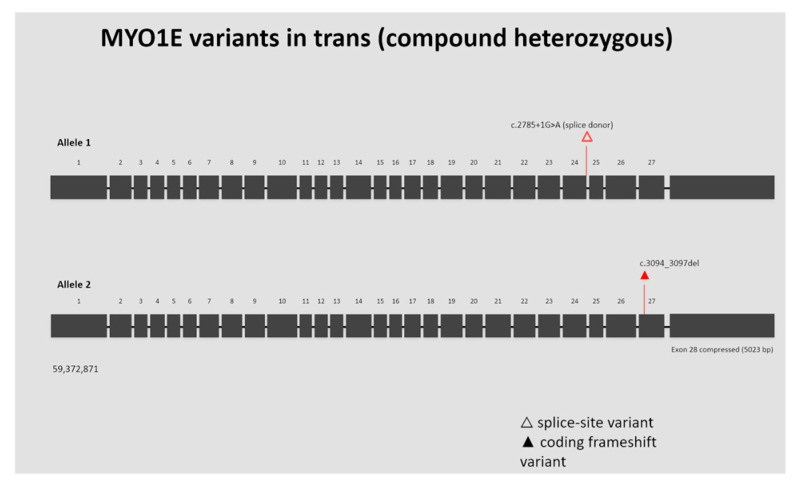 Figure 2
Peer Reviews
No public reviews on file for this paper yet. If you reviewed it on a platform where reviews are public (OpenReview, ICLR, NeurIPS, ICML), you can paste yours below so the community can read it here.
Videos
No videos yet. Explain this paper in a talk, walkthrough, or lecture? Add one.
Taxonomy
TopicsRenal Diseases and Glomerulopathies · Cell Adhesion Molecules Research · Vasculitis and related conditions