Immunohistochemical Markers of Mitochondrial Electron Transport Chain Instability in Human Brain Regions: A Study of Aging and Alzheimer’s Disease
Tatiana I. Baranich, Vladimir S. Sukhorukov, Olga V. Velts, Dmitry N. Voronkov, Ekaterina V. Shcherbak, Anna V. Egorova, Alexander S. Romanenko, Dmitry S. Lazarev, Alexander P. Raksha, Irina G. Charyeva, Alexander N. Yatskovskiy, Valeria V. Glinkina, Sergey N. Illarioshkin

TL;DR
This study identifies unique mitochondrial dysfunction in the hippocampus of Alzheimer's patients, explaining why this brain region is especially vulnerable.
Contribution
The study reveals a hippocampus-specific failure in compensatory mitochondrial responses in Alzheimer’s disease.
Findings
ETC impairment in Alzheimer’s differs fundamentally from normal aging.
The hippocampus lacks compensatory ATP synthase upregulation despite reduced IF-1.
Region-specific mitochondrial defects may be targets for Alzheimer’s therapies.
Abstract
Expanding research indicates that oxidative stress, particularly mitochondrial oxidative stress, is one of the key components in the pathogenesis of Alzheimer’s disease (AD). Mitochondrial oxidative stress is largely driven by impaired function of electron transport chain (ETC) complexes and their regulators. This study conducted an immunohistochemical analysis of ETC proteins (α-subunit of complex V, subunits MTCO1 and MTCO2 of complex IV) and mitochondrial complex V inhibitor IF-1 in the neurons of the caudate nucleus head, hippocampus, anterior cingulate gyrus, middle frontal gyrus, and inferior parietal lobule using autopsy material from patients with sporadic AD. Comparisons were made with similar brain regions in autopsy material from age-matched elderly patients and young patients. The results revealed a pattern of ETC impairment in AD fundamentally distinct from that observed in…
Genes, proteins, chemicals, diseases, species, mutations and cell lines named across the full text — each resolved to its canonical identifier and authoritative record.
Click any figure to enlarge with its caption.
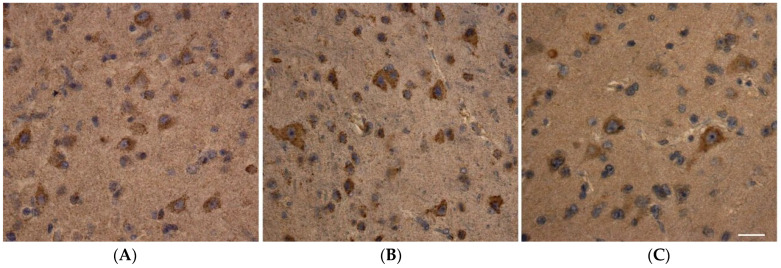 Figure 1
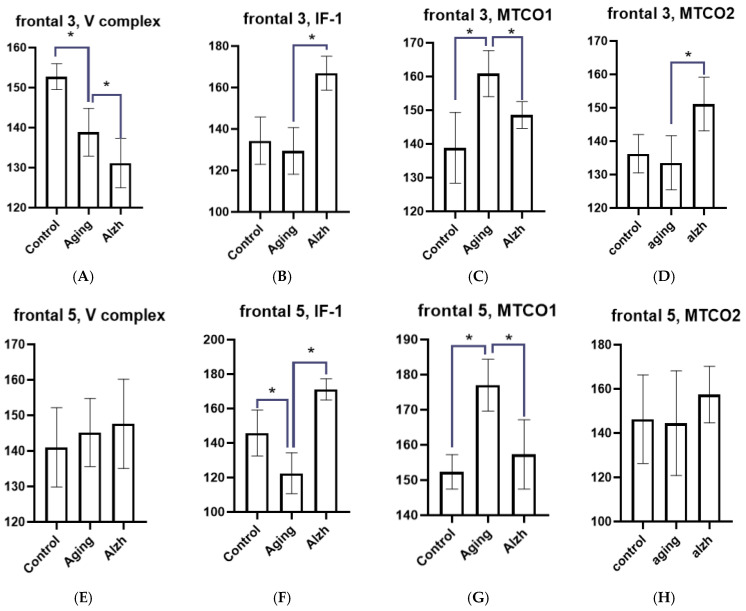 Figure 2
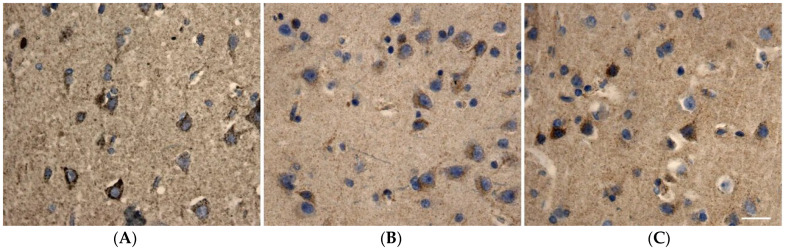 Figure 3
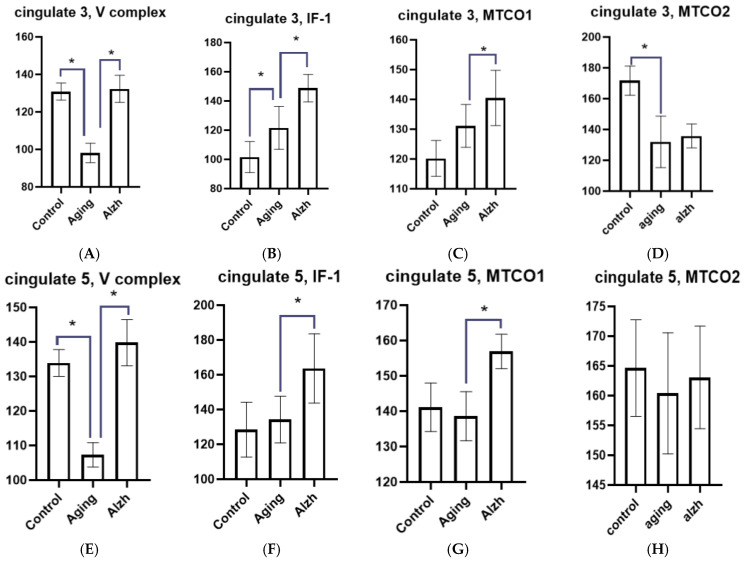 Figure 4
 Figure 5
 Figure 6
 Figure 7
 Figure 8
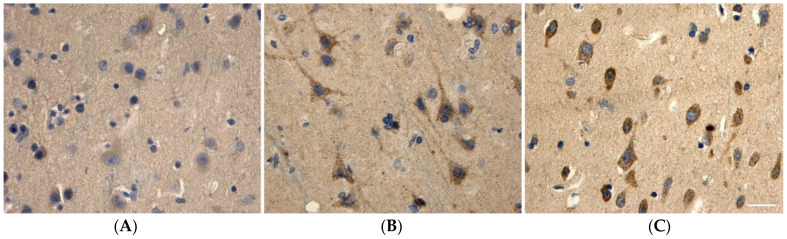 Figure 9
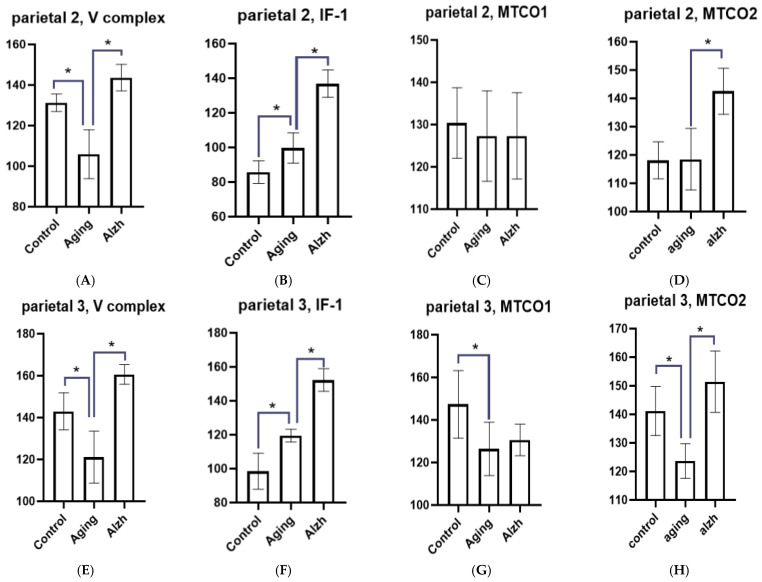 Figure 10
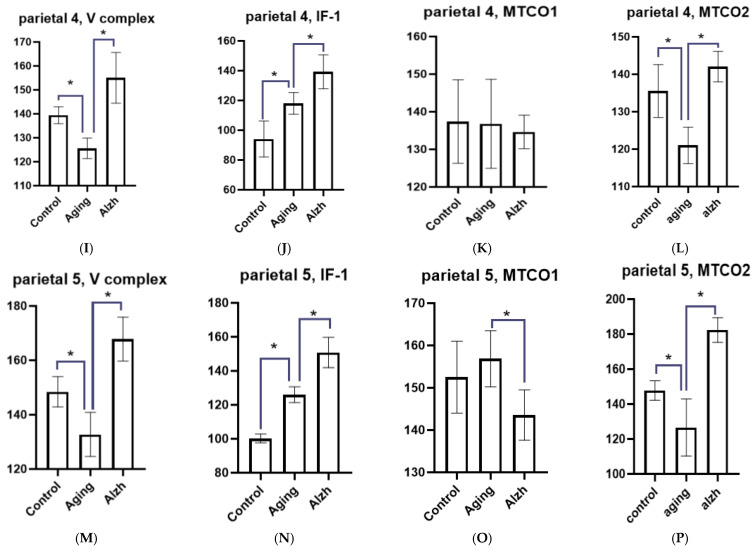 Figure 11
Peer Reviews
No public reviews on file for this paper yet. If you reviewed it on a platform where reviews are public (OpenReview, ICLR, NeurIPS, ICML), you can paste yours below so the community can read it here.
Videos
No videos yet. Explain this paper in a talk, walkthrough, or lecture? Add one.
Taxonomy
TopicsMitochondrial Function and Pathology · Alzheimer's disease research and treatments · Coenzyme Q10 studies and effects