Biological and Behavioural Features of the Stenogastrinae (Hover Wasps) in a Particular Evolutionary Route to Eusociality in the Family Vespidae
Stefano Turillazzi

TL;DR
This paper explores the unique eusocial traits of hover wasps (Stenogastrinae) and their distinct evolutionary path compared to other social wasps in the Vespidae family.
Contribution
The paper highlights the distinct phenotypic features of Stenogastrinae wasps, confirming their independent evolutionary lineage to eusociality.
Findings
Stenogastrinae represent an independent evolutionary lineage to eusociality in Vespidae.
The University of Florence's research reveals unique biological and behavioral traits in hover wasps.
Eusociality in Stenogastrinae differs from that in Polistinae and Vespinae subfamilies.
Abstract
Eusociality is a biological condition that we find in only three subfamilies of the family Vespidae: that of the Polistinae, that of the Vespinae and that of the Stenogastrinae. Recently, molecular data have confirmed that the evolutionary lineage of the latter is independent from that of the other two. The present work reports the biological, physiological and behavioural characteristics of the eusociality of hover wasps provided in large part, in more than forty years of research, by the group of the University of Florence. In the family of Vespidae there are examples of social evolution that are particular, compared to those found among other social insects. The characteristics of eusociality are, however, found only in three subfamilies, those of Stenogastrinae, Vespinae and Polistinae, but the problem of whether eusociality appeared one or two times has long been debated.…
Genes, proteins, chemicals, diseases, species, mutations and cell lines named across the full text — each resolved to its canonical identifier and authoritative record.
Click any figure to enlarge with its caption.
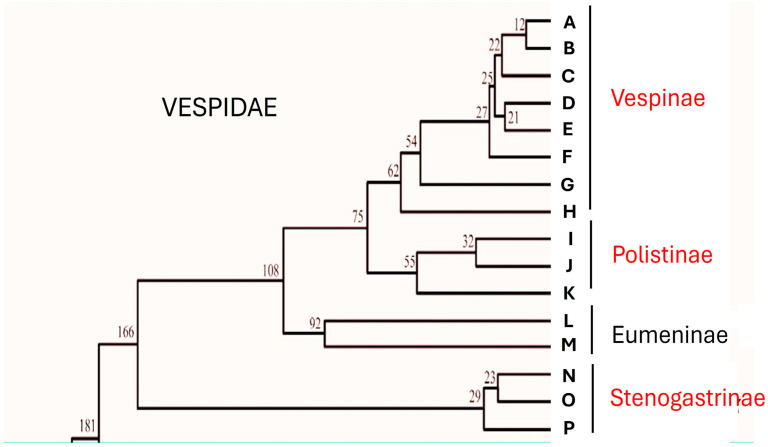 Figure 1
 Figure 2
 Figure 3
 Figure 4
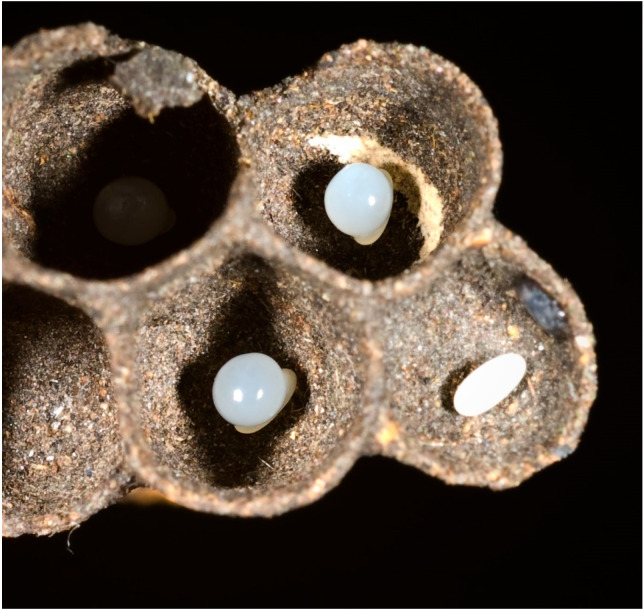 Figure 5
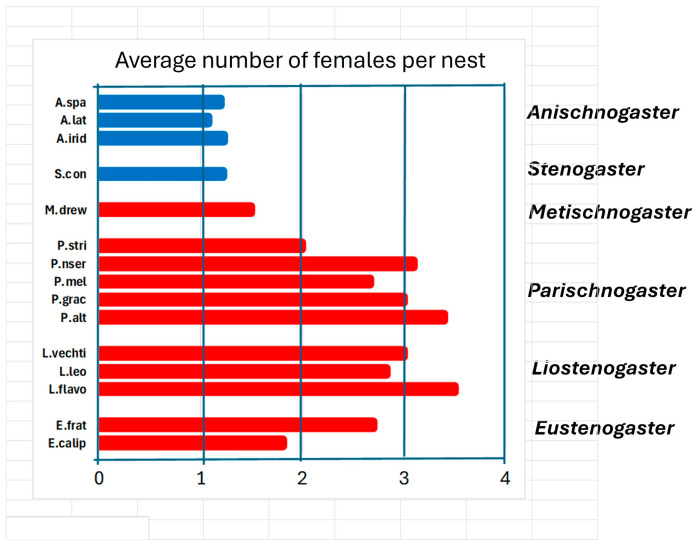 Figure 6
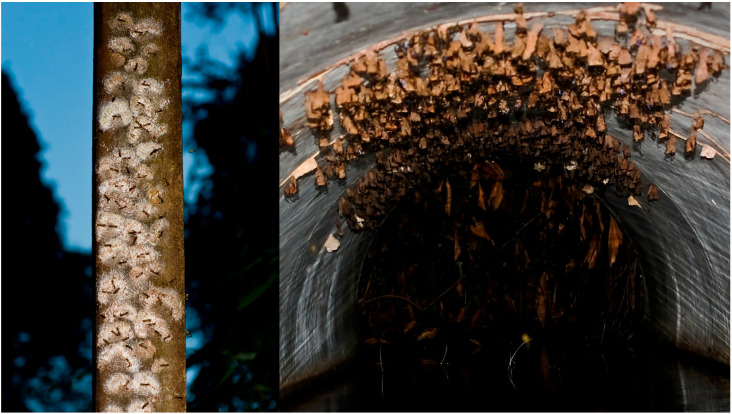 Figure 7
Peer Reviews
No public reviews on file for this paper yet. If you reviewed it on a platform where reviews are public (OpenReview, ICLR, NeurIPS, ICML), you can paste yours below so the community can read it here.
Videos
No videos yet. Explain this paper in a talk, walkthrough, or lecture? Add one.
Taxonomy
TopicsInsect and Arachnid Ecology and Behavior · Plant and animal studies · Fossil Insects in Amber