Escherichia coli Mono-Association Modulates Ionotropic Receptor-Dependent Behaviors in Drosophila melanogaster
Hazem Al Darwish, Mia Cacao, Tia Hart, Deep Patel, Sammi Russo, Safiyah Salama, Muqaddasa Tariq, Aina T. Ananda, Jennifer S. Sun

TL;DR
This study shows that Escherichia coli can change how fruit flies behave in response to sensory cues, and these changes depend on specific receptors in the flies' sensory systems.
Contribution
The study demonstrates that E. coli mono-association modulates sensory-driven behaviors in Drosophila, with effects mediated by ionotropic receptor pathways.
Findings
E. coli mono-association alters phototaxis and mechanosensory responses in Drosophila larvae.
In adult flies, E. coli increases attraction to fermentation cues and sucrose consumption, effects reduced in IR co-receptor mutants.
Microbial status influences sensory-driven behaviors through conserved IR pathways in Drosophila.
Abstract
Insects depend on their sense of smell and taste to find food, mates, and suitable places to reproduce. These behaviors influence ecological interactions and, in some species, contribute to the spread of insect-borne diseases and agricultural losses. Our work shows that microbial status influences insect sensory behaviors and that mono-association with Escherichia coli under controlled conditions alters behavioral outputs in flies. Several of these behavioral effects are reduced or absent in ionotropic receptor (IR) co-receptor mutants, including IR25a and IR76b, suggesting that IR pathways contribute to microbe-dependent behavioral modulation. Our findings further support a role for microbes in shaping insect sensory-driven behaviors. Understanding how bacteria influence insect sensory systems provides insight into host–microbe interactions and establishes a framework for future…
Genes, proteins, chemicals, diseases, species, mutations and cell lines named across the full text — each resolved to its canonical identifier and authoritative record.
Click any figure to enlarge with its caption.
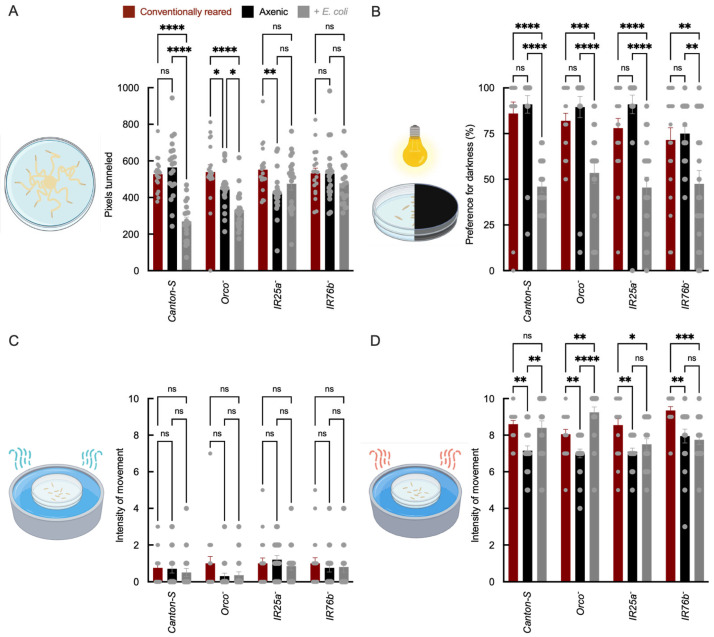 Figure 1
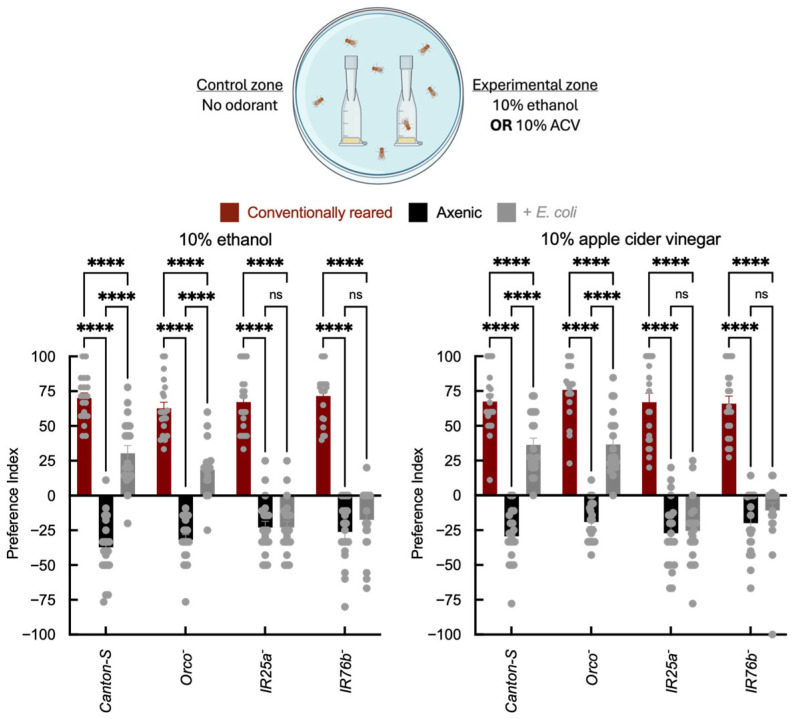 Figure 2
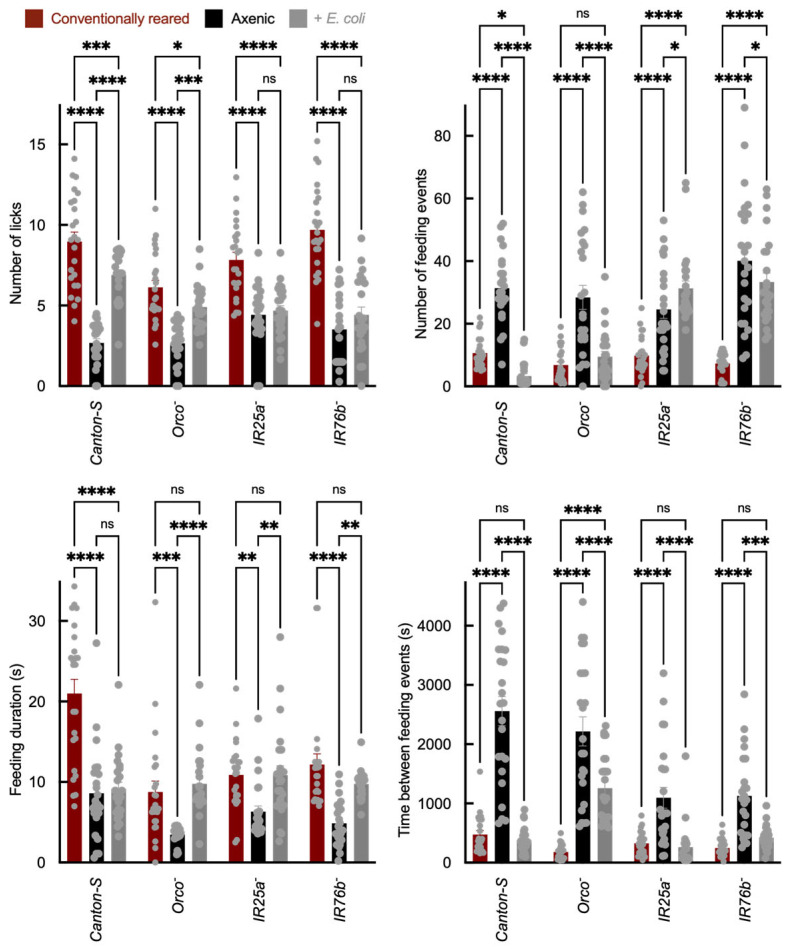 Figure 3
Peer Reviews
No public reviews on file for this paper yet. If you reviewed it on a platform where reviews are public (OpenReview, ICLR, NeurIPS, ICML), you can paste yours below so the community can read it here.
Videos
No videos yet. Explain this paper in a talk, walkthrough, or lecture? Add one.
Taxonomy
TopicsNeurobiology and Insect Physiology Research · Invertebrate Immune Response Mechanisms · Animal Behavior and Reproduction