High-Frame-Rate Echocardiography: A New Frontier in Noninvasive Functional Assessment
Fatemeh Mashayekhi, Fatemeh Shahbazi, Andressa Araujo Andrade Sousa, Miaomiao Liu, Jens-Uwe Voigt, Annette Caenen, Jan D’hooge

TL;DR
High-frame-rate echocardiography improves heart imaging by capturing rapid events, enabling better diagnosis of cardiovascular disorders.
Contribution
This review introduces high-frame-rate ultrasound as a novel method for detailed cardiac motion and flow analysis.
Findings
HFR imaging captures rapid mechanical and hemodynamic events missed by conventional systems.
Clinical studies show improved myocardial motion tracking and deformation parameters with HFR.
HFR enables detailed visualization of intracardiac flow and complex hemodynamic patterns.
Abstract
High-frame-rate (HFR) ultrasound imaging enables the acquisition of up to several thousand frames per second, substantially improving the temporal resolution of echocardiography. This technical advancement allows visualization of rapid mechanical and hemodynamic events that are not captured by conventional systems. In this review, we summarize the methods used to achieve HFR acquisition and examine their application across three principal domains: deformation imaging, mechanical wave imaging, and blood flow imaging. In deformation imaging, clinical studies have demonstrated higher feasibility for myocardial motion tracking and more reliable temporal deformation parameters. Mechanical wave imaging has emerged as a complementary domain, using HFR acquisition to capture transient mechanical events and estimate regional myocardial stiffness under both physiological and pathological…
Genes, proteins, chemicals, diseases, species, mutations and cell lines named across the full text — each resolved to its canonical identifier and authoritative record.
Click any figure to enlarge with its caption.
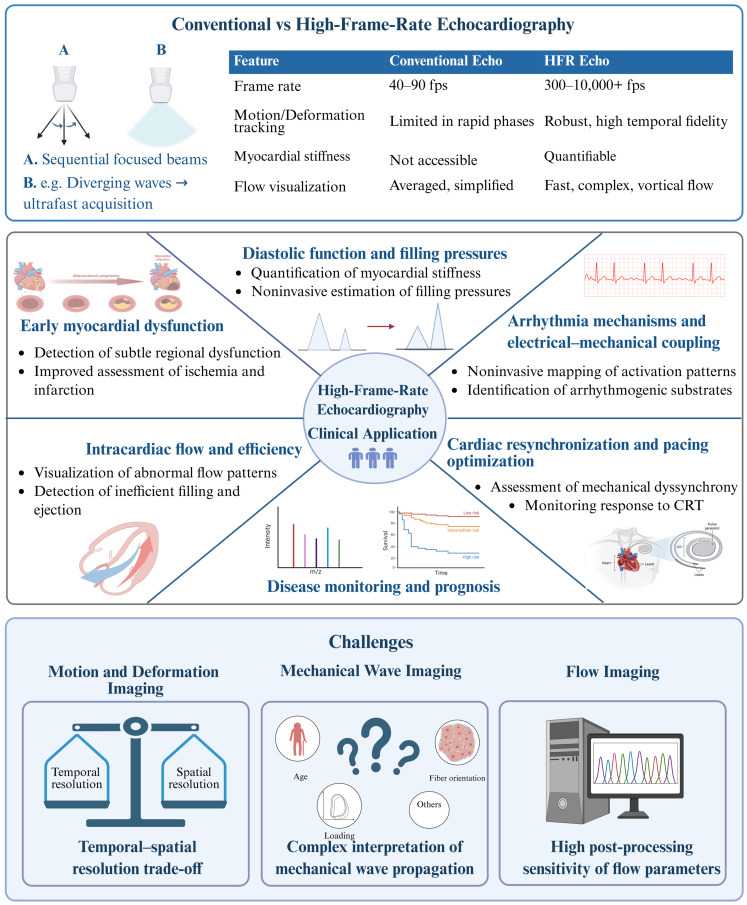 Figure 1
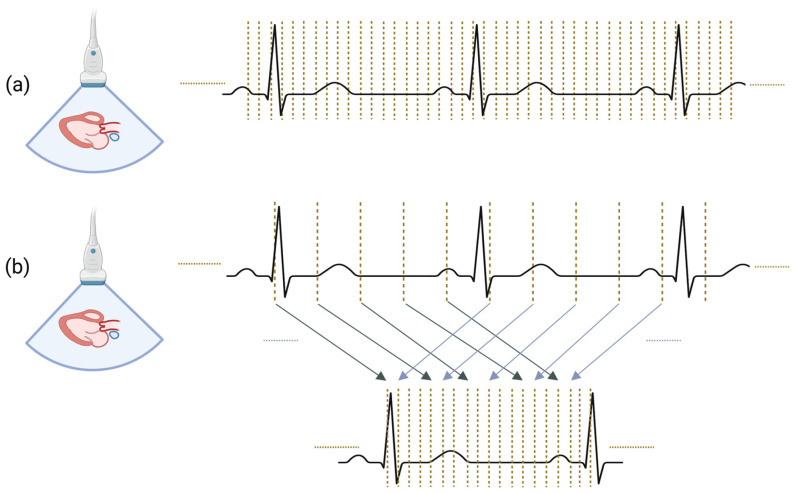 Figure 2
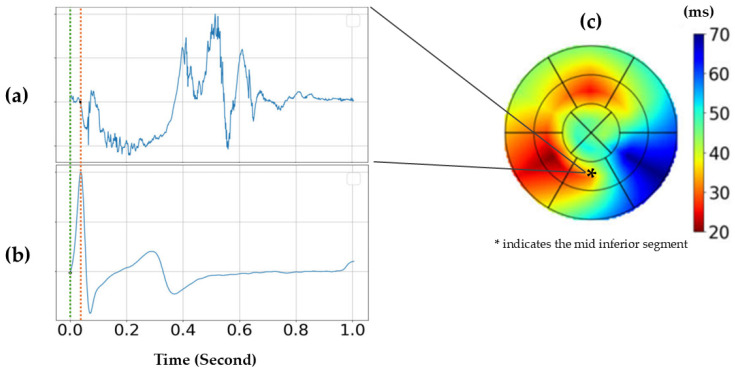 Figure 3
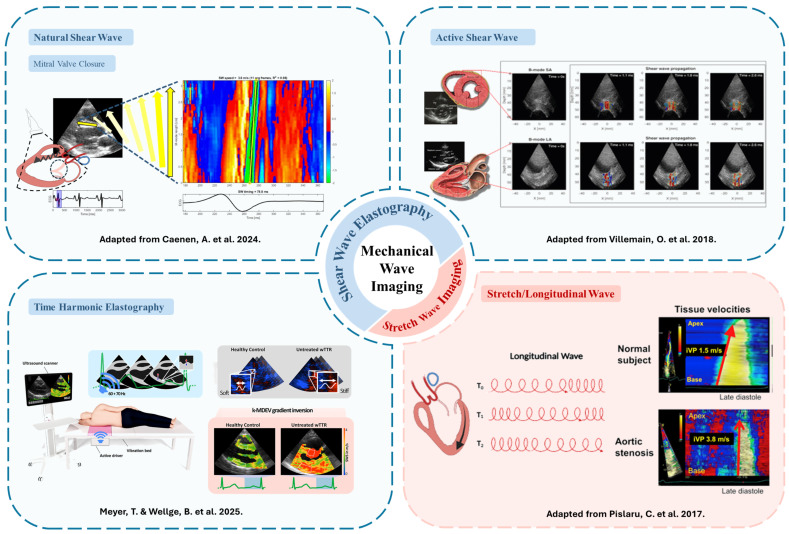 Figure 4
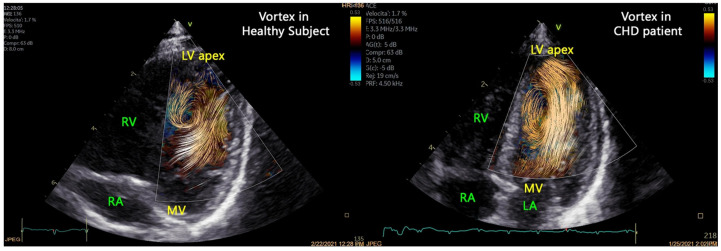 Figure 5
Peer Reviews
No public reviews on file for this paper yet. If you reviewed it on a platform where reviews are public (OpenReview, ICLR, NeurIPS, ICML), you can paste yours below so the community can read it here.
Videos
No videos yet. Explain this paper in a talk, walkthrough, or lecture? Add one.
Taxonomy
TopicsCardiovascular Function and Risk Factors · Ultrasound Imaging and Elastography · Cardiovascular Health and Disease Prevention