EDIL3/Del-1-Dependent Induction of AMPKβ Phosphorylation Regulates the Progression of Mesenchymal Stem-like Triple-Negative Breast Cancer
Seol-Hwa Jeong, Soo Jung Lee, In Hee Lee, Jeeyeon Lee, Byeongju Kang, Joon Suk Moon, Ho Yong Park, Ji Young Park, Nora Jee Young Park, Eun Ae Kim, Jieun Kang, Yee Soo Chae

TL;DR
This study shows that EDIL3/Del-1 promotes aggressive triple-negative breast cancer by activating AMPKβ, suggesting AMPKβ as a potential treatment target.
Contribution
The study identifies a novel mechanism by which Del-1 promotes TNBC through AMPKβ phosphorylation and suggests AMPKβ as a therapeutic target.
Findings
Del-1 and AMPKβ are enriched in mesenchymal stem-like TNBC cells and promote tumor growth and invasion.
Del-1 deletion reduces AMPKβ expression and suppresses tumor-promoting behaviors in TNBC cells.
High AMPKβ expression is linked to poorer disease-free survival in early-stage TNBC patients.
Abstract
Triple-negative breast cancer (TNBC) lacks effective targeted therapies, and the mechanisms by which developmental endothelial locus-1 (EDIL3/Del-1) promotes TNBC remain incompletely defined. We profiled Del-1 and AMPK subunits in TNBC cell lines by RT-PCR and immunoblotting, performed functional assays in CRISPR/Cas9 Del-1 knockout and AMPKβ-manipulated cells, and evaluated AMPKβ in early-stage TNBC tumors using tissue microarrays (TMA) (immunohistochemistry; n = 100) and AMPKβ2 mRNA quantification. Del-1 and AMPKβ were enriched in TNBC cells, most prominently in the mesenchymal stem-like subtype, whereas AMPKα levels were relatively stable. Increased Del-1 and activated AMPKβ enhanced proliferation and invasion, while Del-1 deletion reduced AMPKβ expression and suppressed tumor-promoting phenotypes. Mechanistically, Del-1 increased AMPKβ phosphorylation at serine 108, and a…
Genes, proteins, chemicals, diseases, species, mutations and cell lines named across the full text — each resolved to its canonical identifier and authoritative record.
Click any figure to enlarge with its caption.
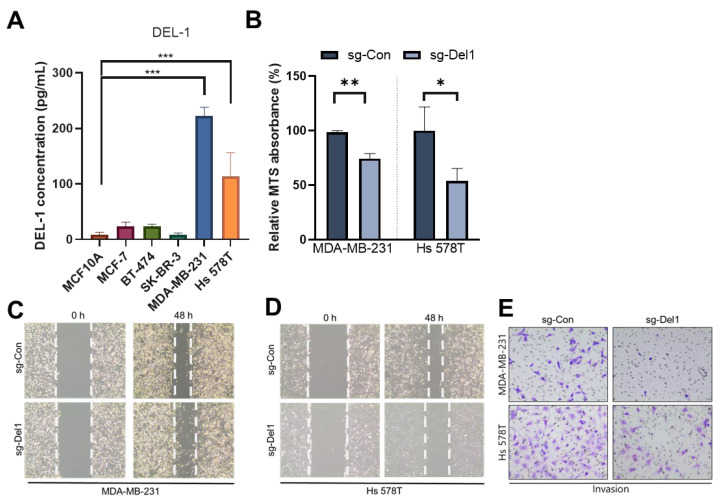 Figure 1
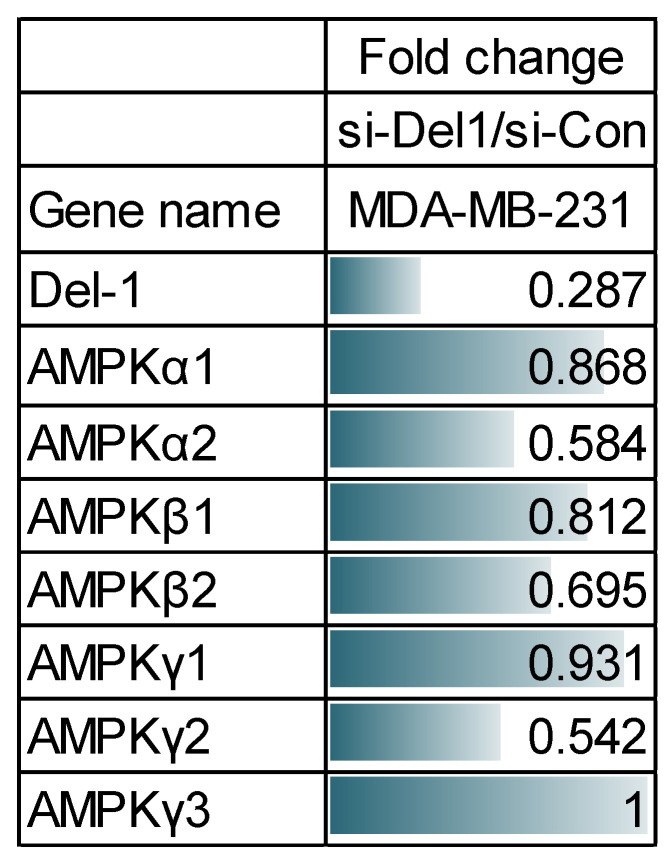 Figure 2
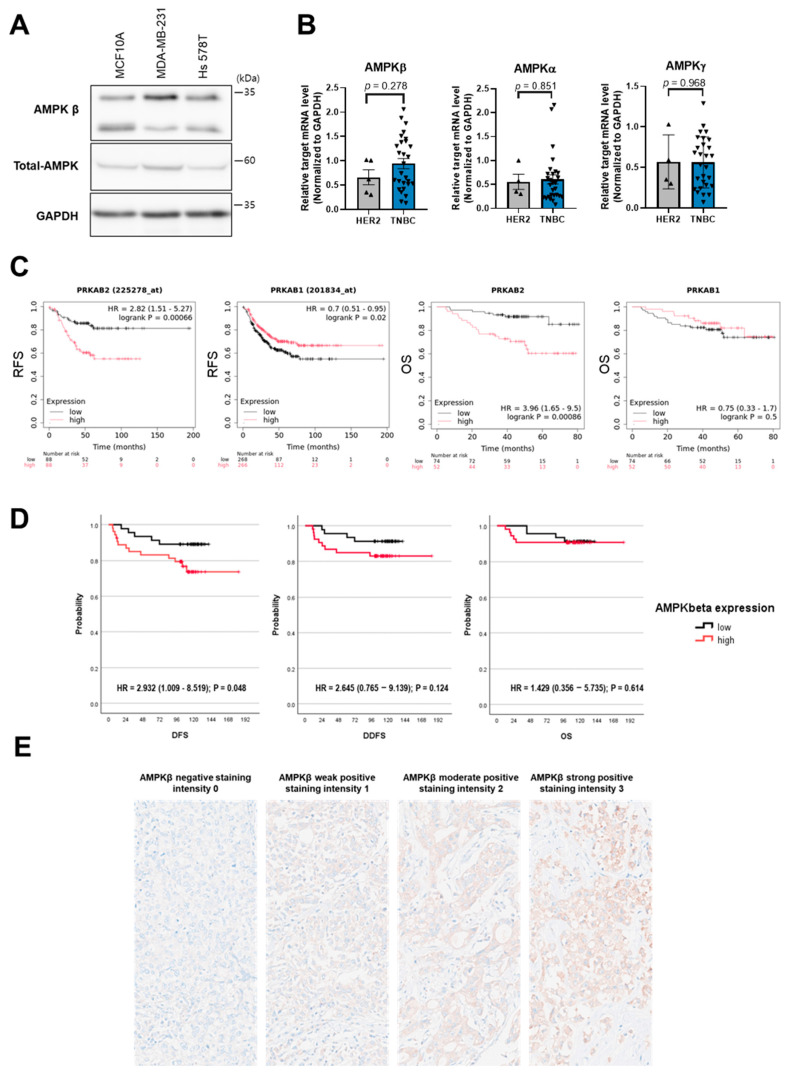 Figure 3
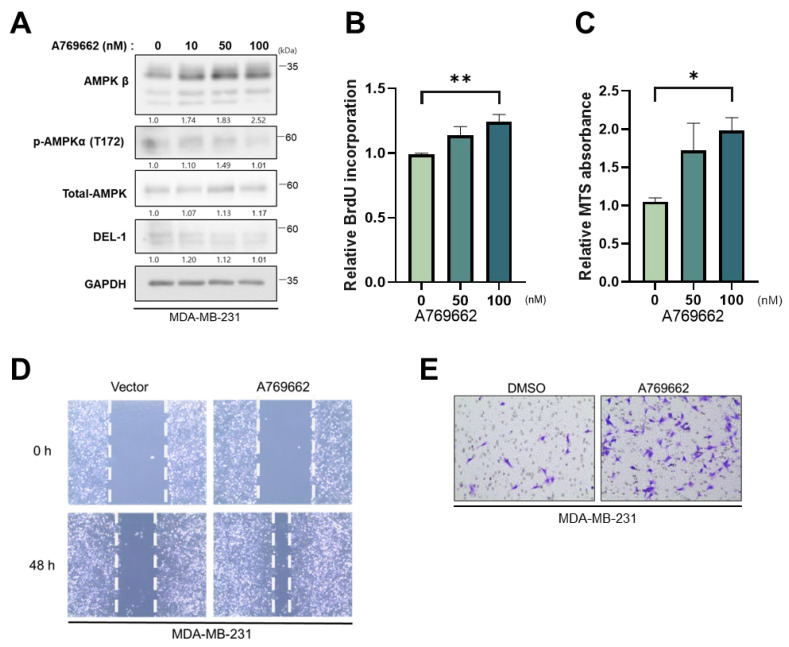 Figure 4
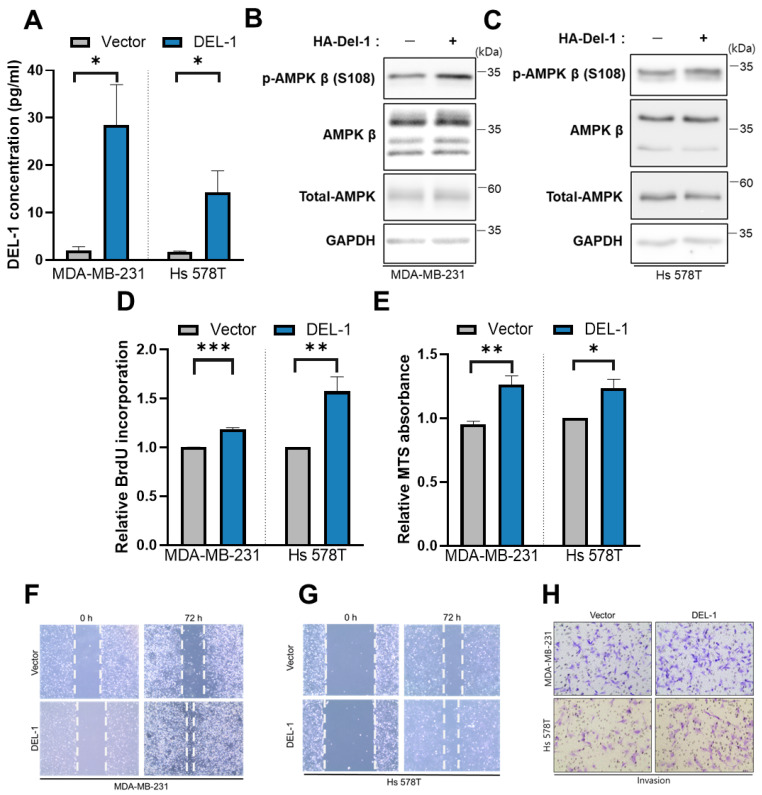 Figure 5
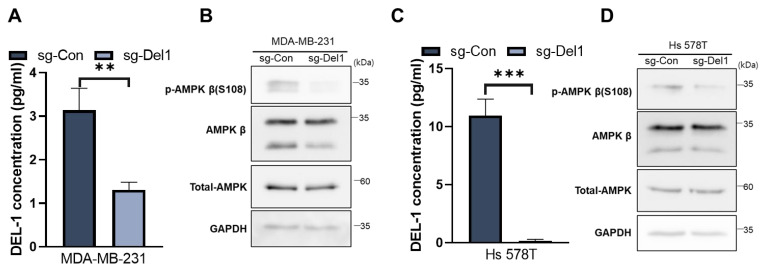 Figure 6
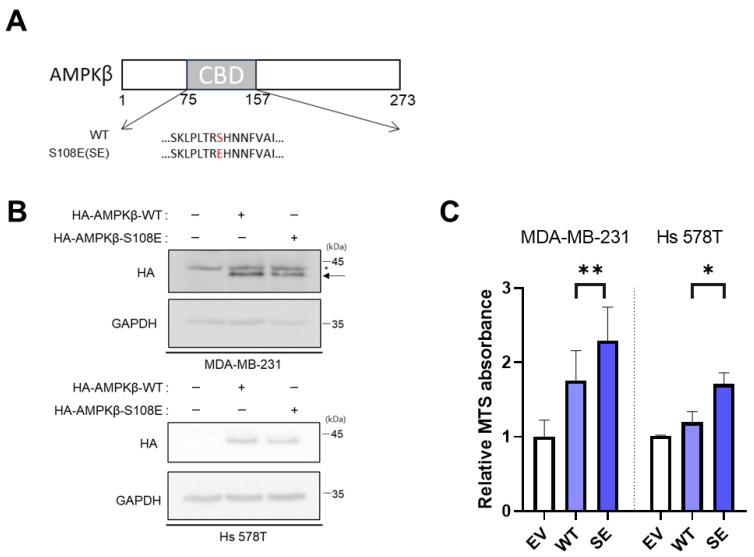 Figure 7
Peer Reviews
No public reviews on file for this paper yet. If you reviewed it on a platform where reviews are public (OpenReview, ICLR, NeurIPS, ICML), you can paste yours below so the community can read it here.
Videos
No videos yet. Explain this paper in a talk, walkthrough, or lecture? Add one.
Taxonomy
TopicsMetabolism, Diabetes, and Cancer · Cancer, Hypoxia, and Metabolism · Cancer Risks and Factors