Attractiveness of Green Stink Bugs Nezara spp. to Ultraviolet-Based Multichromatic Light Traps: Synergistic Effects of Ultraviolet and Blue Light
Nobuyuki Endo, Mantaro Hironaka, Yoshiyuki Honda, Hiroaki Takeuchi, Kazuki Shibuya

TL;DR
Combining ultraviolet and blue light attracts more green stink bugs than ultraviolet alone, improving pest control strategies.
Contribution
The study identifies blue light as a synergistic enhancer of ultraviolet light attractiveness for Nezara stink bugs.
Findings
Traps combining UV and blue light captured three times more Nezara bugs than UV-only traps.
Blue light alone had weak attractiveness, but enhanced UV light's effect when combined.
Orange and red light combinations with UV did not improve capture rates.
Abstract
Many light-attracting insects are attracted to ultraviolet (UV) light. However, certain stink bugs, including the Nezara species, show a stronger preference for light sources combining UV with green light than for UV light alone. To investigate this, we tested whether adding visible light wavelengths to UV light enhanced capture efficiency. We compared the number of Nezara bugs captured in traps combining four visible light sources (blue, green, orange, and red) with UV light against traps using only UV light. Traps combining UV and blue light captured approximately three times more stink bugs than UV-only traps. Interestingly, blue light alone attracted very few bugs, indicating that it enhances UV light attraction rather than acting independently. In contrast, combining UV with orange or red light did not increase capture rates relative to UV-only traps, indicating that these…
Genes, proteins, chemicals, diseases, species, mutations and cell lines named across the full text — each resolved to its canonical identifier and authoritative record.
Click any figure to enlarge with its caption.
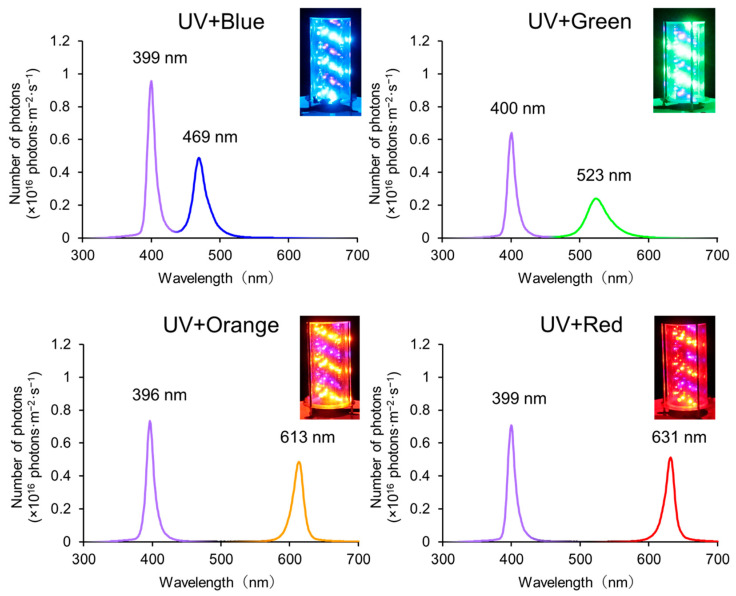 Figure 1
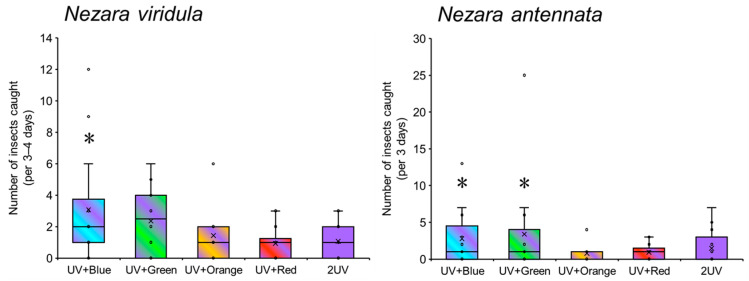 Figure 2
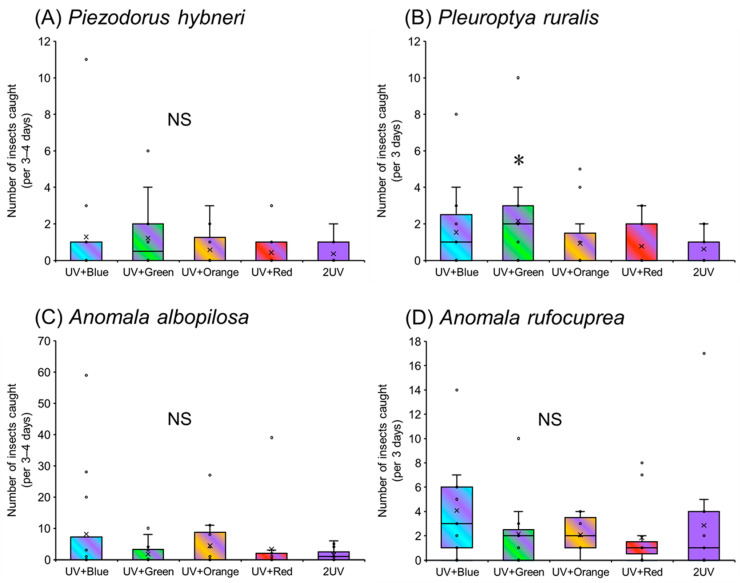 Figure 3
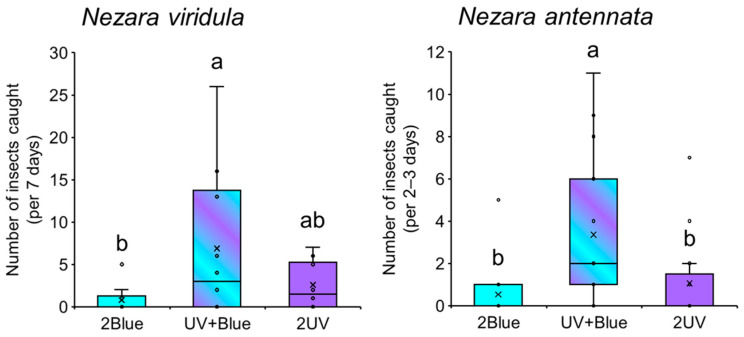 Figure 4
- —JSPS KAKENHI
Peer Reviews
No public reviews on file for this paper yet. If you reviewed it on a platform where reviews are public (OpenReview, ICLR, NeurIPS, ICML), you can paste yours below so the community can read it here.
Videos
No videos yet. Explain this paper in a talk, walkthrough, or lecture? Add one.
Taxonomy
TopicsHemiptera Insect Studies · Insect-Plant Interactions and Control · Beetle Biology and Toxicology Studies
1. Introduction
The southern green stink bug Nezara viridula (L.) (Hemiptera: Pentatomidae) is a cosmopolitan pest found in tropical and temperate locations across the Americas, Africa, Asia, Australia, and Europe, where it imposes considerable economic impacts on numerous crops worldwide [1,2]. In Japan, it primarily damages soybean and rice crops [3,4]. In the past two decades, its range has expanded northward in Japan, possibly because of global warming [5,6,7]. At the northern limit of its distribution range, N. viridula coexists with a congeneric species, the oriental green stink bug Nezara antennata Scott [5,6,7], which is prevalent across Japan [8]. In these sympatric distribution areas, N. viridula often replaces N. antennata [3,6,9]. This phenomenon has attracted considerable ecological interest.
Throughout Japan, automatic daily monitoring light traps are used to monitor the occurrence of pest insects, such as stink bugs and plant hoppers [10,11,12,13]. Nezara bugs exhibit positive phototaxis, making light traps effective for monitoring their population dynamics [14]. Incandescent or mercury lamps are commonly used as light sources in these traps. However, many countries have instituted prohibitions on the production of mercury lamps, reflecting a global trend toward their elimination [15]. In addition, many manufacturers in Japan have already discontinued the production of incandescent lamps because of their poor energy efficiency. The anticipated use of light-emitting diodes (LEDs) as an alternative light source is due to their energy efficiency and extended lifespan [10].
The attractiveness of light to insects is directly affected by the wavelength composition of the light source. Many nocturnal insects are attracted to light sources that emit high levels of ultraviolet (UV) light [16,17]. Nezara bugs are also more attracted to UV-rich mercury lamps than to incandescent ones [18]. Furthermore, in laboratory preference experiments, N. viridula is more strongly attracted to UV light than to visible light, with no significant differences observed between adult males and females in their responsiveness to these wavelengths [19]. These results indicate that UV light effectively attracts Nezara bugs. Meanwhile, our previous research revealed that combining green light, which is hardly attractive on its own, with UV light synergistically enhances insect attraction [20].
Many insects, such as those in the order Hemiptera, possess compounds with three types of photoreceptor cells that respond to UV, blue, and green wavelengths [21,22]. For adult N. viridula, physiological studies using electroretinography (ERG) have shown retinal responses to wavelengths ranging from 320 to 620 nm, suggesting the presence of three photoreceptor types [19]. In contrast, behavioral and modeling studies on the brown marmorated stink bug Halyomorpha halys (Stål), a close relative of N. viridula, have proposed a dichromatic vision system comprising UV and green photoreceptors [23]. While direct molecular or histological evidence to confirm whether N. viridula possesses a dichromatic or trichromatic system remains lacking, field-based behavioral evaluations are essential to determine the functional significance of visible light, particularly blue light, in their attraction.
Although the attractiveness of monochromatic light across various wavelengths has been investigated in numerous species, few studies have examined the attractiveness of light sources combining multiple wavelengths. To address this gap, we evaluated the effects of combinations of UV and other visible light sources—including blue, green, orange, and red wavelengths—on the attractiveness of insect species under field conditions, primarily focusing on Nezara bugs. Specifically, this study aimed to determine which wavelength combinations significantly enhance the inherent attractiveness of UV light and to identify potential synergistic effects across the visible spectrum. These findings aim to provide a functional basis for developing wavelength-optimized light traps to support effective pest control strategies.
2. Materials and Methods
2.1. LED Traps
A commercially available portable light trap (Eco-Chu Trap, Konan Shisetsu Kanri, Okinawa, Japan) was used to modify the light source. Light sources with 42 LEDs were used in all experiments. Bullet-type UV-LED bulbs (NS395L-ERLO; 395 nm, 20 mA, Nitride Semiconductors, Tokushima, Japan), blue LED bulbs (OSB56P5111A; 470 nm, 10 mA, OptoSupply, Hong Kong, China), green LED bulbs (NEPG510S; 525 nm, 20 mA, Nichia, Tokushima, Japan), orange LED bulbs (OOS5OAA5111A; 605 nm, 20 mA, OptoSupply, Hong Kong, China) and red LED bulbs (OSR5CA5111A-WY; 625 nm, 18 mA, OptoSupply, Hong Kong, China) were used. The LEDs were positioned vertically on a stainless-steel cylinder (diameter, 4.8 cm; height, 20 cm). Light sources were organized into eight rows along the circumference. Each row consisted of five or six LEDs spaced at 3.6 cm intervals. Adjacent LEDs were arranged in a left-handed spiral (elevation angle, 63°; interval, approximately 2.0 cm). When utilizing both UV and other LEDs, the arrangement involved alternating the LEDs in a linear configuration. The cylinder containing LEDs was encased in a transparent acrylic cylinder (diameter, 9.8 cm; height, 20 cm).
The light source was mounted on a funnel (diameter, 31 cm; height, 24 cm), with the lower part of the light source situated approximately 100 cm above the ground. The trap was designed such that insects attracted to the light source would fall through the funnel and into a cylindrical chamber (diameter, 23 cm; height, 20 cm) positioned directly beneath it. A dimethyl-dichloro-vinyl-phosphate (DDVP) plate containing 10.7 g dichlorvos (Bapona Earth Chemical, Tokyo, Japan) was placed inside the chamber to kill the captured insects. The legs of the traps were anchored to the ground with steel stakes. The lights were activated at 18:00 and deactivated at 6:00 the following day. The lights were powered by rechargeable car batteries (N-40B19R/SB; DC 12V, 28 Ah, Panasonic, Osaka, Japan). The configuration of the light source used in this study is shown in Figure 1. For a photograph of the entire trap assembly, see Endo et al. [20].
2.2. Emission Spectra of Combined Light
The spectral intensity of combinations of UV and other visible light was measured using a high-speed spectrometer (HSU-100S; Asahi Spectra, Tokyo, Japan) in a controlled dark environment. An attached sensor fiber was placed 50 cm in front of the light source. The measurement was performed five times, with the light source rotated for each instance to minimize angular effects, and the average was taken as the representative value. The emission spectra of the UV-based multichromatic lights are shown in Figure 1. The UV- and blue-LED emission spectra exhibited single peaks at wavelengths of 399 and 469 nm, respectively. The calculated light intensities for the UV (330–425 nm) and blue (426–530 nm) regions were 1.55 × 10^17^ and 1.41 × 10^17^ photons m^−2^ s^−1^, respectively. The UV and green LED emission spectra exhibited single peaks at wavelengths of 400 and 523 nm, respectively. The calculated light intensities for the UV (330–450 nm) and green (451–600 nm) regions were 1.07 × 10^17^ and 1.05 × 10^17^ photons m^−2^ s^−1^, respectively. The UV- and orange-LED emission spectra exhibited single peaks at wavelengths of 396 and 613 nm, respectively. The calculated light intensities for the UV (330–450 nm) and orange (550–700 nm) regions were 1.23 × 10^17^ and 1.08 × 10^17^ photons m^−2^ s^−1^, respectively. The UV- and red-LED emission spectra exhibit single peaks at wavelengths of 399 and 631 nm, respectively. The calculated light intensities for the UV (330–450 nm) and red (550–700 nm) regions were 1.16 × 10^17^ and 1.07 × 10^17^ photons m^−2^ s^−1^, respectively. The light intensities of the visible LEDs ranged from 87.7 to 98.0% of UV, demonstrating near equivalence to UV levels.
2.3. Field Evaluation of Attractiveness to Light Sources
Field experiments were conducted at two locations in Japan: (1) Central Region Agricultural Research Center (CARC), Hokuriku Research Station (37°07′00″ N, 138°16′23″ E) in Niigata; (2) Yamaguchi Prefectural Agriculture & Forestry General Technology Center (YPATC) (34°09′37″ N, 131°29′47″ E) in Yamaguchi. The distribution of Nezara spp. differs across various regions in Japan. Only N. antennata has been found at Niigata. Both N. antennata and N. viridula have been identified in Yamaguchi; however, only N. viridula was caught at this location in our experiments.
2.3.1. Experiment 1: Attractiveness of UV-Based Multichromatic Lights
Field experiments assessing the attractiveness of multichromatic lights were conducted from 30 July to 7 September 2019, near a soybean field at the CARC in Niigata and from 26 August to 16 October 2024, near a soybean field at the YPATC in Yamaguchi.
Light sources comprised multichromatic light traps featuring 21 UV-LEDs paired with 21 blue-LEDs, 21 green-LEDs, 21 orange-LEDs, 21 red-LEDs. A monochromatic light trap with 42 UV-LEDs was used as the positive control. The five LED traps were randomly positioned within the soybean field, with a minimum spacing of 20 m between each trap. Although insects other than Nezara bugs were captured in the light traps, the funnel-type traps used for soybean pest monitoring were designed to target large insects (>1 cm). Therefore, we restricted our counts to insects that met these conditions. Statistical analyses were performed on species with a total capture exceeding 50 individuals across the five traps. The species included Nezara bugs, the heteropteran bug Piezodorus hybneri (Gmelin), the lepidopteran moth Pleuroptya ruralis (Scopoli), and the coleopteran beetles Anomala albopilosa (Hope) and A. rufocuprea Motschulsky. The insects captured in the traps were counted for each species every 3 days in Niigata and every 3–4 days in Yamaguchi. The traps were randomly replaced on a weekly basis to minimize the effect of trap location.
2.3.2. Experiment 2: Attractiveness of Monochromatic and Combined UV and Blue Light
Field experiments were conducted to evaluate the attractiveness of combinations of UV and blue LEDs from 20 July to 29 August 2022, near a soybean field at the CARC in Niigata and from 25 July to 3 October 2023, near a soybean field at the YPATC in Yamaguchi. Light traps with 42 UV-LEDs, 42 blue-LEDs, and a combination of 21 UV-LEDs and 21 blue-LEDs were used as light sources. The three LED traps were randomly placed within the soybean field, with a minimum spacing of 20 m between each trap. The number of Nezara bugs captured in the traps was counted every 2–3 days in Niigata and every 7 days in Yamaguchi. Traps were randomly replaced on a weekly basis.
2.4. Statistical Analysis
In Experiment 1, the attractiveness of each multichromatic light source was compared with that of UV light using the Wilcoxon matched-pair signed-rank test. In Experiment 2, the effect of light source on trap catches was analyzed using the Friedman test, followed by the Wilcoxon signed-rank test with Bonferroni correction for multiple comparisons. To account for the repeated sampling of the same traps over time, we paired the data by each specific sampling occasion (i.e., each 3–4 day interval). This approach effectively controls for temporal fluctuations in insect activity and environmental conditions (e.g., temperature, moon phase) by focusing on the relative performance of traps within the same time-window. Additionally, the weekly randomization of trap locations was employed to minimize spatial bias, effectively treating the location effect as a controlled variable. Statistical analyses were performed using R version 4.5.1 [24].
3. Results
3.1. Attractiveness of UV-Based Multichromatic Light Sources to Nezara Bugs
The effectiveness of the UV-based multichromatic light traps in attracting Nezara bugs differed based on the specific light combinations employed (Figure 2, left). Traps combining UV and blue light resulted in a significantly greater number of N. viridula captured than the monochromatic UV light trap (Wilcoxon signed-rank test; p < 0.05) (Figure 2 left). Although the UV and green light trap captured more than twice the number of bugs as the monochromatic UV light trap, this difference represented only a marginal trend and was not statistically significant (Wilcoxon signed-rank test, p = 0.070). The attractiveness of the traps combining UV light and either orange or red light was similar to that of the monochromatic UV light trap (Wilcoxon signed-rank test; p > 0.05). The response of N. antennata to the UV-based multichromatic light traps mirrored that of N. viridula in overall pattern. Specifically, the UV and blue or green light traps captured significantly more N. antennata than the monochromatic UV light trap (Wilcoxon signed-rank test, p < 0.05) (Figure 2, right). However, the attractiveness of the traps combining UV and orange or red light was not significantly different from that of the monochromatic UV light trap (Wilcoxon signed-rank test, p > 0.05). The number captured was approximately half that of the monochromatic UV light trap, indicating that these color combinations had no positive effect.
3.2. Attractiveness of UV-Based Multichromatic Light Sources to Other Species
Heteropteran bugs P. hybneri were captured in the traps combining UV and blue or green light at more than three times the rate compared with those captured in the monochromatic UV light trap; however, no significant differences were observed between them (Wilcoxon signed-rank test; p > 0.05) (Figure 3A). Many lepidopteran moths P. ruralis were caught in both the UV paired with blue or green light traps (Figure 3B). Notably, traps combining UV and green light captured more than 3.5 times the number of moths than the monochromatic UV light trap (Wilcoxon signed-rank test; p < 0.05). Coleopteran beetles A. albopilosa and A. rufocuprea were predominantly captured in traps combining UV and blue light; however, no significant differences were observed between any of the combined and monochromatic UV light traps (Wilcoxon signed-rank test; p > 0.05) (Figure 3C,D).
3.3. Attractiveness of Monochromatic- and Combined-UV and Blue Light
The trap combining UV and blue light captured 8.6 times more N. viridula than that captured in the monochromatic blue light trap (Wilcoxon signed-rank test with Bonferroni correction; p < 0.05) (Figure 4, left). The monochromatic blue light trap captured fewer bugs than the monochromatic UV light trap, although this difference was not statistically significant (Wilcoxon signed-rank test with Bonferroni correction, p > 0.05). This indicates limited attractiveness. Similar results were observed for N. antennata, with the majority captured in the combined light trap, which was 6.3 times more effective than the monochromatic blue light trap and 3.2 times more effective than the monochromatic UV light trap (Figure 4, right). These results suggest that the trap combining UV and blue light enhances attractiveness to Nezara bugs in a synergistic rather than additive manner.
4. Discussion
Our field bioassays demonstrated that Nezara bugs were more strongly attracted to a combination of UV and blue light than to monochromatic UV light. This effect is comparable to that observed with the combination of UV and green light, which has been confirmed to exert a synergistic effect [20]. In contrast, the attractiveness of orange and red light paired with UV light was equivalent to or less than that of monochromatic UV light, thereby indicating that these color combinations do not enhance attraction. Furthermore, our field bioassays indicated that blue light alone tended to be less attractive to Nezara bugs than UV light. This is consistent with laboratory multiple-choice experiments using LEDs of various wavelengths, which revealed that no specific wavelength-dependent behaviors have been observed in N. viridula; instead, there is a clear hierarchy of attraction where UV is the most attractive, followed by blue, green, and then orange, with the attractiveness of UV being overwhelmingly dominant [19]. These findings suggest that while blue light is not highly attractive on its own, it enhances the attractiveness of UV light when combined with it.
Many insects are strongly attracted to UV light [16,17], while a strong attraction to blue light has also been reported in several species. Most lepidopteran moths are strongly attracted to short-wavelength light, particularly within the visible spectrum, where they are strongly attracted to blue light [25]. In the fall armyworm Spodoptera frugiperda (JE Smith) (Lepidoptera: Noctuidae), adult males are more strongly attracted to blue light than to UV light [26]. The diurnal western flower thrip Frankliniella occidentalis (Pergande) (Thysanoptera: Thripidae) is more strongly attracted to blue light than to other light sources, including UV light [27,28]. The brown marmorated stink bug Halyomorpha halys (Stål) (Hemiptera: Pentatomidae) exhibits a strong attraction to UV and blue light [29]. Furthermore, laboratory choice assays have indicated a preference for a combination of UV and blue light over UV light alone [30]. Conversely, field evaluations that incorporated pheromones did not reveal any advantage for insects when exposed to a combination of UV and blue light than to UV light alone [30]. This discrepancy may arise from the presence of pheromones or differences in experimental scales. Our study, conducted in a natural field setting without chemical lures, clearly demonstrates that the addition of blue light significantly enhances the attractiveness of UV light. To the best of our knowledge, this is the first field-based evidence of a clear synergistic increase in attractiveness resulting from combining blue light with other wavelengths in such agricultural pest species.
The precise mechanism by which the combination of various wavelengths enhances attractiveness remains unclear. However, distinct wavelengths elicit specific behaviors in certain diurnal hemipterans. UV radiation triggers migratory behaviors associated with flight initiation, migration, and dispersal [31,32,33], whereas green-yellow light promotes settling on host plants [31,32,33,34]. Furthermore, an antagonistic relationship between blue and green light has been observed in T. vaporariorum [33,35] and F. occidentalis [28]. Although such wavelength-specific behaviors have not been confirmed in N. viridula, the synergistic effects observed in our study suggest that Nezara bugs may exhibit complex behavioral responses to certain wavelength combinations, potentially improving capture efficiency. Further investigation is required to elucidate the mechanisms by which blue and green light, each displaying limited attractiveness on its own, enhance the attractiveness of UV light.
The attractiveness of combined-color light sources differs across species. In Coleopteran beetles, specifically A. albopilosa and A. rufocuprea, no significant difference in attraction is observed between UV-based multichromatic and UV light, indicating that UV photoreceptors predominantly influence light attraction in these species. In addition to Nezara bugs, the bean webworm P. ruralis (Lepidoptera) exhibits significantly higher attraction to a combination of UV and green light than to monochromatic UV light. The attractiveness of combined-color light to lepidopteran insects has also been studied in the oriental armyworm Mythimna separata (Walker), which demonstrates a stronger attraction to monochromatic green light (520 nm) than to a combination of two or three LEDs with varying wavelengths (400, 450, and 520 nm) [36]. Although the attractiveness of monochromatic green light remains unexplored, the enhanced attraction to combined-color light observed in P. ruralis suggests that a similar effect may be present in related moth species and in nocturnal insects of other orders.
Light traps that exploit insect-positive phototaxis have been employed to monitor numerous pest species [10,37]. Light sources attract not only pests but also their natural enemies and non-target insects [38,39,40], necessitating the development of light sources that effectively attract target species. The observed variations in attractiveness across different light combinations highlight the importance of spectral composition in insect attraction and may be leveraged to develop more effective and species-specific light traps. Furthermore, examining the mechanisms underlying insect attraction to specific light wavelengths and combinations may provide valuable insights into insect phototactic behavior and visual perception.
The reference list from the paper itself. Each links out to its DOI / PubMed record.
- 1Todd J.W. Ecology and behavior of Nezara viridula Annu. Rev. Entomol.19893427329210.1146/annurev.en.34.010189.001421 · doi ↗
- 2Schaefer C.W. Panizzi A.R. Heteroptera of Economic Importance CRC Press Boca Raton, FL, USA 2000
- 3Kiritani K. Hokyo N. Yukawa J. Co-existence of the two related stink bugs Nezara viridula and N. antennata under natural conditions Res. Popul. Ecol.19635112210.1007/BF 02518817 · doi ↗
- 4Nakamura T. Wada T. Shimizu F. Timing of pesticide application for reducing soybean seed damage caused by several soybean bugs Kyushu Plant Prot. Res.2009559910410.4241/kyubyochu.55.99 · doi ↗
- 5Tougou D. Musolin D.L. Fujisaki K. Some like it hot! Rapid climate change promotes changes in distribution ranges of Nezara viridula and Nezara antennata in Japan Entomol. Exp. Appl.200913024925810.1111/j.1570-7458.2008.00818.x · doi ↗
- 6Yukawa J. Kiritani K. Gyoutoku N. Uechi N. Yamaguchi D. Kamitani S. Distribution range shift of two allied species, Nezara viridula and N. antennata (Hemiptera: Pentatomidae), in Japan, possibly due to global warming Appl. Entomol. Zool.20074220521510.1303/aez.2007.205 · doi ↗
- 7Yukawa J. Kiritani K. Kawasawa T. Higashiura Y. Sawamura N. Nakada K. Gyotoku N. Tanaka A. Kamitani S. Matsuo K. Northward range expansion by Nezara viridula (Hemiptera: Pentatomidae) in Shikoku and Chugoku Districts, Japan, possibly due to global warming Appl. Entomol. Zool.20094442943710.1303/aez.2009.429 · doi ↗
- 8Tomokuni M. Yasunaga T. Takai T. Yamashita I. Kawamura M. Kawasawa T. A Field Guide to Japanese Bugs: Terrestrial Heteropterans Zenkoku Noson Kyoiku Kyokai Tokyo, Japan 1993