Comprehensive Analysis of Volatile Flavor Components in ‘Hujing Milu’ Peach from Different Regions Using HS-SPME-GC-MS and HS-GC-IMS
Yiying Wang, Linshu Jiao, Yiran Gui, Wei Zhao, Lanlan Chen, Xiaolong Chen, Jian Chen, Yong Li, Lixiao Song, Xiangyang Yu

TL;DR
This study identifies key aroma compounds in ‘Hujing Milu’ peaches from different regions and links them to soil properties, aiding in quality improvement and origin tracing.
Contribution
The study identifies 17 potential biomarkers for distinguishing ‘Hujing Milu’ peaches from different regions and links these compounds to soil properties.
Findings
Esters, aldehydes, and alcohols are the main contributors to the aroma profile of ‘Hujing Milu’ peaches.
17 potential biomarkers, including ethyl acetate and dihydro-β-ionone, were identified to distinguish peaches from different regions.
Soil properties like pH, organic matter, and available potassium significantly correlate with specific volatile compounds.
Abstract
To explore the characteristic volatile compounds of ‘Hujing Milu’ peaches from different growing regions, headspace solid-phase microextraction coupled with gas chromatography–mass spectrometry (HS-SPME-GC-MS) and headspace gas chromatography–ion mobility spectrometry (HS-GC-IMS) were employed to analyze volatile components in samples from six production areas. A total of 73 and 56 volatile compounds were identified by HS-SPME-GC-MS and HS-GC-IMS, respectively. Quantitative analysis revealed that esters, aldehydes, and alcohols were the main contributors to the aroma profile, accounting for over 70% of the total relative content. Combined with chemometric analysis (VIP > 1 and OAV/ROAV > 1), 17 potential biomarkers were identified that can distinguish ‘Hujing Milu’ peaches from different regions, including ethyl acetate, hexanol, (E)-2-nonenal, and dihydro-β-ionone. Moreover, soil…
Genes, proteins, chemicals, diseases, species, mutations and cell lines named across the full text — each resolved to its canonical identifier and authoritative record.
Click any figure to enlarge with its caption.
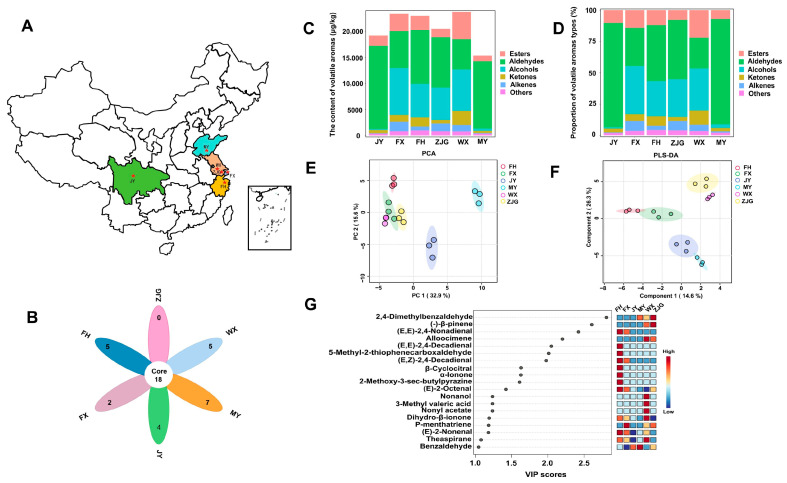 Figure 1
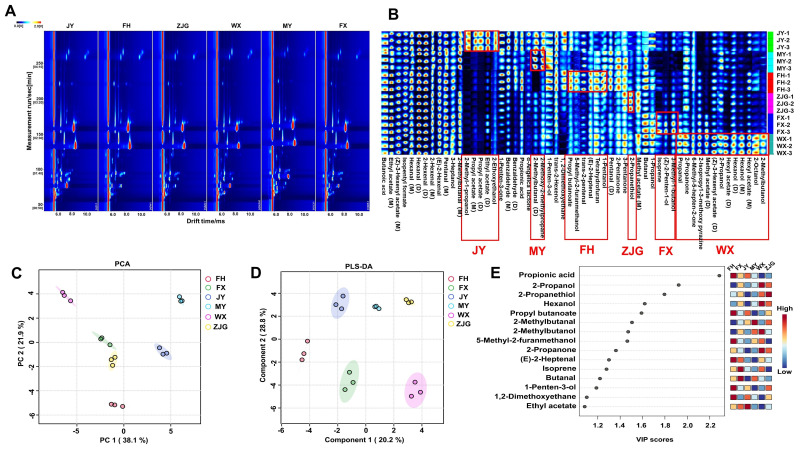 Figure 2
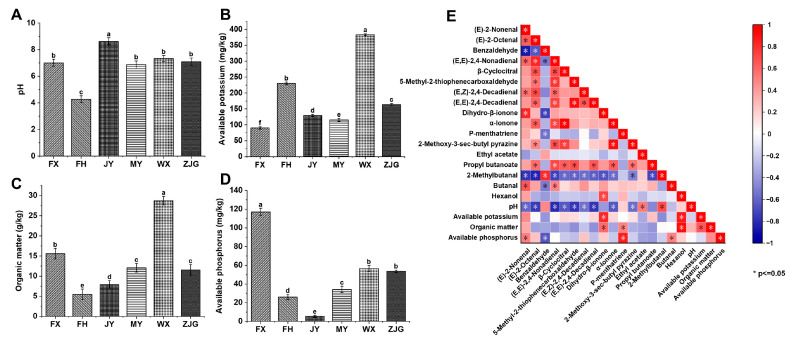 Figure 3
- —National Natural Science Foundation of China
- —China Agriculture Research System
- —Jiangsu Agricultural Science and Technology Innovation Fund
Peer Reviews
No public reviews on file for this paper yet. If you reviewed it on a platform where reviews are public (OpenReview, ICLR, NeurIPS, ICML), you can paste yours below so the community can read it here.
Videos
No videos yet. Explain this paper in a talk, walkthrough, or lecture? Add one.
Taxonomy
TopicsPostharvest Quality and Shelf Life Management · Fermentation and Sensory Analysis · Phytochemicals and Antioxidant Activities
1. Introduction
Peach (Prunus persica L.) is an important economic fruit in the Rosaceae family and is widely favored by consumers for its distinctive flavor and rich nutritional value [1,2]. Globally, there are more than 3000 kinds of peach variety resources in the world and more than 1000 kinds of cultivated varieties of peach originated from China [3,4]. ‘Hujing Milu’ peach is well known for its delicate flesh, abundant juiciness, and rich aroma. It is widely cultivated in southern China, including Jiangsu, Zhejiang, Shandong, and Shanghai, yielding considerable economic benefits. In recent years, with consumers’ increasing demands for fruit quality, fruit aroma has been regarded as an important quality characteristic closely related to the commercial value and market competitiveness of fruit [5]. Currently, over 100 volatile compounds have been identified in peach fruits, with only a few key compounds contributing to the aroma profile. The characteristic aroma of peach is primarily composed of esters (hexyl acetate), lactones (γ-decalactone), aldehydes (trans-2-hexenal), and alcohols (cis-3-hexenol) [6,7].
Fruit aroma formation is influenced by multiple factors, including variety, growing environment, climate, and cultivation conditions [8]. Soil conditions, particularly OM content and pH, are key factors affecting fruit aroma quality. These factors influence aroma formation by regulating fruit metabolism, affecting the accumulation of precursors such as sugars, amino acids, and fatty acids, and modulating the activity of enzymes associated with aroma biosynthesis, ultimately contributing to regional quality differences [9,10,11]. Moreover, soil mineral nutrients also play an important role in fruit quality formation. Potassium application has been shown to significantly influence the levels of volatile volatile compounds in cherry tomatoes, including 3-methylbutyraldehyde, phenylacetaldehyde, and phenylethanol [12]. Grape volatile compounds are reported to be more closely related to soil phosphorus and potassium contents than to soil nitrogen content [13]. Growing elevation, temperature, moisture, and light also affect the synthesis of fruit aroma. Falcão et al. investigated the effect of growing temperature on the aroma profiles of ‘Cabernet Sauvignon’ grapes from five vineyards at different altitudes showed that the content of 2-methoxy-3-isobutylpyrazine was significantly positively correlated with vineyard altitude and negatively correlated with temperature [14]. In previous studies, Su et al. indicated that moderate light enhances the synthesis of aromatic compounds in peach fruit, whereas excessive light (full sunlight) or insufficient light (15% of full sunlight) inhibits the accumulation of volatile compounds [15]. Similarly, under greenhouse cultivation conditions, fructose content in apricots increases, but the synthesis of volatile aromas is inhibited due to limited light, resulting in a significant reduction in aroma [16]. These differences in cultivation conditions contribute to the unique flavor profiles, quality attributes, and regional characteristics of fruits from different areas.
At present, research on regional differences in the aroma quality of ‘Hujing Milu’ peaches is limited. To accurately characterize fruit volatile compounds, a combination of detection technologies is necessary to obtain comprehensive and reliable aroma information. HS-SPME-GC-MS is one of the most widely used methods for precise qualitative and quantitative analysis of volatile compounds in fruits [17]. Li et al. analyzed the volatile compounds in three peach cultivars (Jiucui, Zhongyoupan 9, and Zhongyoupan 8) using HS-SPME-GC-MS and identified 169, 159, and 177 volatile compounds, respectively [6]. Gas chromatography–ion mobility spectrometry (GC-IMS) is a relatively new technique for analyzing volatile compounds. It combines the high separation capability of gas chromatography with the high sensitivity of ion mobility spectrometry, enabling rapid collection and analysis of volatile compounds and generation of fingerprint profiles that facilitate intuitive and detailed comparisons among samples [18,19].
To study fruit aroma comprehensively, these methods are often combined to overcome the subjectivity and limited resolution of traditional sensory evaluation, providing a reliable approach for objective analysis of complex volatile compounds [20]. Xu et al. analyzed citrus aromas from different geographical regions using both GC-IMS and HS-SPME-GC-MS and reported that the volatile information obtained by the two methods differed substantially, with GC-MS showing better performance in separating terpenes, alcohols, and esters [21]. Xie et al. applied HS-GC-IMS and HS-SPME-GC-MS to study 10 blueberry cultivars from three regions and identified nine volatile compounds as potential biomarkers for distinguishing varieties and production origins [22].
To comprehensively analyze regional differences in aroma profiles and their formation mechanisms, Hujing Milu’ peach samples were collected from six regions, including Wuxi and Zhangjiagang (Jiangsu Province), Fenghua (Zhejiang Province), Fengxian (Shanghai), Jianyang (Sichuan Province), and Mengyin (Shandong Province). The chosen study regions were well-known production areas for honey peaches including ‘Hujing Milu’ characterized by a long history of cultivation and relatively high yields. These regions covered major production areas in eastern, southeastern, and southwestern China, which facilitated a systematic study regional difference. HS-SPME-GC-MS and HS-GC-IMS were employed to detect volatile compounds in the peaches, and characteristic volatiles in ‘Hujing Milu’ peaches from different regions were screened using principal component analysis (PCA) and orthogonal partial least squares discriminant analysis (OPLS-DA). Furthermore, differences in volatile compounds among regions and their correlation with soil quality were examined. This study aims to reveal the regional variation characteristics of volatile compounds in ‘Hujing Milu’ peaches and clarify the relationship between soil properties and aroma formation, thereby providing a theoretical foundation for the origin identification and quality improvement of this specialty peach variety.
2. Materials and Methods
2.1. Sample Collection and Pretreatment
‘Hujing Milu’ peaches were collected from six producing areas: Wuxi and Zhangjiagang in Jiangsu Province, Fenghua in Zhejiang Province, Fengxian in Shanghai, Jianyang in Sichuan Province, and Mengyin in Shandong Province. In each orchard, five sampling points were selected, and peach trees at the same growth stage were chosen for sampling. Fruits were randomly harvested from different positions on each tree (top, middle, and bottom). Six fruits were collected at each sampling point, resulting in 30 fruits per orchard as one batch. All samples were immediately placed in foam boxes with ice packs and transported to the laboratory. Undamaged fruits with similar color and size were selected, peeled, cut into pieces, and stored at −80 °C for subsequent analysis.
Soil samples were collected from the same locations as the peach samples. At each planting base, soil was collected from five sampling points. A total of 300 g of soil was obtained per batch, with 60 g taken from each sampling point. After removing debris such as plant and animal residues, the soil samples were spread into a thin layer of 2–3 cm and allowed to air-dry naturally in a cool environment. The dried soil samples were then crushed using a wooden hammer, further pulverized using a wooden stick, and subsequently sieved through nylon sieves with pore sizes of 2 mm, 0.25 mm, and 0.149 mm. Finally, the samples were stored separately according to their particle size for subsequent analysis [23,24].
2.2. Analysis of Volatile Compounds in Peach Fruits
2.2.1. HS-SPME-GC-MS Analysis of Volatile Compounds
Volatile compounds in ‘Hujing Milu’ peaches were analyzed using an HS-SPME-GC-MS system (Agilent 8890–7000, Santa Clara, CA, USA). The sample extraction procedure was modified from Cai et al. [10]. Briefly, 3 g of ground peach sample were placed into a 20 mL headspace vial containing a magnetic stir bar, followed by the addition of 3 mL saturated NaCl solution and 30 μL of 3-nonanone as an internal standard. The vials were equilibrated on a thermostatically controlled magnetic stirrer at 40 °C with a stirring rate of 600 r/min for 30 min. Subsequently, a solid phase microextraction fiber (65 μm PDMS/DVB) was exposed to the headspace for adsorption for 30 min. After extraction, the fiber was inserted into the GC injector for desorption for 5 min.
GC-MS conditions were set according to Otify et al. [25]. GC separation was performed using an HP-5MS capillary column (60 m × 0.25 mm, 0.25 μm). The inlet temperature was set at 250 °C, and helium was used as the carrier gas at a flow rate of 1 mL/min in splitless injection mode. The oven temperature program was as follows: the initial temperature was held at 35 °C for 2 min; then increased to 220 °C at a rate of 4 °C/min and held for 2 min; and finally increased to 245 °C at a rate of 15 °C/min. The MS conditions were set with an electron ionization (EI) source at 70 eV and a mass range of 35–350 m/z. The transfer line temperature, ion source temperature, and quadrupole temperature were set at 280 °C, 250 °C, and 150 °C, respectively.
Under the same experimental conditions, GC-MS was used to analyze saturated alkane standards (C_7_–C_40_) to determine the retention index (RI). The RI values of the volatile components were calculated using linear interpolation based on the retention times of n-alkanes according to the following formula [26]:
where n represented the number of carbon atoms, while t_a_, t_n_, and t_n+_1 represented the retention times of the volatile compound, C_n_, and C_n_+1, respectively.
The calculated RI values of each volatile component were compared with the RI values in the NIST 17 database, and identification was performed by matching both the RI values and the mass spectra with the standard mass spectra. The identified volatile components with matching factors higher than 70% were considered reliable. In addition, 3-nonanone was used as an internal standard for the relative quantification analysis of volatile components in the peach samples.
2.2.2. HS-GC-IMS Analysis of Volatile Compounds
Volatile compounds in peach samples were also analyzed using a GC-IMS instrument (FlavorSpec^®^, G.A.S., Dortmund, Germany). Two g of peach fruit powder were placed into a 20 mL headspace vial and incubated at 40 °C for 15 min. The headspace injection needle temperature was set at 85 °C, and the injection volume was 500 μL.
GC conditions followed Xu et al. [27]. An MXT-5 capillary column (15 m × 0.53 mm, 1 μm) was used for chromatographic separation, with an initial column temperature of 60 °C. High-purity nitrogen (≥99.99%) served as the carrier gas, and the flow rate program was set as follows: 2 mL/min for 2 min, increased to 10 mL/min for 8 min, and then increased to 100 mL/min for 10 min. IMS conditions were as follows: drift tube length 9.8 cm, drift tube temperature 45 °C, and electric field strength 500 V/cm. High-purity nitrogen (≥99.99%) was used as the drift gas at a flow rate of 150 mL/min.
A calibration curve between retention time (RT) and retention index (RI) was established using six n-ketone mixed standards. Volatile compounds were identified by matching both RI and ion mobility drift time with reference data from the GC-IMS built-in library and the NIST database. Flavor fingerprints of volatile compounds were constructed using the reporter plot and gallery plot modules in the VOCal software (v 0.4.03).
2.2.3. Calculation of Odor Activity Value (OAV) and Relative Odor Activity Value (ROAV)
To evaluate the contribution of individual volatile compounds to the overall aroma, the odor activity value (OAV, Formula (2)) and relative odor activity value (ROAV, Formula (3)) were calculated. Higher OAV or ROAV values indicate greater contributions to the total aroma [28].
where C represented the concentration of a volatile compound, and OT was its odor threshold in water (μg/kg). Odor threshold values were obtained from Compilation of Odor Thresholds in Air, Water, and Other Media [29].
where C_a_ was the relative content of volatile compounds (%); T_a_ was the olfactory threshold for volatile compounds (μg/kg); C_max_ and T_max_ represented the relative content (%) and odor threshold (μg/kg) of the compound that contributes most significantly to the overall aroma of the sample.
2.3. Determination of Soil Physicochemical Properties
The soil samples were collected and prepared using the five-point sampling method in Section 2.1 to the determination of physicochemical indicators. Soil organic matter (OM) content was determined using the potassium dichromate oxidation–volume method [30]. Available phosphorus (AP) was measured using the sodium bicarbonate extraction–molybdenum antimony colorimetric method [31]. Soil available potassium (AK) was determined by flame photometry [32]. Soil pH was measured using a pH meter [33].
2.4. Data Analysis
Each experiment was conducted in triplicate, and the results were expressed as the mean ± standard deviation (SD). Excel 2021 was used for data organization. SPSS 22.0 was used to perform one-way analysis of variance (ANOVA) and normality tests, followed by Tukey–Kramer post hoc tests after ANOVA. Data normalization and graphical visualization were conducted using Origin 2024. PCA and partial least squares discriminant analysis (PLS-DA) were performed using the MetaboAnalyst online platform (https://www.metaboanalyst.ca/, accessed on 31 October 2025). Pearson correlation analysis and heatmap visualization were conducted using the Metware Cloud online tool (https://cloud.metware.cn/, accessed on 13 November 2025).
3. Results and Discussion
3.1. HS-SPME-GC-MS Analysis of Volatile Compounds in Different Regions of ‘Hujing Milu’ Peach
3.1.1. Differences in Volatile Compounds of ‘Hujing Milu’ Peaches from Different Regions Based on HS-SPME-GC-MS
Fruit aroma is a crucial indicator for evaluating fruit quality and is mainly composed of aldehydes, alcohols, esters, terpenes, and ketones, which are derived from amino acids, carotenoids, and fatty acids [34]. HS-SPME-GC-MS is a widely used method for determining volatile compounds in fruits. In this study, the volatile compounds of ‘Hujing Milu’ peaches from six different regions were analyzed using HS-SPME-GC-MS. Based on a matching factor (≥70%), a total of 73 volatile compounds were identified, as detailed in Table 1. This includes 17 esters, 17 aldehydes, 11 ketones, 11 alkenes, 7 alcohols, and 11 other compounds. The concentrations and relative contents of individual volatile compounds in the samples are shown in Figure 1. Aldehydes and alcohols were found to be the predominant volatile compounds in ‘Hujing Milu’ peaches, followed by esters. This result is consistent with the findings of Wu et al., who reported that alcohols, aldehydes, and esters were the aroma classes with the highest relative contents in seven peach cultivars analyzed using HS-SPME-GC-MS [35]. Similarly, Farneti et al. identified aldehydes, alcohols, terpenoids, and esters as the main compound classes contributing to the aroma profiles of blueberries [36].
Among the 73 volatile compounds identified in this study, 18 were common across all six regions, including 2-hexenal, benzaldehyde, γ-decalactone, and dihydro-β-ionone, which play key roles in the aroma of ‘Hujing Milu’ peaches (Figure 1B). The typical aroma classes commonly found in ‘Hujing Milu’ peaches were aldehydes, esters, and ketones, which exhibited marked differences in their contributions to regional aroma profiles. Aldehydes such as hexanal and 2-hexenal are major contributors to green notes in fruits [37,38], and benzaldehyde has been reported as a dominant aldehyde in peach pulp [39,40]. Esters are formed through esterification reactions between short-chain fatty acids and alcohols. As major contributors to fruity aromas, esters strongly affect the overall aroma profile of peaches [41,42], particularly lactones, which contribute characteristic fruity and sweet notes due to their low odor thresholds [5,43]. Ketones are mainly generated through pathways such as fatty acid oxidation, carotenoid degradation, and decarboxylation, typically imparting floral notes [5,44].
The volatile compounds of ‘Hujing Milu’ peaches from different regions are illustrated in Figure 1C,D. The results showed that the total aroma content was highest in samples from the WX region (23,710.90 μg/kg), followed by samples from the FX (23,317.92 μg/kg) and FH (22,935.44 μg/kg) regions. Notably, the proportion of aldehydes in samples from the MY and JY regions was significantly higher than that in other regions, reaching 84.16% and 83.23%, respectively. In contrast, the proportions of alcohols in MY and JY samples were relatively low, accounting for only 2.91% and 0.92%, respectively, which differed significantly from those in other regions. Samples from the WX region display comparatively high proportions of esters (22.07%) and ketones (11.44%), while samples from the FX region displayed distinct regional characteristics with a high proportion of alcohols (38.34%). Li et al. analyzed volatile compounds of peaches from three different regions (Beijing, Shandong, and Hebei) and reported significant regional differences in the proportions of aldehydes, alcohols, esters, and ketones [45]. Similarly, Xiao et al. investigated aroma characteristics of ‘Jinxiu’ yellow peaches from three regions and demonstrated that aldehydes were the dominant aroma component [46].
3.1.2. Multivariate Statistical Analysis of Volatile Compounds of ‘Hujing Milu’ Peach from Different Regions Based on HS-SPME-GC-MS
To characterize the overall differences in the aroma profiles of ‘Hujing Milu’ peaches from different geographical regions, principal component analysis (PCA) was conducted using aroma component data from the six regions. As illustrated in Figure 1E, the contribution rates of PC1 and PC2 were 32.9% and 15.6%, respectively, resulting in a cumulative contribution rate of 48.5%. This result effectively explains the major variation in overall aroma among ‘Hujing Milu’ peach samples from the six regions. Based on clustering patterns in the PCA score plot, samples from the WX, ZJG, FX, and FH regions were closely clustered, indicating a high degree of similarity in their overall aroma profiles. In contrast, samples from the MY region showed clear spatial separation from those of other regions, indicating a distinctly different aroma profile, which is consistent with its greater geographical separation.
To further analyze characteristic volatile compounds of ‘Hujing Milu’ peaches from different regions, partial least squares discriminant analysis (PLS-DA) was employed for dimensionality reduction. The reliability of the PLS-DA model was verified using five-fold cross-validation (Figure S1). The R^2^ and Q^2^ values were 0.975 and 0.853, respectively, indicating good model robustness and predictive performance. As shown in Figure 1F, the contribution rates of Component 1 and Component 2 were 14.6% and 26.3%, respectively, resulting in cumulative contribution rate of 40.9%, which adequately explains aroma differences among samples. The PLS-DA score plot showed that WX and ZJG clustered together, as did FH and FX, while clear separations were observed between WX and ZJG, FH and FX, and MY and JY. Variable importance in projection (VIP) values were calculated to evaluate the contribution of each aroma compound to the model, with higher VIP values indicating greater contributions [47]. A total of 19 compounds with VIP > 1 were identified (Figure 1G), indicating their key roles in differentiating aroma profiles among regions. The corresponding heatmap shows relative concentrations of these compounds. Ranked by VIP values, the major differential compounds contributing to aroma differences included 2,4-dimethylbenzaldehyde, (−)-β-pinene, (E, E)-2,4-nonadienal, allo-ocimene, (E, E)-2,4-decadienal, 5-methyl-2-thiophenecarboxaldehyde, (E, Z)-2,4-decadienal, β-cyclocitral, α-ionone, 2-methoxy-3-sec-butylpyrazine, (E)-2-octenal, nonanol, 3-methylvaleric acid, nonyl acetate, dihydro-β-ionone, p-menthatriene, (E)-2-nonenal, theaspirane, and benzaldehyde. Among these compounds, benzaldehyde and dihydro-β-ionone have been reported as core volatile compounds of peaches, and their regional concentration differences are key factors contributing to the different aroma characteristics of ‘Hujing Milu’ peaches [45,48].
3.1.3. Screening of Characteristic Volatile Compounds of ‘Hujing Milu’ Peach from Different Regions Based on HS-SPME-GC-MS
The overall aroma profile of peaches is influenced by multiple factors. Compounds present at high concentrations establish the foundational structure of aroma, while certain compounds present at low concentrations but with low odor thresholds also significantly shape aroma characteristics [49]. The OAV is a quantitative indicator used to evaluate the contribution of individual volatile compounds to the overall aroma profile. Compounds with OAV > 1 are generally considered key contributors [28]. To further investigate the contribution of volatile compounds, OAV analysis was performed for the 73 volatile compounds detected by HS-SPME-GC-MS, and 48 compounds with OAV > 1 were identified. Among these, samples from the six producing regions (JY, FX, FH, ZJG, WX, and MY) contained 21, 34, 33, 28, 30, and 21 compounds, respectively (Table S1).
In addition, 17 volatile compounds with high contributions (OAV > 100) were identified, including γ-decalactone, γ-dodecalactone, (E)-2-nonenal, (E)-2-octenal, 2-hexenal, (E)-2-decenal, (E, E)-2,4-nonadienal, nonanal, (E, Z)-2,4-decadienal, (E, E)-2,4-decadienal, linalool, 1-hepten-3-one, dihydro-β-ionone, (E)-β-ionone, β-damascenone, myrcene, and 2-methoxy-3-sec-butylpyrazine. Among these, γ-decalactone, γ-dodecalactone, 2-hexenal, linalool, and dihydro-β-ionone have been widely reported as key contributors to peach aroma, with γ-decalactone providing a characteristic fruity and peach-like note [50]. Notably, concentrations of γ-decalactone, nonanal, dihydro-β-ionone, and β-damascenone, all with OAV > 100, were significantly higher in samples from five regions (JY, FX, FH, ZJG, and WX) compared to samples from the MY region, indicating stronger fruity and floral aroma characteristics.
Clear differences in characteristic aromas were also observed among regions. In samples from the JY region, β-damascenone and 1-hepten-3-one showed the highest OAVs, contributing predominantly floral notes. In samples from the FX and ZJG regions, linalool and β-damascenone were the main contributors, resulting in pronounced fruity and floral characteristics. In samples from the WX region, linalool and (E)-β-ionone exhibited the highest OAVs, contributing sweet floral and fruity notes. In samples from the FH region, linalool and 2-methoxy-3-sec-butylpyrazine were identified as major contributors, producing a combined aroma characterized by floral, fruity, green, and slight frankincense notes. In contrast, samples from the MY region were characterized by 1-hepten-3-one and (E)-2-nonenal as dominant components, imparting a fresh green aroma.
To further screen differential aroma markers of ‘Hujing Milu’ peaches from different regions, a dual screening criterion of OAV > 1 and VIP > 1 was applied. A total of 12 differential volatile compounds were identified (Table 2), including (E)-2-nonenal, (E)-2-octenal, benzaldehyde, (E, E)-2,4-nonadienal, dihydro-β-ionone, and 2-methoxy-3-sec-butylpyrazine. Notably, (E)-2-nonenal and (E)-2-octenal were key markers distinguishing samples from the FH region, contributing rich fruity and frankincense-like notes. In samples from the WX region, dihydro-β-ionone showed the highest OAV and was the primary source of intense floral aroma, whereas benzaldehyde significantly contributed to aroma characteristics of samples from the MY region.
3.2. HS-GC-IMS Analysis of Volatile Compounds in Different Regions of ‘Hujing Milu’ Peach
3.2.1. Separation, Characterization, and Comparative Analysis of Volatile Compounds of ‘Hujing Milu’ Peaches from Different Regions Based on HS-GC-IMS
HS-GC-IMS is a recently developed gas-phase separation and detection technique. Its main advantage is the combination of the high separation capability of gas chromatography with the rapid response of ion mobility spectrometry. Compared to HS-SPME-GC-MS, HS-GC-IMS is characterized by high separation efficiency, rapid analysis, and operation under atmospheric pressure and moderate temperature conditions [51,52]. To further investigate differences in volatile compound composition of ‘Hujing Milu’ peaches from different producing areas, HS-GC-IMS was applied to obtain aroma information from peach samples of different origins. Two-dimensional visualization of the detected volatile compounds is shown in Figure 2A. A total of 56 volatile compounds were identified, which included 15 aldehydes, 15 alcohols, 13 esters, 5 ketones, and 8 other compounds (Table 3). Aldehydes, alcohols, and esters were the dominant volatile compounds in peaches from all six regions, consistent with the results obtained using HS-SPME-GC-MS. Some volatile compounds with high proton affinity tend to form dimers or polymers through proton or electron sharing, leading to multiple signal peaks. In this study, monomers and dimers of these compounds are denoted as (M) and (D), respectively [53,54].
To accurately evaluate regional differences in volatile compounds of ‘Hujing Milu’ peaches, aroma fingerprints of samples from the six regions were constructed (Figure 2B), followed by semiquantitative analysis. The results showed that 3-heptanol, pentanal (D), (E)-2-hexenal, 2-hexenal (M), 2-hexenal (D), hexanal (M), hexanal (D), isopentyl formate, (Z)-3-hexenyl acetate (D), ethyl acetate (M), and butanoic acid were present at relatively high levels in ‘Hujing Milu’ peach samples. Notably, samples from the JY region exhibited significant differences in five volatile compounds, including ethyl acetate (D), propyl acetate and 2-methyl-1-propanol, when compared to samples from other regions. In the MY region, contents of 2-methylbutanal (D) and 2-methoxy-2-methylpropane were significantly higher than those in the other five regions. The FH region samples contained six volatile compounds, including 1-pentanol, tetrahydrofuran, (E)-2-heptenal, trans-2-pentenal, 5-methyl-2-furfuryl alcohol and propyl butanoate, which were detected at relatively high levels. In the ZJG region, the content of 2-propanethiol was higher than in samples from other regions. Furthermore, in the FX region, three volatile compounds, including 3-methyl-1-butanol, (Z)-2-pentenol and isoprene were present at notably high levels. Compared with the other five regions, 14 volatile compounds were detected in samples from the WX region (Figure 2B). Among these, 2-methylbutanol, hexyl acetate and 2-octanol were present at relatively high levels. Both analytical techniques identified hexyl acetate and 2-hexenal. The content of hexyl acetate is positively correlated with the fruity and sweet aroma of the fruit, enhancing fruity intensity in fruits [55].
A comparative analysis of HS-GC-IMS and HS-SPME-GC-MS results was further conducted. HS-SPME-GC-MS demonstrated superior separation capability for volatile compounds compared to HS-GC-IMS. However, HS-GC-IMS has distinct advantages in detecting small-molecule and low-abundance volatile compounds, such as ketones and acids [56,57]. In addition, HS-GC-IMS identified 33 compounds that were not detected by HS-SPME-GC-MS, including butanal with a cocoa-like note, hexanal with a fatty note, 2-propanol with a woody note, propyl butanoate with a pineapple-like note, and 2-pentanone with a fruity note. These findings indicated that HS-GC-IMS effectively complements HS-SPME-GC-MS, facilitating a comprehensive analysis of volatile compounds. The combined application of HS-GC-IMS and HS-SPME-GC-MS integrates the advantages of strong separation capability, high sensitivity, and reliable qualitative and quantitative performance, thereby expanding the detectable range of volatile compounds, and providing a more comprehensive representation of fruit flavor characteristics [58].
3.2.2. Multivariate Statistical Analysis of Volatile Compounds of ‘Hujing Milu’ Peach from Different Regions Based on HS-GC-IMS
Principal component analysis (PCA) of volatile compounds in ‘Hujing Milu’ peaches from different regions was conducted, with the results are shown in Figure 2C. The contribution rates of principal components PC1 and PC2 were found to be 38.1% and 21.9%, respectively, resulting in a cumulative contribution rate of 60.0%. This indicates that the PCA model effectively characterizes overall aroma differences among ‘Hujing Milu’ peach samples from different geographical origins. In the PCA score plot, samples from the ZJG and FX regions were closely clustered, indicating high similarity in their overall aroma profiles. This similarity may be related to comparable climatic conditions, such as temperature and light, or similar soil physicochemical properties in the two regions. In contrast, samples from the MY, JY, WX, and FH regions were clearly separated from the ZJG–FX cluster, indicating relatively significant differences in overall aroma characteristics.
Notably, compared to results obtained using HS-SPME-GC-MS, the combination of HS-GC-IMS with PCA showed stronger discriminative performance in characterizing aroma differences among samples from different geographical origins. This observation is consistent with the findings of Zhang et al. in citrus volatile analysis, which demonstrated that HS-GC-IMS combined with multivariate analysis provides improved resolution for distinguishing geographical origins of agricultural products [59]. He et al. also reported the advantages of GC-IMS in identifying differences in volatile components and discriminating geographical origins of kiwifruit [56].
Partial least squares discriminant analysis (PLS-DA) was conducted to identify volatile compounds that most significantly contribute to differences in overall aroma profiles. The PLS-DA model was validated using five-fold cross-validation, yielding R^2^ and Q^2^ values of 0.98937 and 0.96207, respectively (Figure S2), indicating strong model reliability and predictive capability. As shown in Figure 2D, the contribution rates of Component 1 and Component 2 were 20.2% and 28.8%, respectively, with a cumulative contribution rate of 49.0%. The PLS-DA score plot showed clear separation of ‘Hujing Milu’ peach samples from the six regions, confirming that geographical origin is a major factor associated with aroma differences. This finding is consistent with the conclusions reported by Li et al. regarding the correlation between peach volatile compounds and geographical origin [45]. Variable importance in projection (VIP) values were calculated, and 15 differential volatile compounds with VIP > 1 were identified (Figure 2D). These compounds played key roles in differentiating aroma profiles among regions and were ranked by VIP value as follows: propionic acid, 2-propanol, 2-propanethiol, hexanol, propyl butanoate, 2-methylbutanal, 2-methylbutanol, 5-methyl-2-furanmethanol, 2-propanone, (E)-2-heptenal, isoprene, butanal, 1-penten-3-ol, 1,2-dimethoxyethane, and ethyl acetate. Among these, ester compounds such as ethyl acetate have been reported as characteristic aroma contributors in peaches, and differences in their contents directly affect peach aroma characteristics. This observation is consistent with the results reported by Li et al. during screening of key peach volatile compounds [45].
3.2.3. Screening of Characteristic Volatile Compounds of ‘Hujing Milu’ Peach from Different Regions Based on HS-GC-IMS
To evaluate the contribution of individual volatile compounds to the overall aroma of ‘Hujing Milu’ peaches, the relative ROAV of the 56 volatile compounds identified by HS-GC-IMS was calculated. Compounds with ROAV ≥ 1 were defined as potential key aroma contributors. A total of 13 volatile compounds met this criterion (Table S2), including (Z)-3-hexenyl acetate, hexyl acetate, ethyl acetate, propyl butanoate, hexanal, 2-hexenal, 2-methylbutanal, butanal, pentanal, hexanol, 3-methyl-1-butanol, 2-octanol, and 2-methoxy-2-methylpropane. Hexanal showed the highest contribution (ROAV = 100) in samples from the JY, FX, FH, WX, and ZJG regions and the second highest contribution (ROAV = 97.82) in samples from the MY region, indicating that hexanal is a major aroma-active compound in ‘Hujing Milu’ peaches. Tan et al. reported that hexanal, because of its low odor threshold and strong olfactory activity, frequently serves as a core aroma compound in flat peach juice, which supports its key role in the aroma profile of ‘Hujing Milu’ peaches [60].
To identify characteristic volatile compounds responsible for regional aroma differences, volatile compounds were further screened using combined criteria of ROAV > 1 and VIP > 1. Five volatile compounds meeting these criteria were identified (Table 4): ethyl acetate, propyl butanoate, 2-methylbutanal, butanal, and hexanol. In samples from the JY region, ethyl acetate showed a significantly higher ROAV compared to other regions, indicating its value as a biomarker for distinguishing JY samples and contributing to an intensified fruity aroma. In samples from the FH region, propyl butanoate exhibited the highest ROAV among all regions, contributing a sweet and fresh pineapple-like aroma. In samples from the WX region, hexanol showed the highest ROAV, contributing a combined fruity and green aroma profile. In samples from the MY region, 2-methylbutanal significantly contributed to the aroma, imparting a characteristic cocoa-like note.
Based on integrated analyses using OAV, ROAV, and PLS-DA, characteristic volatile compounds of ‘Hujing Milu’ peaches from six regions were identified (Table 5). In the JY region, the main characteristic volatile compounds were benzaldehyde and hexanol. In the FX region, the identified characteristic volatile compounds included (E, Z)-2,4-decadienal, (E, E)-2,4-nonadienal, p-menthatriene, and butanal. In the FH region, characteristic volatile compounds included 2-methoxy-3-sec-butylpyrazine, (E)-2-nonenal, (E, E)-2,4-decadienal, ethyl acetate, (E)-2-octenal, β-cyclocitral, 5-methylthiophene-2-carboxaldehyde, (E, Z)-2,4-decadienal, and α-ionone. In the ZJG region, characteristic volatile compounds included propyl butanoate and p-menthatriene. In the WX region, characteristic volatile compounds included dihydro-β-ionone and p-menthatriene. Finally, in the MY region, characteristic volatile compounds were benzaldehyde and 2-methylbutanal.
3.3. Correlation Analysis Between Volatile Compounds and Cultivation Environments of ‘Hujing Milu’ Peaches from Different Origins
Soil serves as an essential environmental carrier for plant growth. The environmental differences in terrain and climate among cultivation regions are ultimately reflected in soil physicochemical properties, including pH, AK, AP, and OM. Consequently, soil properties act as a key intermediate through which regional environmental conditions affect fruit aroma [61,62]. Soil physicochemical properties of six ‘Hujing Milu’ peach production regions were determined, and the results are shown in Figure 3A–D. Significant differences (p < 0.05) were observed among regions for all measured indicators (pH, AK, OM, and AP).
The JY region exhibited the highest soil pH value (8.62), while the FH region showed the lowest pH value (4.28). Soil pH values in the FX, MY, WX, and ZJG regions ranged from 6 to 8, with no significant differences among these regions. Significant regional differences were observed in AK content, which decreased in the order WX (382.90 mg/kg), FH (230.10 mg/kg), ZJG (163.20 mg/kg), JY (129.90 mg/kg), MY (115.50 mg/kg), and FX (89.76 mg/kg). The OM content in the WX region (28.77 g/kg) was also significantly higher than in other regions and was nearly fivefold higher than that in the FH region (5.50 g/kg). The FX region had the highest AP content (117.10 mg/kg), which was significantly greater than that in all other regions. In contrast, the JY region had the lowest AP content (5.53 mg/kg), with significant variations observed in the remaining regions. These results indicate clear regional specificity in soil physicochemical properties, which may indirectly affect the synthesis and accumulation of volatile compounds [63,64]. Soil factors can influence volatile aroma formation through multiple pathways, including regulation of plant physiological metabolism, microbial activity, and enzyme activity [11,65]. Ji et al. reported that the application of organic fertilizer application significantly improved soil pH and OM content while altering microbial diversity, with microbial interactions having strong effects on volatile emissions [66]. Ran et al. showed that OM content affects soil structure, water retention, and nutrient buffering capacity, thereby enhancing metabolic activity of tea plants and regulating the synthesis of secondary metabolites related to flavor and aroma [67].
To clarify the correlation between soil conditions and aroma formation in ‘Hujing Milu’ peaches, Pearson correlation analysis was conducted to systematically examine associations between soil physicochemical properties and concentrations of characteristic volatile compounds. As shown in Figure 3E, most aldehydes exhibited significant negative correlations with soil pH. However, 2-methylbutanal showed a significant positive correlation with soil pH (r = 0.690, p < 0.05). In addition, ethyl acetate content was positively correlated with soil pH (r = 0.530, p < 0.05), indicating that alkaline soil conditions favor its synthesis. This effect may be related to enhanced lipoxygenase activity under alkaline conditions, which can accelerate ethyl acetate formation [68,69]. Wang et al. reported that increased soil pH promotes synthesis of floral volatile compounds in tea, particularly geraniol, thereby enhancing floral characteristics in the overall aroma profile [62].
Hexanol (r = 0.865, p < 0.05) and dihydro-β-ionone (r = 0.830, p < 0.05) showed significant positive correlations with soil AK content. Wang et al. also reported significant positive correlations between soil AK content and geraniol, α-ionone, and linalool [62]. Potassium can activate alcohol dehydrogenase in plants, promote conversion of carbohydrates into alcohols, and participate in energy metabolism related to terpene synthesis, thereby facilitating the formation of dihydro-β-ionone [70,71]. Furthermore, hexanol showed a significant positive correlation with soil OM content (r = 0.917, p < 0.05), likely due to the decomposition of OM providing carbon sources that serve as important precursors for hexanol synthesis. Dihydro-β-ionone (r = 0.587, p < 0.05) and p-menthatriene (r = 0.482, p < 0.05) also showed significant positive correlations with OM, indicating that OM facilitates synthesis of these terpene compounds. Consistent with these findings, Jiang et al. reported that sufficient soil OM supports microbial activity and provides slow-release resources, thereby favoring biosynthesis of terpenoids associated with floral aromas [61]. This effect may occur through provision of terpenoid precursors or through microbial processes that support precursor formation [72].
Additionally, AP showed significant positive correlations with p-menthatriene (r = 0.848), (E)-2-nonenal (r = 0.509), and butanal (r = 0.496) (p < 0.05), whereas a significant negative correlation was observed with benzaldehyde (r = −0.646, p < 0.05). These differences may arise from distinct formation pathways of aldehydes, as unsaturated aldehydes are mainly derived from lipid oxidation, whereas aromatic aldehydes are more closely associated with phenolic metabolism [73,74]. Bustamante et al. demonstrated that phosphorus is essential for terpenoid synthesis in Rosmarinus officinalis because it supports precursor generation and production of ATP and NADPH required for biosynthesis [75].
4. Conclusions
In this study, the volatile compounds of ‘Hujing Milu’ peaches from six regions were analyzed using combined HS-SPME-GC-MS and HS-GC-IMS approaches. Characteristic volatile compounds and their correlations with key soil factors were identified. Aldehydes, alcohols, and esters were the main volatile components of ‘Hujing Milu’ peaches, revealing significant regional differences in aroma type, proportion, and content. Notably, the highest total volatile content detected in the WX region. Based on OAV, ROAV, and VIP analyses, 17 volatile compounds were identified as potential biomarkers for distinguishing samples from the six regions. Characteristic volatile compounds were identified as follows: WX (hexanol, dihydro-β-ionone), FH (propyl butanoate, (E)-2-octenal), JY (benzaldehyde, ethyl acetate), MY (benzaldehyde), and FX (butanal). Correlation analysis indicated that contents of key volatile compounds, including hexanol, 2-methylbutanal, ethyl acetate, and dihydro-β-ionone, were significantly correlated with soil properties. Adjusting soil pH may enhance ester and aldehyde contents, whereas modifying soil OM may increase alcohol and terpene levels in peaches. Overall, this study clarifies regional aroma characteristics of ‘Hujing Milu’ peaches and their correlations with soil factors, providing theoretical support for origin tracing and aroma quality improvement.
The reference list from the paper itself. Each links out to its DOI / PubMed record.
- 1Feng C. Ni Y. Zhang Y. Yang J. Xiong R. Characteristic aroma identification of differentially colored peach fruits based on HS-SPME-GC–MS Food Chem.202546714228010.1016/j.foodchem.2024.14228039616768 · doi ↗ · pubmed ↗
- 2Veerappan K. Natarajan S. Chung H. Park J. Molecular insights of fruit quality traits in peaches, Prunus persica Plants 202110219110.3390/plants 1010219134686000 PMC 8541108 · doi ↗ · pubmed ↗
- 3Aubert C. Chalot G. Physicochemical characteristics, vitamin C, and polyphenolic composition of four European commercial blood-flesh peach cultivars (Prunus persica L. Batsch)J. Food Compos. Anal.20208610333710.1016/j.jfca.2019.103337 · doi ↗
- 4Rong D. Wang H. Ying Y. Zhang Z. Zhang Y. Peach variety detection using VIS-NIR spectroscopy and deep learning Comput. Electron. Agric.202017510555310.1016/j.compag.2020.105553 · doi ↗
- 5Li X. Gao P. Zhang C. Xiao X. Chen C. Song F. Aroma of peach fruit: A review on aroma volatile compounds and underlying regulatory mechanisms Int. J. Food Sci. Technol.2023584965497910.1111/ijfs.16621 · doi ↗
- 6Li X. Liu C. Wu J. Su K. Xiao X. Zhang L. Eberhart B.L. Chen C. Song F. Comprehensive investigation on the dynamic changes of volatile organic compounds in three peach cultivars during fruit development Food Res. Int.202520311586610.1016/j.foodres.2025.11586640022387 · doi ↗ · pubmed ↗
- 7Wang X. Zhang C. Miao Y. Deng L. Zhang B. Meng J. Wang Y. Pan L. Niu L. Liu H. Interaction between Pp ERF 5 and Pp ERF 7 enhances peach fruit aroma by upregulating Pp LOX 4 expression Plant Physiol. Biochem.202218537838910.1016/j.plaphy.2022.06.02435777129 · doi ↗ · pubmed ↗
- 8Wang M. Wu Y. Yang H. Zhang C. Wu W. Lyu L. Cao F. Li W. Formation and regulatory network of fruit aroma components of Rosaceae plants Food Biosci.20256910640010.1016/j.fbio.2025.106400 · doi ↗