Encapsulation of Bee Pollen Phenolics with β-Cyclodextrin: Effects on Antioxidant Activity, Antimicrobial Properties, and Digestive Stability
Aslı Akdas, Deniz Günal-Köroğlu, Dilara Devecioglu, Esra Capanoglu, Funda Karbancioglu-Guler, Gulay Ozkan

TL;DR
Bee pollen's beneficial compounds were encapsulated with β-cyclodextrin, improving their stability and bioavailability in the gut.
Contribution
The study introduces β-cyclodextrin encapsulation to enhance bee pollen phenolics' stability and bioaccessibility.
Findings
Encapsulation with β-cyclodextrin increased the bioaccessibility of phenolics and antioxidant capacity during digestion.
The PE:BCD ratio of 1:2 showed the highest encapsulation efficiency (64%) and good colloidal stability.
Encapsulated bee pollen retained significant antimicrobial activity against both Gram-positive and Gram-negative bacteria.
Abstract
Bee pollen is a natural product with multifunctional properties, containing abundant bioactive compounds, especially phenolic acids and flavonoids, which are largely responsible for its antioxidant and antimicrobial activities. In this study, the bioactive composition, antioxidant capacity, encapsulation efficiency, antimicrobial activity, and gastrointestinal stability of bee pollen extract (PE) were investigated. The pollen extract exhibited high total phenolic (2817 mg GAE/100 g) and flavonoid contents (5255 mg QE/100 g), along with strong antioxidant activity (DPPH: 4305 mg TE/100 g; CUPRAC: 3685 mg TE/100 g). To improve the stability and bioaccessibility of phenolic compounds, PE was encapsulated using β-cyclodextrin (BCD) at different weight ratios. Among the formulations, the PE:BCD ratio of 1:2 showed the highest encapsulation efficiency (64%) and favorable physicochemical…
Genes, proteins, chemicals, diseases, species, mutations and cell lines named across the full text — each resolved to its canonical identifier and authoritative record.
Click any figure to enlarge with its caption.
 Figure 1
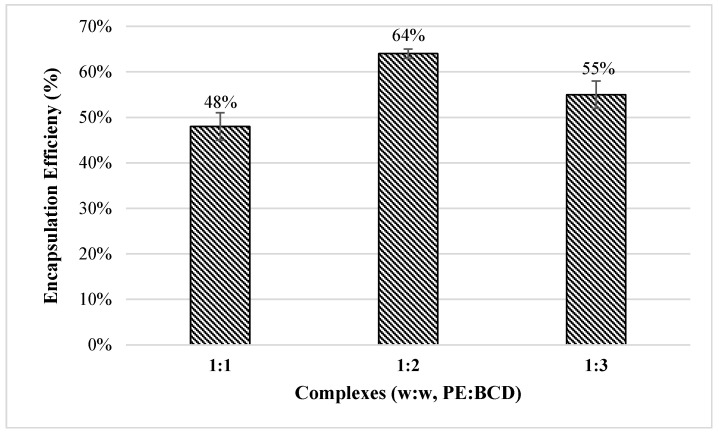 Figure 2
Peer Reviews
No public reviews on file for this paper yet. If you reviewed it on a platform where reviews are public (OpenReview, ICLR, NeurIPS, ICML), you can paste yours below so the community can read it here.
Videos
No videos yet. Explain this paper in a talk, walkthrough, or lecture? Add one.
Taxonomy
TopicsBee Products Chemical Analysis · Proteins in Food Systems · Microencapsulation and Drying Processes