Translation, Cultural Adaptation, and Validation of the Greek Version of the 4 ‘A’s Test for Delirium Screening in Elderly Patients with Hip Fracture
Maria Spyraki, Evanthia Dimitriou, Panagiotis Antzoulas, Georgios Karpetas, Francesk Mulita, Vasileios Leivaditis, Ejona Shaska, John Lakoumentas, Diamanto Aretha, Andreas Panagopoulos

TL;DR
This study translated and validated a quick delirium screening tool, the 4AT, for Greek-speaking elderly patients with hip fractures.
Contribution
The study provides a culturally adapted and validated Greek version of the 4AT for delirium screening in hip fracture patients.
Findings
The Greek 4AT showed 87.5% sensitivity and 91.1% specificity for delirium detection.
The tool had an AUC of 0.94, indicating strong diagnostic accuracy.
A cut-off score of ≥4 was optimal for screening delirium in this population.
Abstract
Background: Delirium is a frequent and serious complication in elderly patients with hip fractures and is associated with adverse outcomes. Early identification requires a brief and reliable screening tool suitable for routine clinical practice. The 4 ‘A’s Test (4AT) is a rapid instrument for delirium detection that requires minimal training. Objective: To translate, culturally adapt, and validate the Greek version of the 4AT in elderly patients with hip fractures. Methods: A total of 103 patients aged ≥65 years who were admitted with hip fracture were enrolled. The 4AT was translated using a forward–backward translation process and culturally adapted according to established guidelines. Delirium diagnosis was established using DSM-5 criteria by trained clinicians, serving as the reference standard. The 4AT was administered independently within 3 h. Diagnostic accuracy was assessed by…
Genes, proteins, chemicals, diseases, species, mutations and cell lines named across the full text — each resolved to its canonical identifier and authoritative record.
Click any figure to enlarge with its caption.
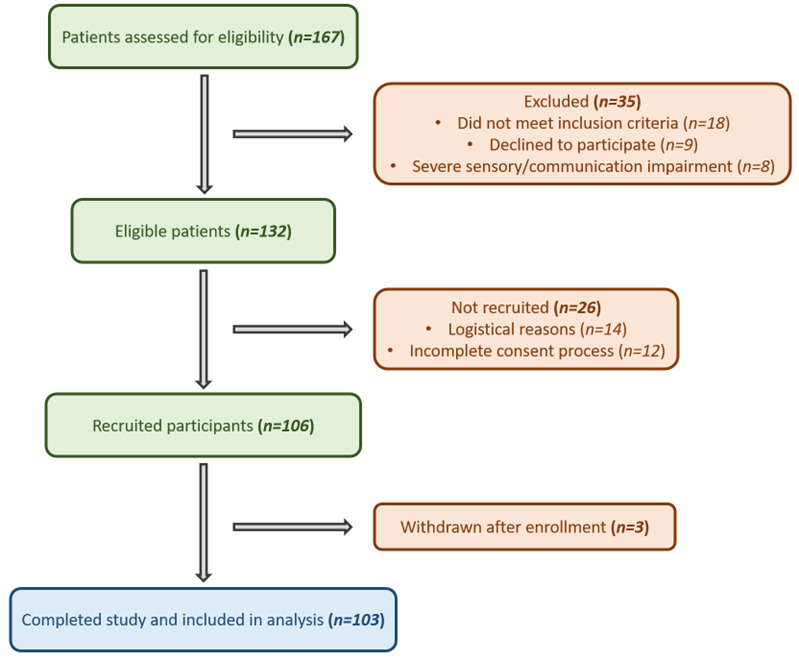 Figure 1
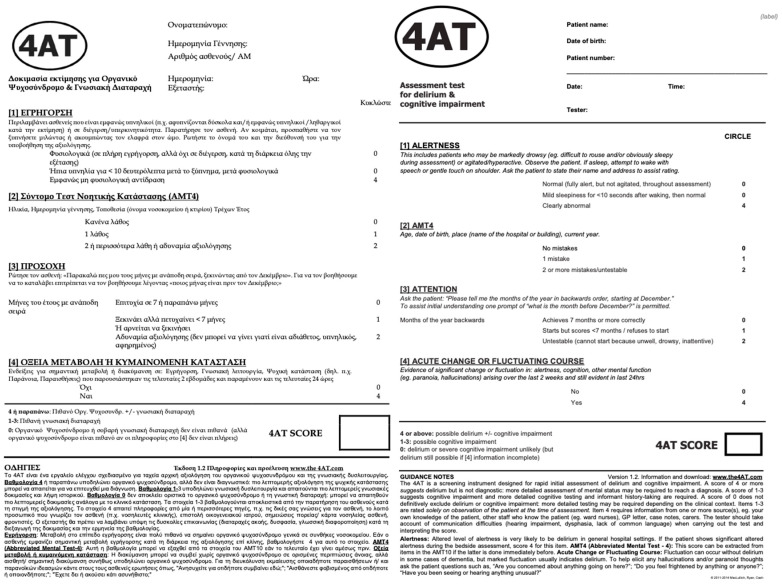 Figure 2
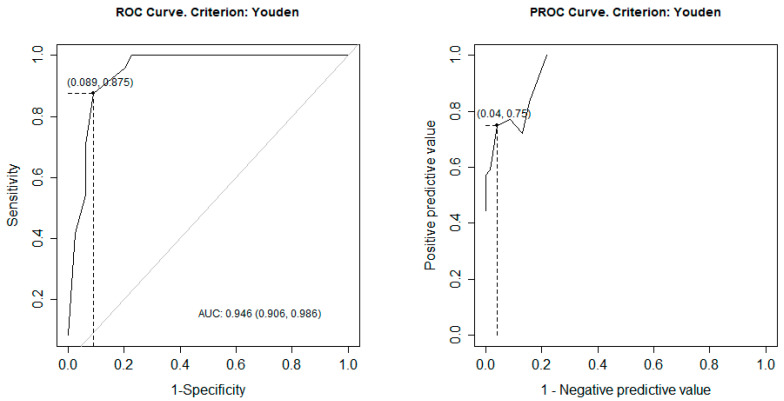 Figure 3
Peer Reviews
No public reviews on file for this paper yet. If you reviewed it on a platform where reviews are public (OpenReview, ICLR, NeurIPS, ICML), you can paste yours below so the community can read it here.
Videos
No videos yet. Explain this paper in a talk, walkthrough, or lecture? Add one.
Taxonomy
TopicsIntensive Care Unit Cognitive Disorders · Anesthesia and Sedative Agents · Hip and Femur Fractures