The Effect of Mechanical Loading on Mitophagy in Aged Myoblasts
Evangelos Tolis, Eirini Chatzinikita, Athanasios Moustogiannis, Antonios Giannopoulos, Maria Maridaki, Michael Koutsilieris, Anastassios Philippou

TL;DR
This study shows that mechanical stretching improves mitophagy and early muscle cell differentiation in aged myoblasts, potentially counteracting age-related muscle decline.
Contribution
The study reveals that mechanical loading enhances mitophagy and mitochondrial biogenesis in aged muscle cells, offering a novel therapeutic strategy for age-related muscle loss.
Findings
Mechanical loading increased PGC-1a and Parkin expression in aged myoblasts, promoting mitochondrial biogenesis.
Mechanical stretching upregulated Myf5 but downregulated myogenin in aged cells, indicating a shift in differentiation.
Mechanical loading induced BNIP3L/NIX and AMPK in aged myoblasts, suggesting enhanced mitophagy initiation.
Abstract
Background: During aging, skeletal muscle mass constantly diminishes and myogenic potential declines. At the cellular level, a decline in mitochondrial function is a hallmark of the aging process and the deficiency of the mitochondrial network contributes to a progressive reduction in muscle mass. Autophagic clearance of mitochondria through the process of mitophagy is required to remove impaired or damaged mitochondria, while mitophagy is a key regulator of muscle maintenance. Dysfunctional degradation of mitochondria is increasingly associated with aging (mitophaging), while mechanical stimuli have been shown to ameliorate the aging-induced impaired muscle mass and function; however, less is known about the potential effects of mechanical loading on mitophaging. The aim of the present study was to investigate the effect of mechanical stretching on mitophagy in aged myoblasts, in…
Genes, proteins, chemicals, diseases, species, mutations and cell lines named across the full text — each resolved to its canonical identifier and authoritative record.
Click any figure to enlarge with its caption.
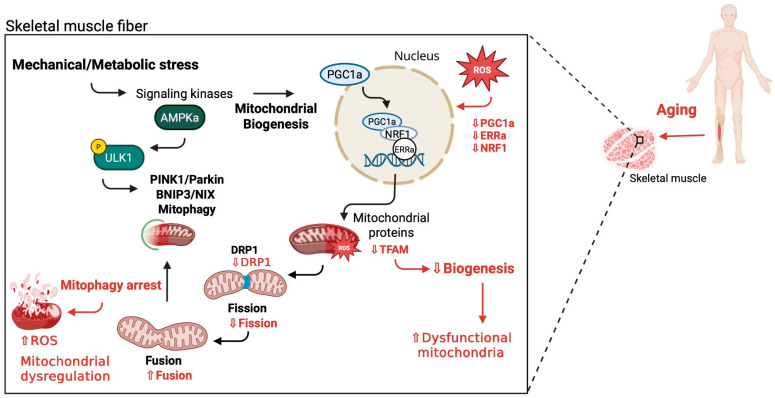 Figure 1
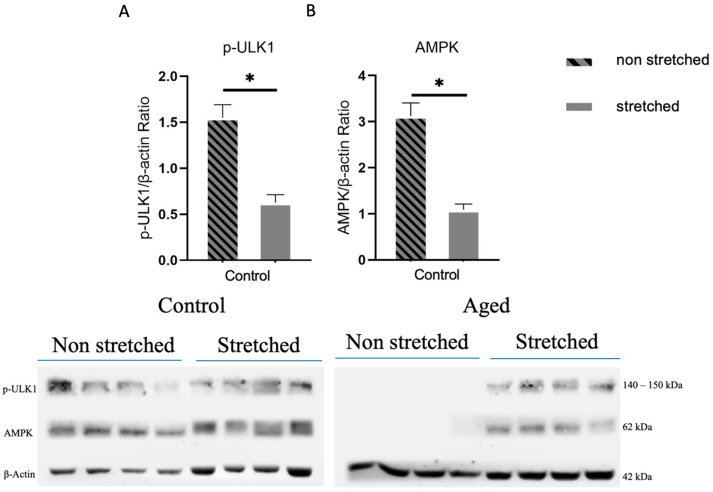 Figure 2
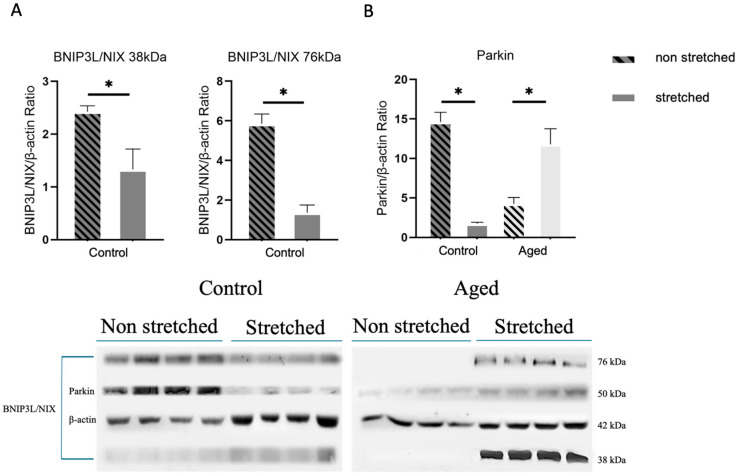 Figure 3
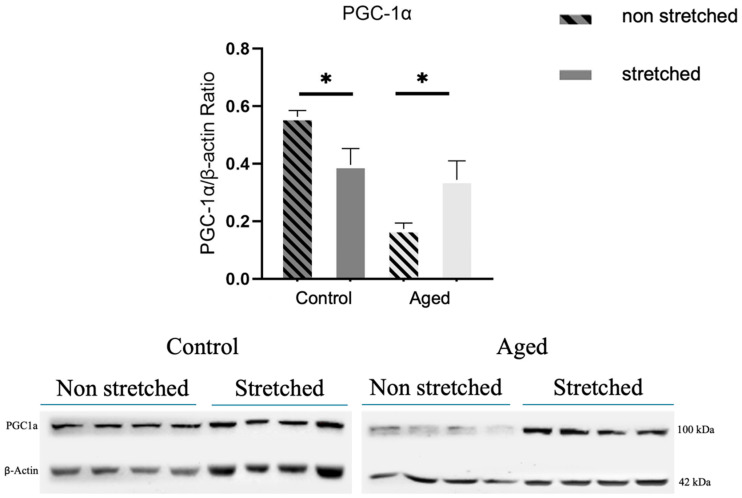 Figure 4
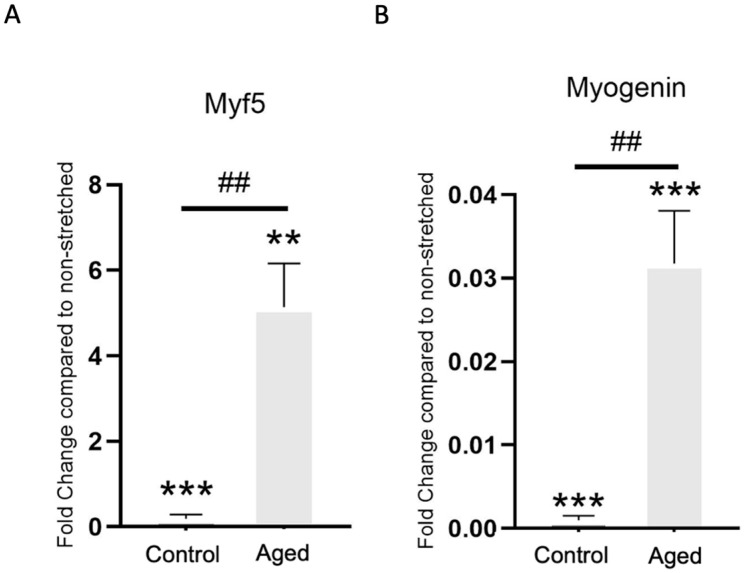 Figure 5
Peer Reviews
No public reviews on file for this paper yet. If you reviewed it on a platform where reviews are public (OpenReview, ICLR, NeurIPS, ICML), you can paste yours below so the community can read it here.
Videos
No videos yet. Explain this paper in a talk, walkthrough, or lecture? Add one.
Taxonomy
TopicsAutophagy in Disease and Therapy · Muscle Physiology and Disorders · Adipose Tissue and Metabolism