Immunopathogenesis of Severe Fever with Thrombocytopenia Syndrome: Core Driving Role of Cytokine Storm
Yuan Ding, Quanman Hu, Yan Hu, Yanyan Yang, Jundong Chen, Fei Zhao, Saiwei Lu, Li Zhang, Shuaiyin Chen, Guangcai Duan

TL;DR
This paper explains how a cytokine storm caused by the SFTS virus leads to severe illness and suggests possible treatments targeting immune responses.
Contribution
The paper highlights the central role of cytokine storm in SFTS progression and reviews potential immunotherapies targeting immune dysregulation.
Findings
SFTSV inhibits the host's type I interferon response, promoting immune evasion and viral replication.
Cytokine storm disrupts immune balance, leading to vascular damage and multi-organ failure in SFTS.
Targeting cytokine pathways with therapies like tocilizumab and JAK inhibitors may improve SFTS outcomes.
Abstract
Severe fever with thrombocytopenia syndrome (SFTS) is a newly discovered tick-borne disease caused by SFTS virus (SFTSV) infection. Patients present with high fever, thrombocytopenia, and multiple organ dysfunction, with a high mortality rate and a lack of specific treatment, all of which indicate that research on the deterioration mechanism and treatment of this disease is urgent. Currently, multiple studies have indicated that cytokine storm is one of the core factors contributing to the deterioration of the disease. SFTSV inhibits the host’s type I interferon response through its non-structural protein NSs, thereby promoting immune evasion and viral replication. Extensive viral stimulation leads to dysfunction and abnormal polarization of immune cells (including monocytes, macrophages, dendritic cells, T cells, and B cells), triggering the massive release of pro-inflammatory…
Genes, proteins, chemicals, diseases, species, mutations and cell lines named across the full text — each resolved to its canonical identifier and authoritative record.
Click any figure to enlarge with its caption.
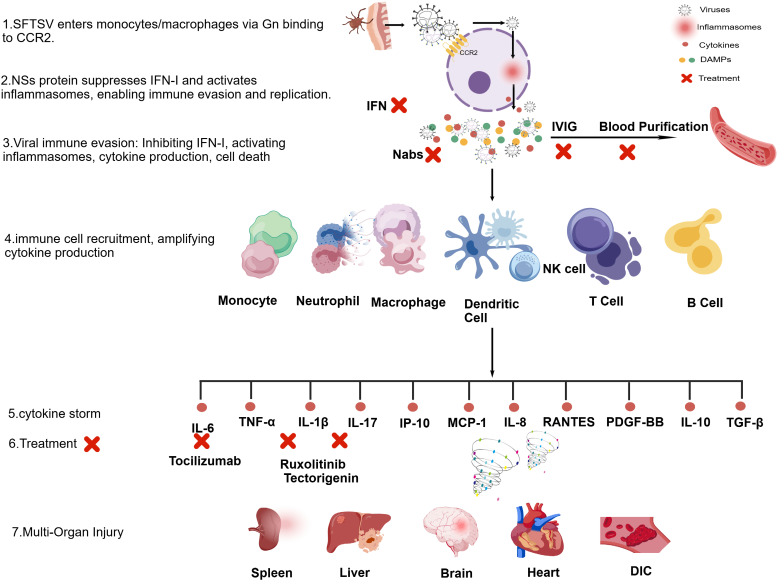 Figure 1
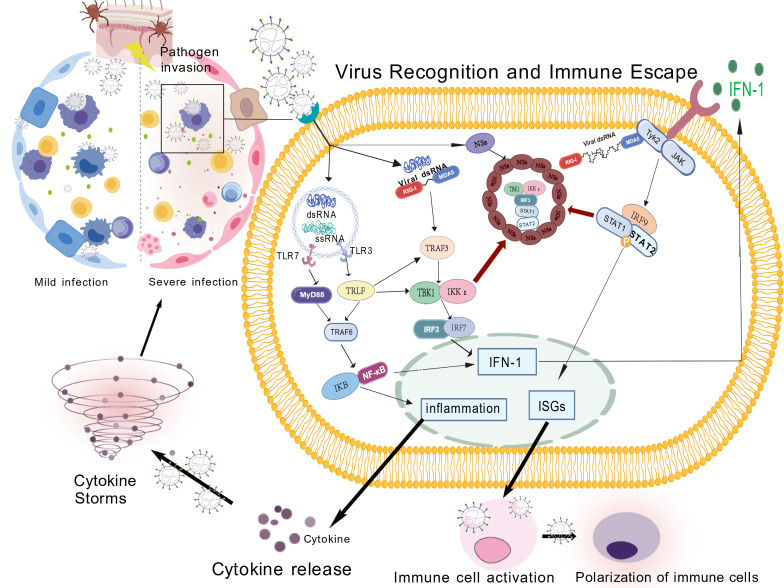 Figure 2
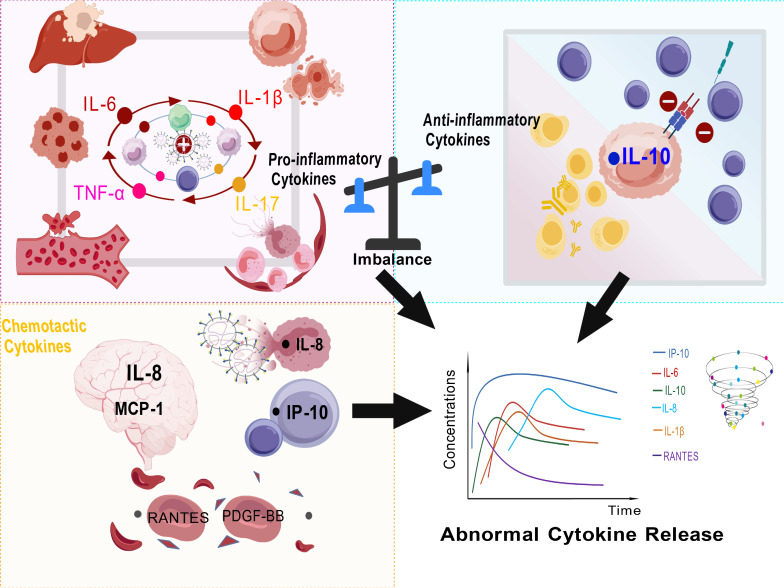 Figure 3
Peer Reviews
No public reviews on file for this paper yet. If you reviewed it on a platform where reviews are public (OpenReview, ICLR, NeurIPS, ICML), you can paste yours below so the community can read it here.
Videos
No videos yet. Explain this paper in a talk, walkthrough, or lecture? Add one.
Taxonomy
TopicsViral Infections and Vectors · Vector-borne infectious diseases · Vector-Borne Animal Diseases