MOB2 Loss Sensitizes Lung Cancer Cells to PARP Inhibition Through p53-Dependent DNA Damage Signaling
Ramazan Gundogdu

TL;DR
This study shows that losing the hMOB2 protein makes lung cancer cells more vulnerable to PARP inhibitors, especially when the p53 protein is active, suggesting a new way to improve cancer treatment.
Contribution
The study identifies hMOB2 as a novel modulator of PARP inhibitor sensitivity in lung cancer cells through p53-dependent DNA damage signaling.
Findings
hMOB2 depletion sensitizes lung cancer cells to PARP inhibitors like olaparib and rucaparib.
The sensitization effect depends on functional p53, as it was absent in p53-null cells but restored with p53 re-expression.
hMOB2 loss increases DNA damage and apoptosis without being cytotoxic on its own.
Abstract
Poly(ADP-ribose) polymerase (PARP) inhibitors exploit defects in homologous recombination (HR) but show limited and heterogeneous efficacy in non-small-cell lung cancer (NSCLC), where canonical HR deficiency is uncommon. Identifying alternative molecular determinants that modulate PARP inhibitor sensitivity therefore remains an important objective. In this study, we examined the role of the NDR/Hippo-associated cofactor human MOB2 (hMOB2) in shaping PARP inhibitor responses in lung cancer cells. hMOB2 was depleted by siRNA in A549 and H1299 cell lines, and cell viability, long-term survival, DNA damage, and apoptosis were assessed using WST-1 assays, clonogenic assays, Western blotting, immunofluorescence, comet assays, and caspase-3 activity assays. p53 dependency was evaluated using p53-null H1299 cells and p53 reconstitution via retroviral transduction. hMOB2 depletion sensitized…
Genes, proteins, chemicals, diseases, species, mutations and cell lines named across the full text — each resolved to its canonical identifier and authoritative record.
Click any figure to enlarge with its caption.
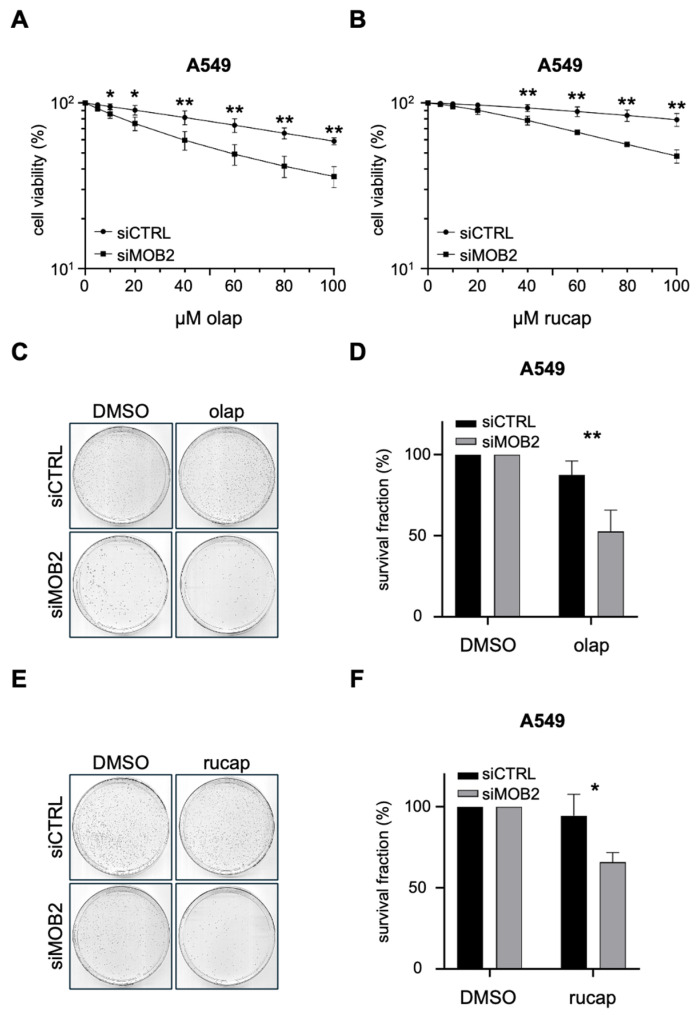 Figure 1
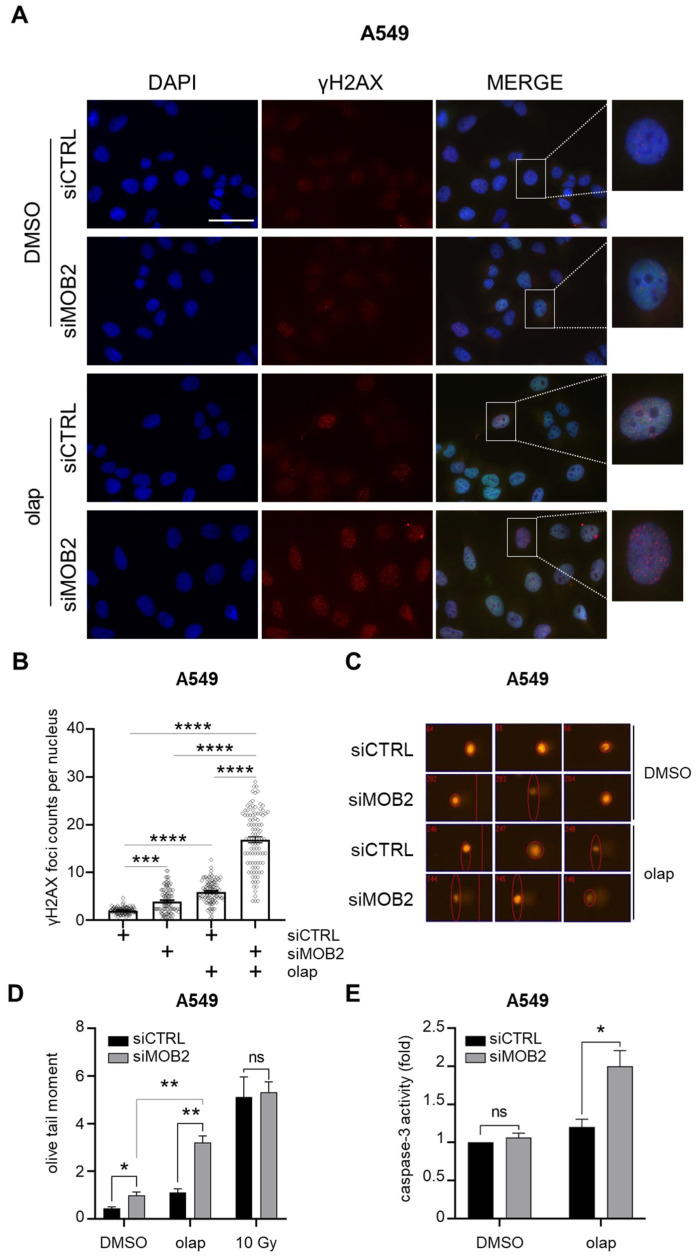 Figure 2
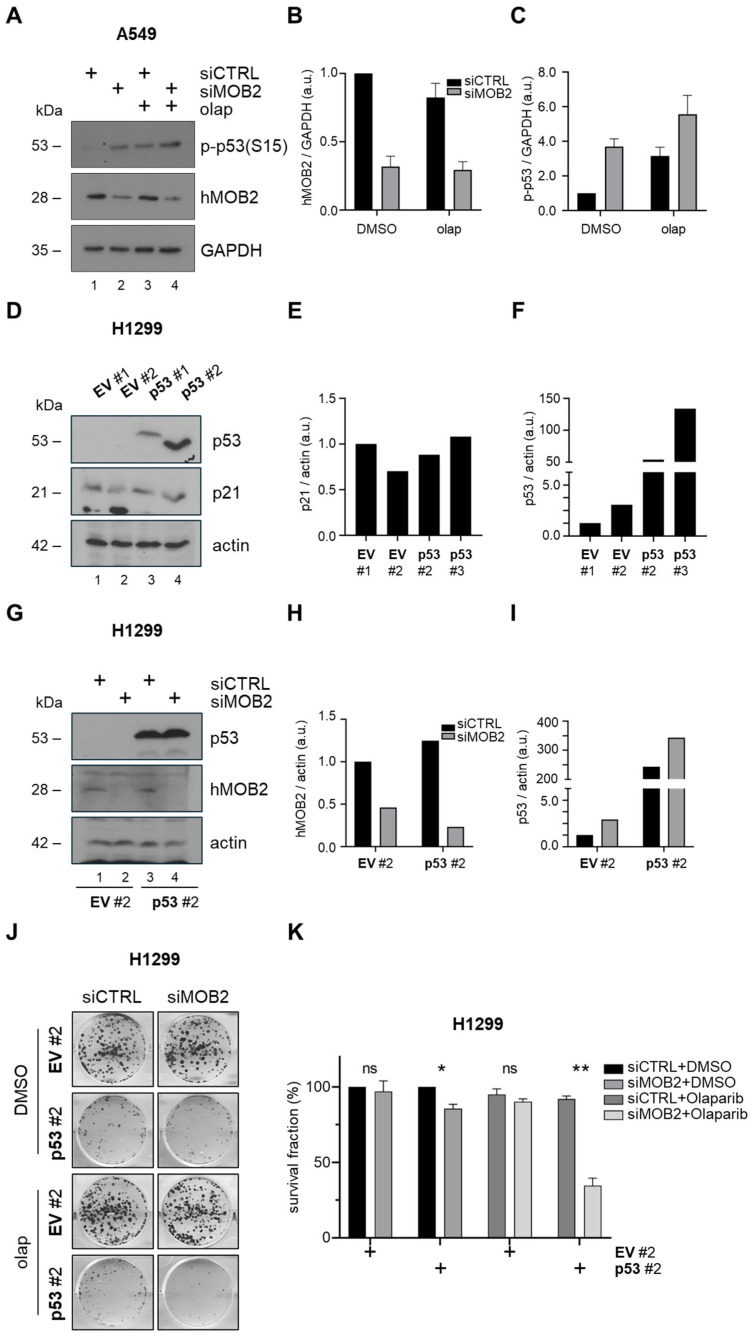 Figure 3
Peer Reviews
No public reviews on file for this paper yet. If you reviewed it on a platform where reviews are public (OpenReview, ICLR, NeurIPS, ICML), you can paste yours below so the community can read it here.
Videos
No videos yet. Explain this paper in a talk, walkthrough, or lecture? Add one.
Taxonomy
TopicsPARP inhibition in cancer therapy · RNA Research and Splicing · Cell death mechanisms and regulation