Differential Diagnosis of Parotid Tumors on Ultrasound: Interobserver Variability and Examiner-Specific Decision Rules—A Machine Learning Approach
Lukas Pillong, Ida Ohnesorg, Lukas Alexander Brust, Jan Palm, Julia Schulze-Berge, Victoria Bozzato, Manfred Voges, Adrian Müller, Malvina Garner, Alessandro Bozzato

TL;DR
This study uses machine learning to analyze how different examiners diagnose parotid tumors via ultrasound and finds significant variability in their assessments.
Contribution
The novel use of interpretable machine learning surrogates to model and visualize examiner-specific decision patterns in parotid tumor diagnosis.
Findings
Examiner accuracy in diagnosing parotid tumors ranged from 63.5% to 90.5%.
Decision-tree surrogates accurately approximated individual examiners' diagnostic behavior with high coverage.
Objective ultrasound descriptors showed higher interobserver agreement than subjective ones.
Abstract
Background/Objectives: Noninvasive differentiation of parotid gland tumors remains challenging despite ultrasound being the primary imaging modality for salivary gland lesions. Given its examiner dependence, improving diagnostic consistency and transparency is crucial. We quantified interobserver variability in parotid ultrasound, modeled examiner-specific decision patterns using machine learning surrogates, and tested whether surrogate complexity relates to examiner performance. Methods: In this retrospective, single-center study, six examiners independently rated ultrasound images of 149 parotid tumors using predefined descriptors. Performance was summarized using accuracy and the area under the receiver operating characteristic curve (AUC), with 95% confidence intervals (CIs). AUCs were compared using DeLong tests (Holm-adjusted). Interobserver agreement was assessed using pairwise…
Genes, proteins, chemicals, diseases, species, mutations and cell lines named across the full text — each resolved to its canonical identifier and authoritative record.
Click any figure to enlarge with its caption.
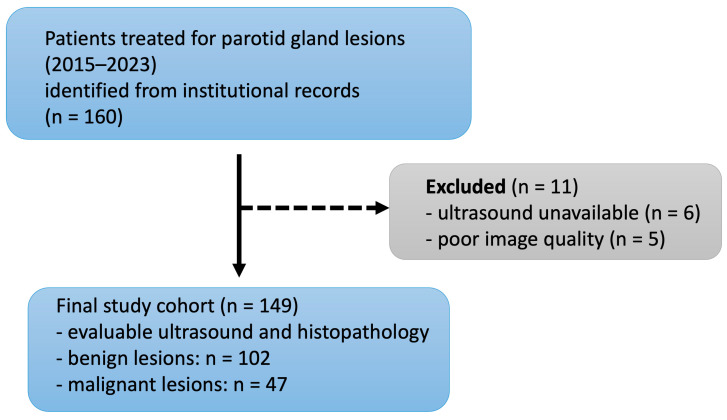 Figure 1
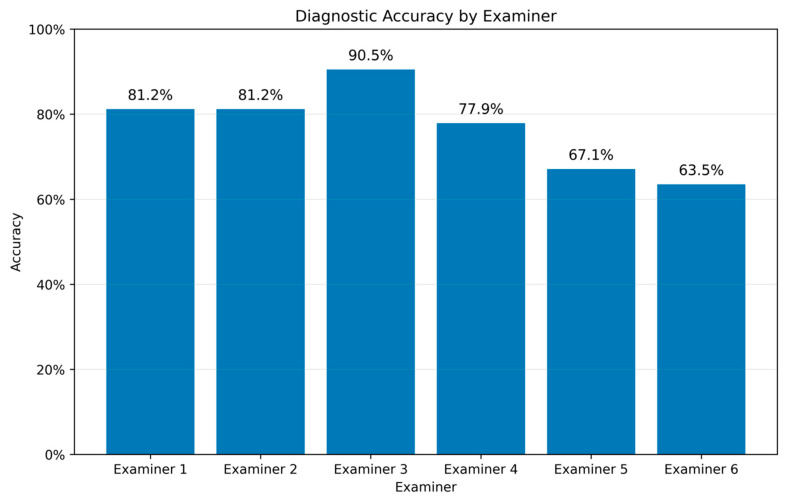 Figure 2
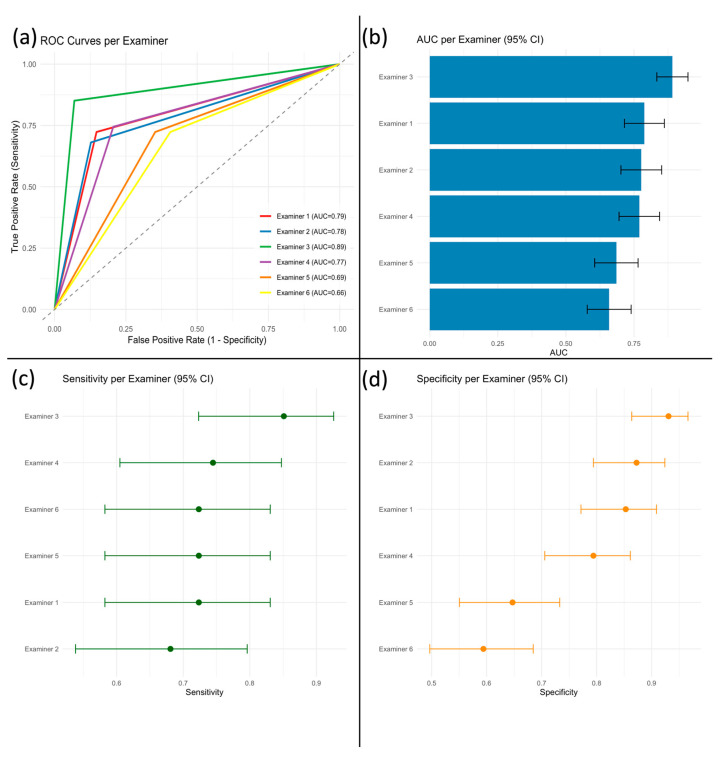 Figure 3
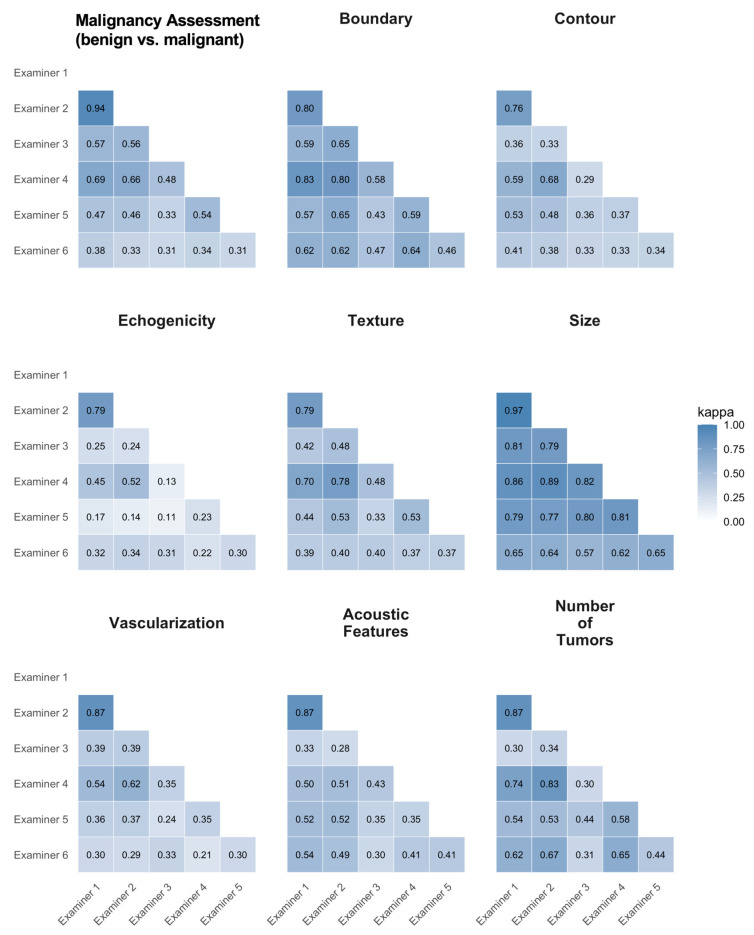 Figure 4
Peer Reviews
No public reviews on file for this paper yet. If you reviewed it on a platform where reviews are public (OpenReview, ICLR, NeurIPS, ICML), you can paste yours below so the community can read it here.
Videos
No videos yet. Explain this paper in a talk, walkthrough, or lecture? Add one.
Taxonomy
TopicsSalivary Gland Tumors Diagnosis and Treatment · Salivary Gland Disorders and Functions · Thyroid Cancer Diagnosis and Treatment