Enhanced Exome Sequencing Improves the Genetic Diagnosis of Deafblindness
Guadalupe A. Cifuentes, Marta Diñeiro, Alicia R. Huete, Raquel Capín, Adrián Santiago, Alberto A. R. Vargas, Dido Carrero, Julien Biscay, Esther López Martínez, Beatriz Aguiar, María Urbaniak, Beatriz Fernández-Vega, María Costales, Rocío González-Aguado, Rubén Cabanillas

TL;DR
Enhanced exome sequencing improves genetic diagnosis of deafblindness by combining whole-exome and targeted probes.
Contribution
The study introduces an enhanced exome sequencing strategy that improves diagnostic yield for deafblindness.
Findings
The enhanced exome approach identified causative variants in 10 out of 10 known cases and 3 out of 10 previously undiagnosed cases.
The method achieved high coverage of target regions and outperformed commercial platforms in variant prioritization.
Both bioinformatics platforms failed to correctly call one causative variant.
Abstract
Background/Objectives: The combination of hearing loss and visual impairment in a single patient strongly suggests a genetic aetiology. However, after conventional testing, a considerable proportion of deafblindness cases remain without a genetic diagnosis. The aim of this study was to address this diagnostic gap. Methods: We developed an enhanced exome strategy that uses a whole-exome backbone complemented by spike-in capture probes for (i) low-coverage coding segments and clinically validated, non-coding regions (including deep intronic splice-altering sites and untranslated exonic sequences) across 659 genes associated with hearing loss and/or visual impairment, and (ii) mitochondrial DNA. Results: With 66.6 million paired-end reads per sample, this methodology achieved coverage of at least 20 reads per base at 99.3% of target coding and non-coding positions of genes associated with…
Genes, proteins, chemicals, diseases, species, mutations and cell lines named across the full text — each resolved to its canonical identifier and authoritative record.
Click any figure to enlarge with its caption.
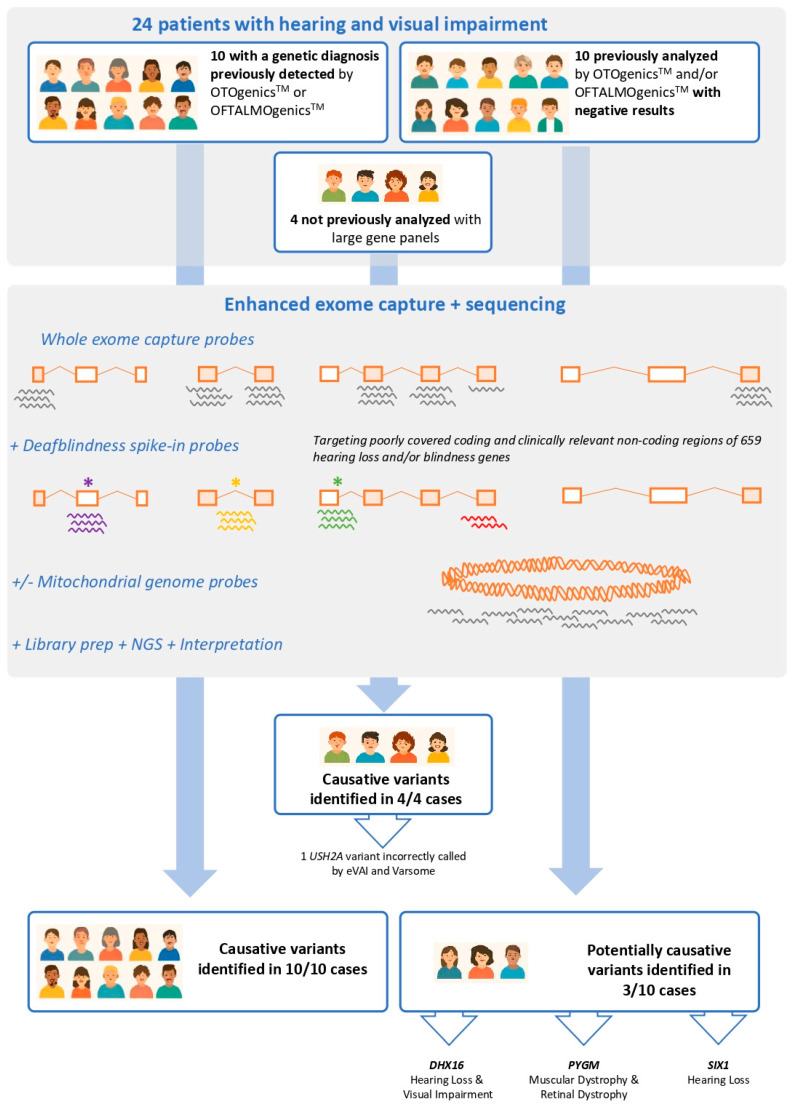 Figure 1
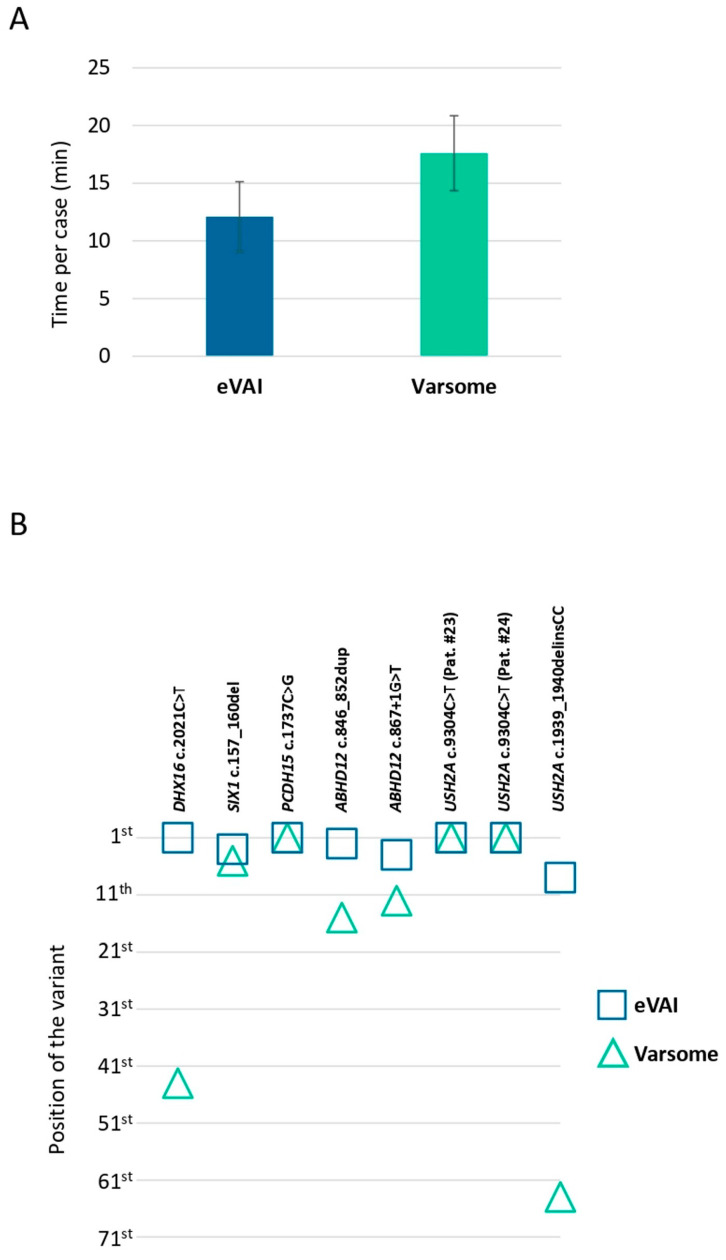 Figure 2
Peer Reviews
No public reviews on file for this paper yet. If you reviewed it on a platform where reviews are public (OpenReview, ICLR, NeurIPS, ICML), you can paste yours below so the community can read it here.
Videos
No videos yet. Explain this paper in a talk, walkthrough, or lecture? Add one.
Taxonomy
TopicsGenomics and Rare Diseases · Hearing, Cochlea, Tinnitus, Genetics · Genetic Neurodegenerative Diseases