Stage-Dependent Persistence of Nucleated Endosperm Cells in Seeds of Limonium Sexual and Apomictic Species with Autonomous Endosperm Formation
Catarina Gomes-Domingues, Elvira Hörandl, Ana D. Caperta

TL;DR
This study explores how seeds develop in two related plant species, focusing on asexual reproduction and endosperm formation.
Contribution
The study identifies stage-dependent endosperm development patterns and seed coat markers in apomictic Limonium species.
Findings
Triploid Limonium plants are self-sterile and produce seeds without pollination.
Stage II seeds show nucleated endosperm cells with double ploidy, while stage III seeds have only embryos.
Hexaploid endosperm peaks in stage I seeds indicate early endosperm initiation before embryo development.
Abstract
Limonium Mill. species present a polymorphic sexual system associated with flower polymorphisms like ancillary pollen and stigma, with sexual and/or apomictic reproduction. The aim of this study was to investigate the reproductive traits, test for autonomous apomixis, and assess seed formation in triploid Limonium algarvense and Limonium daveaui. Pollen-stigma combinations were determined and the number of flowers and seeds counted. Single-seed flow cytometry was performed using seeds in three phenological stages: immature (stage I), early maturing (stage II) and mature seeds (stage III). The findings revealed that all triploid plants were self-sterile and produced seeds in the absence of pollination. Despite L. daveaui having a higher number of flowers than L. algarvense, a significantly higher ratio of seeds/flowers was observed in the latter species. Stage-dependent endosperm…
Genes, proteins, chemicals, diseases, species, mutations and cell lines named across the full text — each resolved to its canonical identifier and authoritative record.
Click any figure to enlarge with its caption.
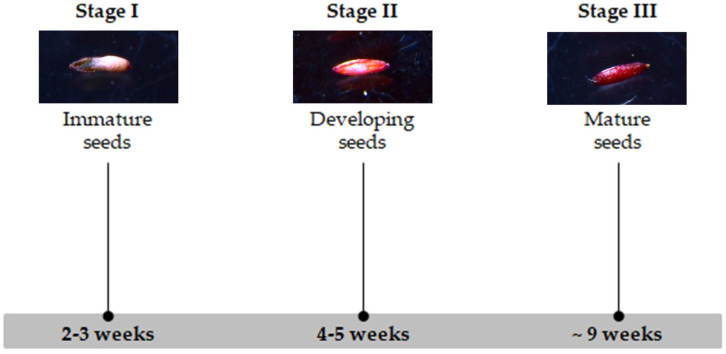 Figure 1
 Figure 2
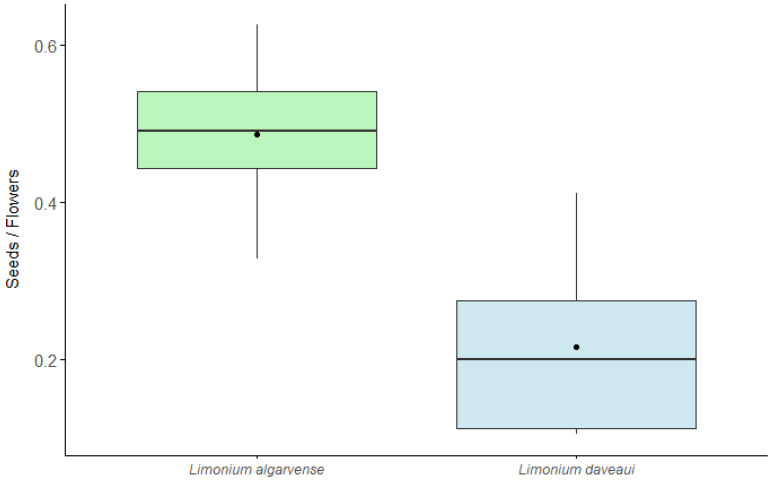 Figure 3
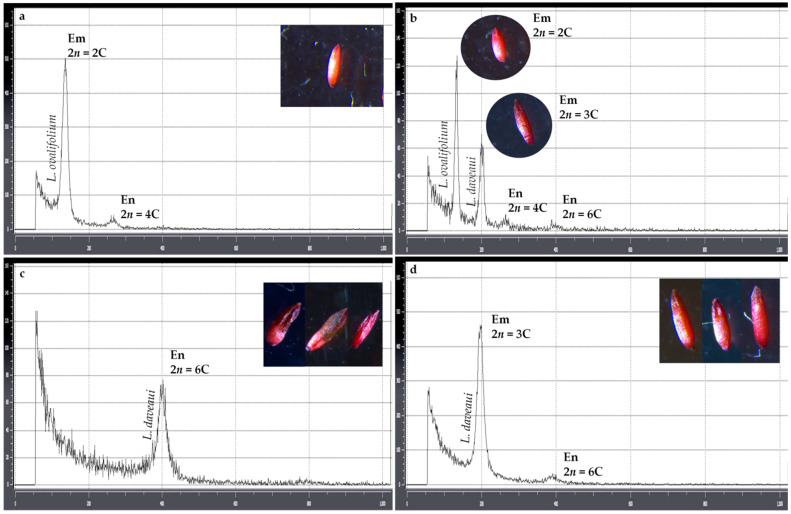 Figure 4
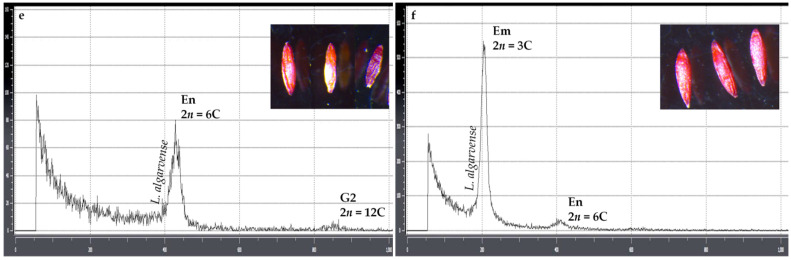 Figure 5
 Figure 6
Peer Reviews
No public reviews on file for this paper yet. If you reviewed it on a platform where reviews are public (OpenReview, ICLR, NeurIPS, ICML), you can paste yours below so the community can read it here.
Videos
No videos yet. Explain this paper in a talk, walkthrough, or lecture? Add one.
Taxonomy
TopicsPlant Taxonomy and Phylogenetics · Botany, Ecology, and Taxonomy Studies · Fern and Epiphyte Biology