Frequency and Hearing Loss Phenotypes of OPA1 Variants in a Cohort of 18,475 Patients with Hearing Impairment
Masayuki Kawakita, Hideaki Moteki, Shin-ya Nishio, Yumiko Kobayashi, Mika Adachi, Takayuki Okano, Hiroshi Yamazaki, Jun Nakayama, Shinya Ohira, Takashi Ishino, Yutaka Takumi, Shin-ichi Usami

TL;DR
This study finds that OPA1 gene variants are a rare but significant cause of hearing loss, often linked to auditory neuropathy and optic atrophy.
Contribution
The study identifies OPA1 as a rare cause of hearing loss and explores genotype-phenotype correlations in a large patient cohort.
Findings
Ten individuals with OPA1 variants were identified in 18,475 patients with hearing loss.
OPA1-related hearing loss is typically post-lingual, progressive, and associated with auditory neuropathy spectrum disorder.
Cochlear implants provided better outcomes than hearing aids for some patients with OPA1-related hearing loss.
Abstract
Background/Objectives: The OPA1 gene encodes a dynamin-related GTPase essential for mitochondrial fusion. Variants in OPA1 are a major cause of autosomal dominant optic atrophy (DOA). A subset of DOA patients exhibits hearing loss, often manifesting as auditory neuropathy spectrum disorder (ANSD). In this study, we aimed to describe the frequency of OPA1-related hearing loss in a large cohort of patients with hearing loss and to explore the genotype–phenotype correlations and appropriate interventions. Methods: A total of 18,475 Japanese patients with hearing loss were recruited. Targeted massively parallel sequencing of 158 deafness-related genes was performed, and individuals with OPA1 variants were identified. Clinical data, including age of onset, audiological findings, and systemic features, were retrospectively reviewed. Results: Ten individuals from eight independent families…
Genes, proteins, chemicals, diseases, species, mutations and cell lines named across the full text — each resolved to its canonical identifier and authoritative record.
Click any figure to enlarge with its caption.
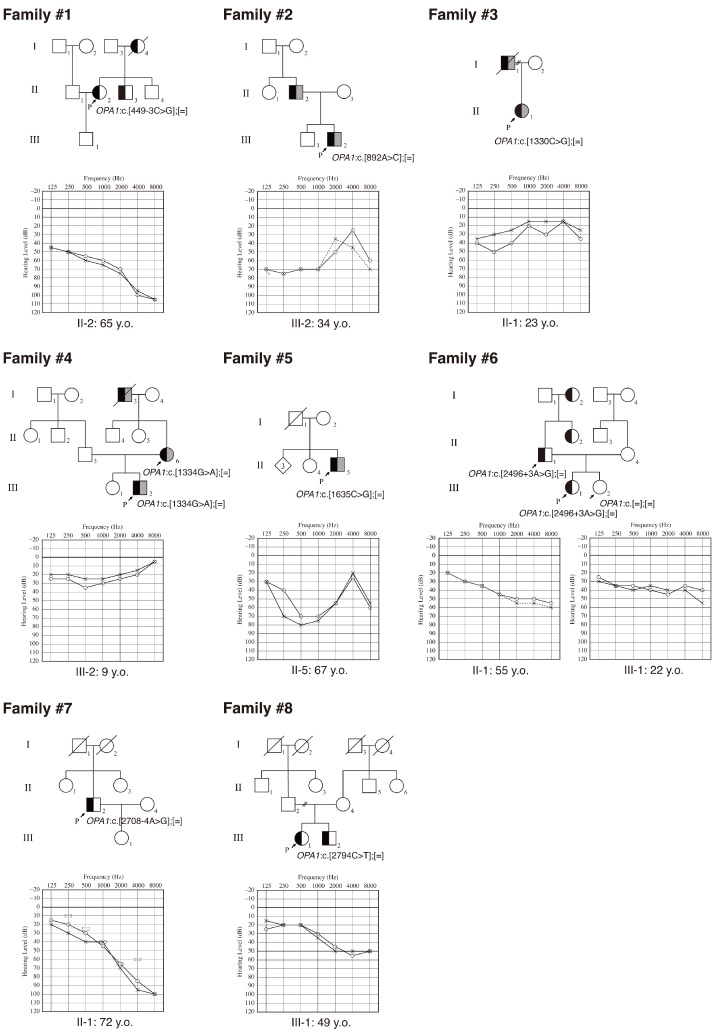 Figure 1
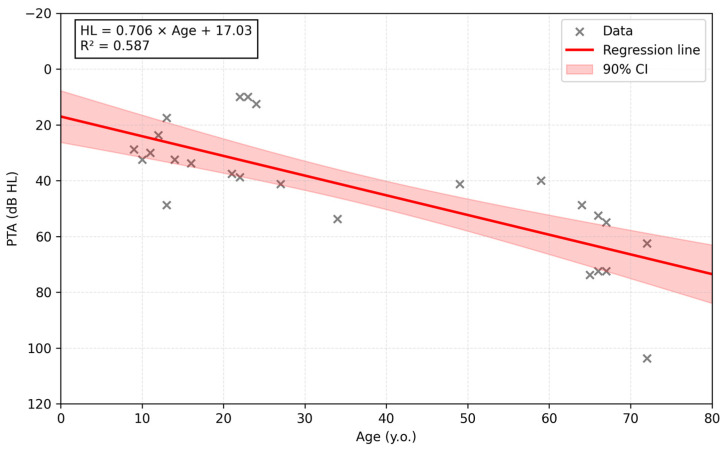 Figure 2
Peer Reviews
No public reviews on file for this paper yet. If you reviewed it on a platform where reviews are public (OpenReview, ICLR, NeurIPS, ICML), you can paste yours below so the community can read it here.
Videos
No videos yet. Explain this paper in a talk, walkthrough, or lecture? Add one.
Taxonomy
TopicsMitochondrial Function and Pathology · Genetic Neurodegenerative Diseases · Hearing, Cochlea, Tinnitus, Genetics