CISAT, a CoPP-Induced lncRNA, Improves Cardiac Mesenchymal Progenitor Cell Survival and Myocardial Repair via SFPQ/NRF2/p38 Redox Regulation
Xiuchun Li, Xiao-Liang Wang, Sofia Lopez, Jill Wang, Chuanxi Cai

TL;DR
A new long non-coding RNA called CISAT helps heart progenitor cells survive better and repair heart tissue by regulating redox balance and aging pathways.
Contribution
CISAT is a novel lncRNA that improves hMPC survival and myocardial repair via SFPQ/NRF2/p38 redox regulation.
Findings
CISAT overexpression reduces senescence markers and enhances hMPC survival and migration.
CISAT-overexpressed hMPCs improve heart function and reduce fibrosis in a murine model of myocardial infarction.
CISAT interacts with SFPQ to regulate NRF2 and inhibit p38 MAPK phosphorylation, mitigating cellular senescence.
Abstract
Cellular therapy using human cardiac mesenchymal progenitor cells (hMPCs) for regenerative medicine is hindered by poor cell survival and senescence. Long non-coding RNAs (lncRNAs) are critical regulators of cellular processes, yet their role in cardiac aging remains underexplored. Here, lncRNA microarray profiling identified a novel lncRNA, XLOC_002543, upregulated in hMPCs preconditioned with cobalt protoporphyrin (CoPP), which was named CoPP-Induced and SFPQ-Associated RNA Transcript (CISAT) due to its interaction with splicing factor proline and glutamine rich (SFPQ), confirmed via RNA pull-down and immunoprecipitation. CISAT was the only highly expressed transcript among seven lnc-ANKMY1-5 variants in hMPCs, as shown by RT-PCR. Notably, CISAT expression decreased in aging/senescent hMPCs, correlating with elevated p16INK4A, a senescence marker. Overexpression of CISAT reduced…
Genes, proteins, chemicals, diseases, species, mutations and cell lines named across the full text — each resolved to its canonical identifier and authoritative record.
Click any figure to enlarge with its caption.
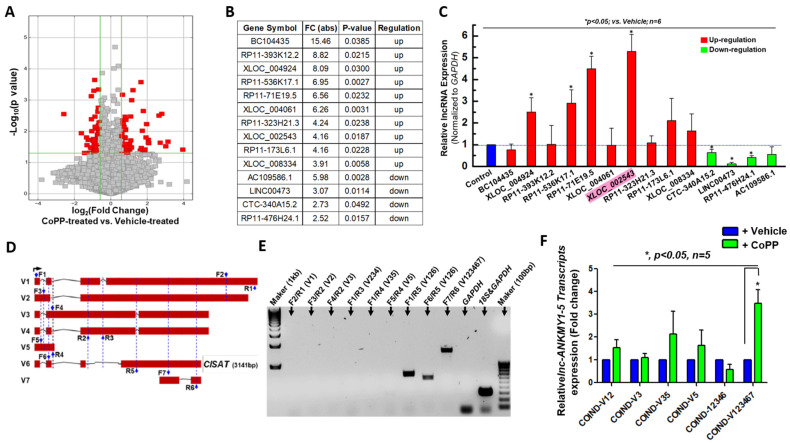 Figure 1
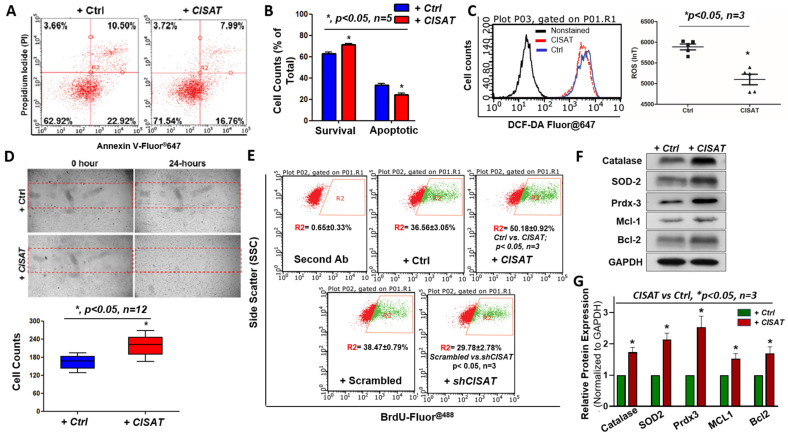 Figure 2
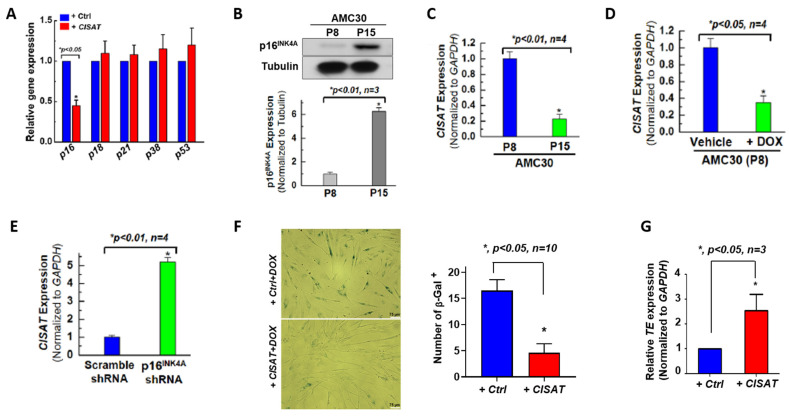 Figure 3
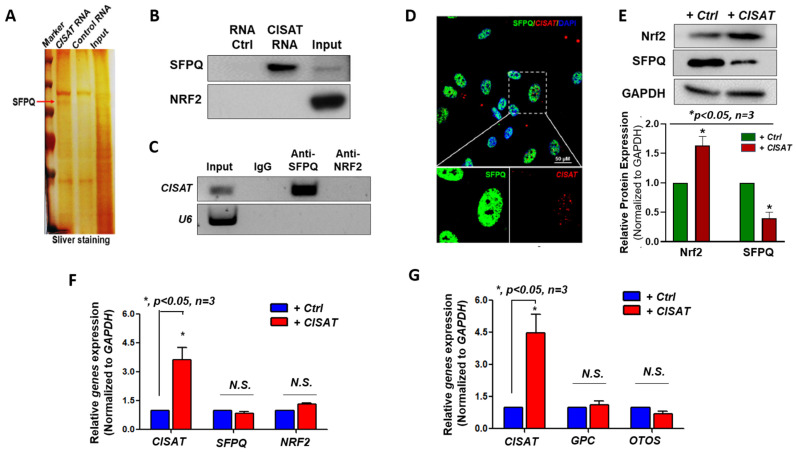 Figure 4
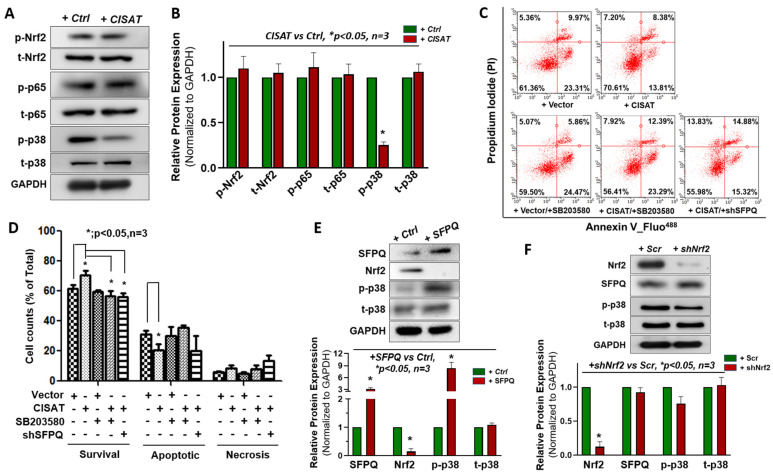 Figure 5
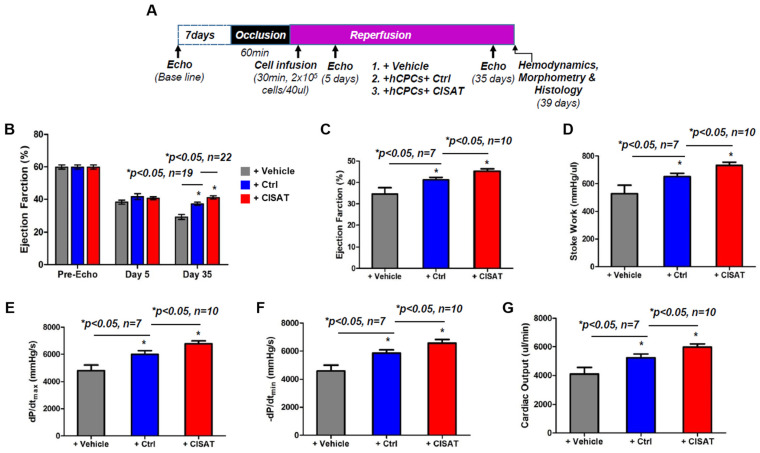 Figure 6
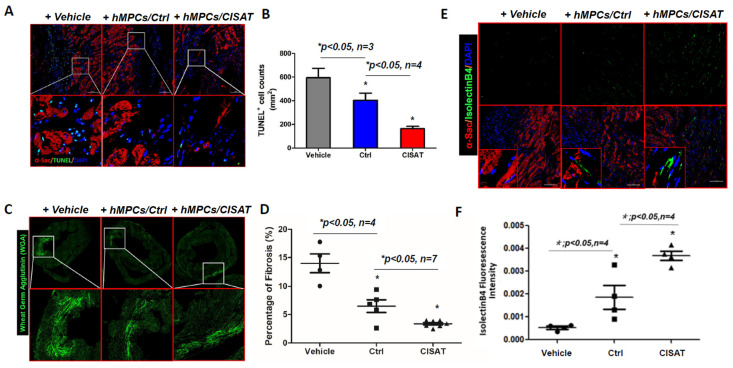 Figure 7
Peer Reviews
No public reviews on file for this paper yet. If you reviewed it on a platform where reviews are public (OpenReview, ICLR, NeurIPS, ICML), you can paste yours below so the community can read it here.
Videos
No videos yet. Explain this paper in a talk, walkthrough, or lecture? Add one.
Taxonomy
TopicsCongenital heart defects research · Cancer-related molecular mechanisms research · Mesenchymal stem cell research