Spec-LAMP: Robust Spectre Attack Detection Under Web-Based LLM Workload via L1D Miss Pending Event
Jiajia Jiao, Quan Zhou, Yulian Li

TL;DR
This paper introduces Spec-LAMP, a new method to detect Spectre attacks in web environments running large language models, where traditional methods fail due to interference from AI workloads.
Contribution
The novel use of the L1D Miss Pending event to improve Spectre attack detection accuracy in the presence of web-based LLM workloads.
Findings
Traditional HPC-based detectors suffer significant accuracy loss due to LLM-induced noise.
Incorporating the L1D Miss Pending event improves detection accuracy from 85.15% to 98.43%.
Spec-LAMP demonstrates robustness in realistic web-based LLM scenarios.
Abstract
As Large Language Models (LLMs) become increasingly integrated into web environments, they introduce complex microarchitectural noise that challenges existing hardware security mechanisms. This paper investigates the impact of concurrent web-based LLM workloads on the detection accuracy of Spectre attacks. Firstly, we constructed a representative dataset by executing multiple web-accessible LLMs (e.g., DeepSeek, Kimi, Doubao and Qwen) alongside Spectre attacks, capturing the specific interference patterns introduced by these AI workloads. Experimental analysis reveals that traditional Hardware Performance Counter (HPC)-based detectors, relying primarily on branch prediction and Last-Level Cache (LLC) events, suffer significant accuracy degradation due to the masking effects of LLM-induced noise. To address this limitation, we then propose a novel Spectre attack detector Spec-LAMP via…
Click any figure to enlarge with its caption.
 Figure 1
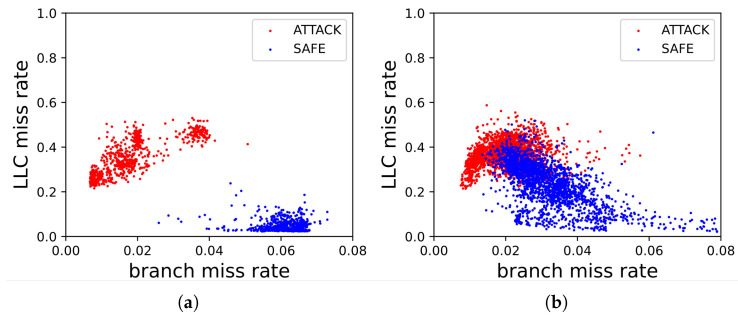 Figure 2
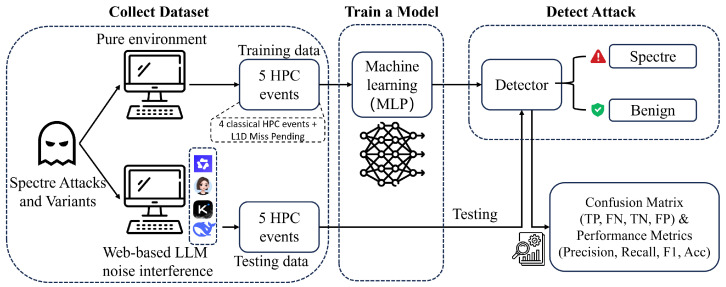 Figure 3
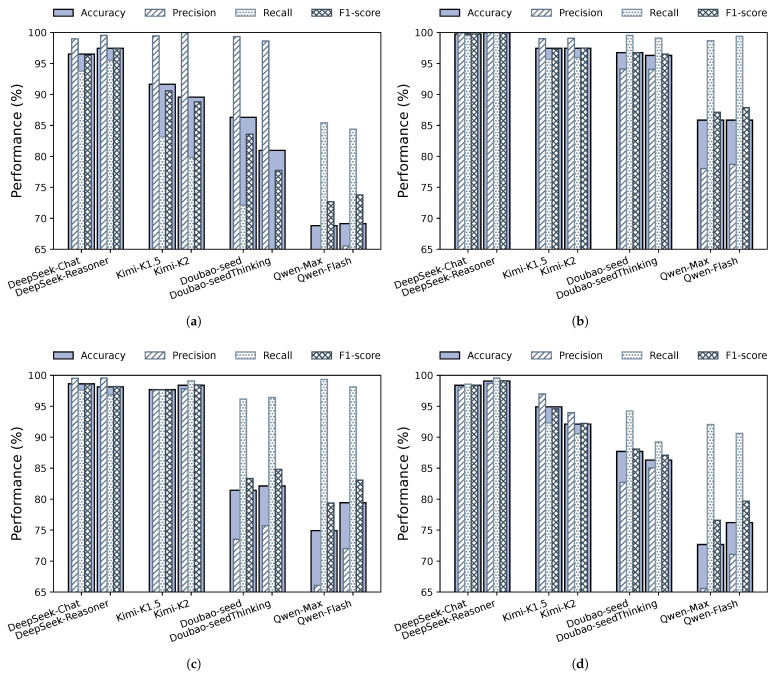 Figure 4
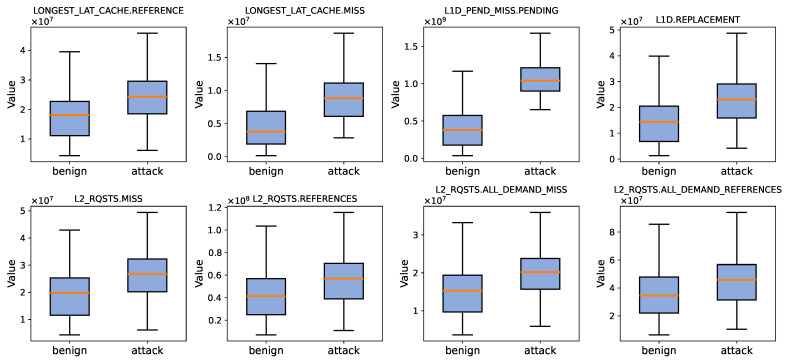 Figure 5
 Figure 6
Peer Reviews
No public reviews on file for this paper yet. If you reviewed it on a platform where reviews are public (OpenReview, ICLR, NeurIPS, ICML), you can paste yours below so the community can read it here.
Videos
No videos yet. Explain this paper in a talk, walkthrough, or lecture? Add one.
Taxonomy
TopicsSecurity and Verification in Computing · Adversarial Robustness in Machine Learning · Advanced Malware Detection Techniques