Genetic Diversity and Selection Signal Analysis of Xinjiang Black Pig Based on Whole Genome Resequencing
Mingming Tian, Yun Feng, Haitao Wang, Qiang Wang, Jingyang Dong, Haichao Zhao, Fahui Yang, Mengxun Li, Guang Pu, Xinyin Zhang, Dan Wang, Guang Li, Hongwei Chen, Tao Huang

TL;DR
This study analyzes the genetic diversity and selection signals in Xinjiang Black pigs using whole genome resequencing to understand their genetic makeup and guide future breeding.
Contribution
The study identifies 686 selection regions and 406 candidate genes linked to traits like fat deposition and reproduction in Xinjiang Black pigs.
Findings
Xinjiang Black pigs show severe inbreeding and close genetic ties to Landrace pigs.
Candidate genes like SOX5 and HMG20A are linked to fat deposition, while SPRY1 and MNS1 relate to male reproductive ability.
Genes such as ARPP19 and TLN2 are strongly associated with oestrous cycle regulation and oocyte maturation.
Abstract
Background: The Xinjiang Black pig is an excellent breed developed by the Xinjiang Production and Construction Corps in the 1990s; however, it has been endangered by the impact of commercial breeds. Methods: Whole genomes of 224 individuals from the Xinjiang Black pig conservation population were resequenced. Results: Genetic structure and diversity analyses revealed that Xinjiang Black pigs underwent severe inbreeding and were genetically closely linked to Landrace pigs. The genetic diversity of the F2 generation was well preserved in the existing breeding scheme. A total of 686 significant selection regions and 406 candidate genes were identified using FST and θπ complementary methods, with Xinjiang Black pigs, Min pigs, and Laiwu pigs as ancestral populations, and F2. Based on Gene Ontology, Kyoto Encyclopedia of Genes and Genomes, and quantitative trait loci annotations, potential…
Genes, proteins, chemicals, diseases, species, mutations and cell lines named across the full text — each resolved to its canonical identifier and authoritative record.
Click any figure to enlarge with its caption.
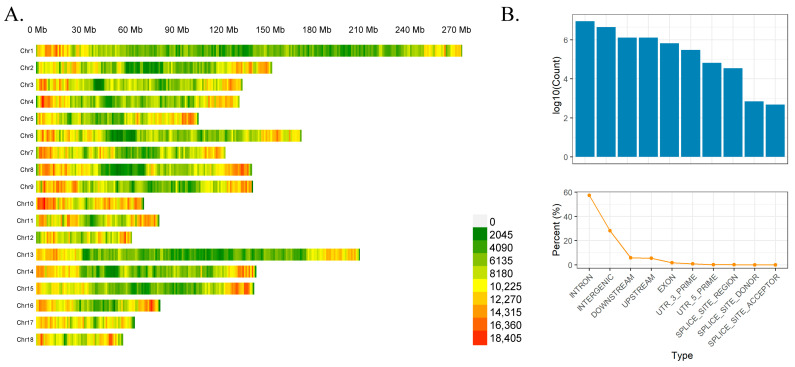 Figure 1
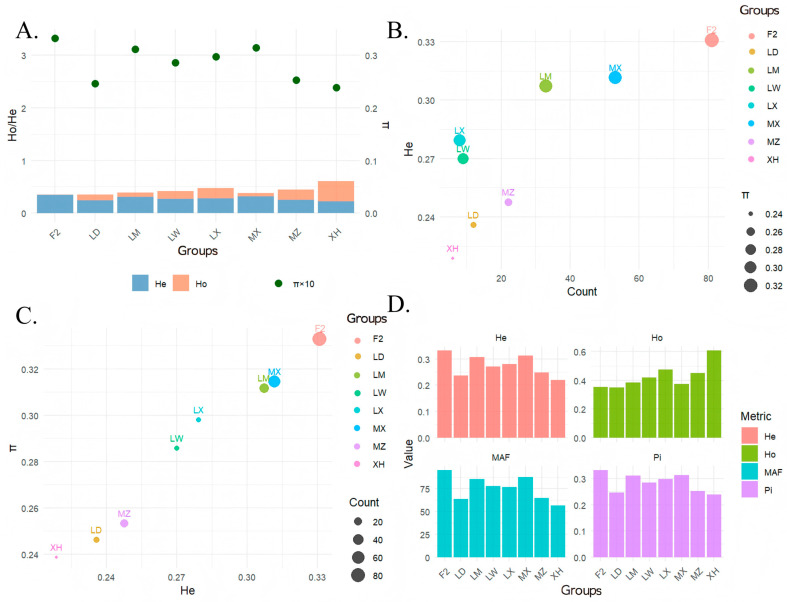 Figure 2
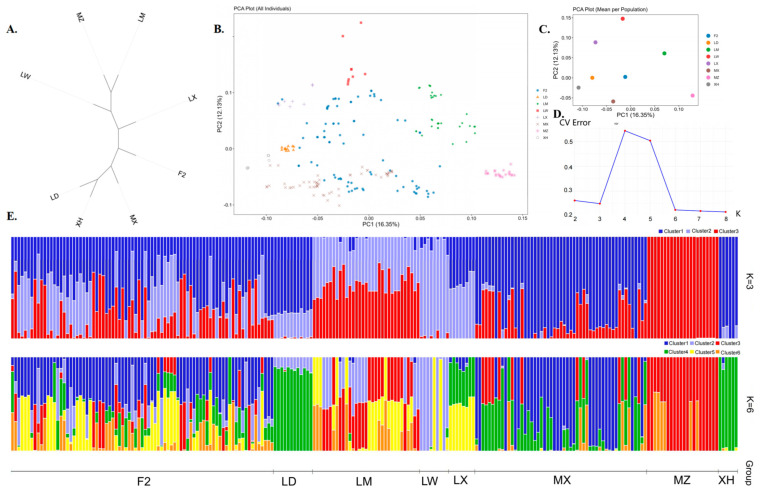 Figure 3
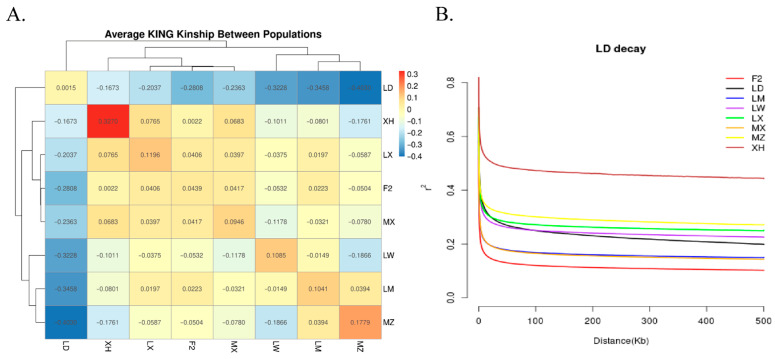 Figure 4
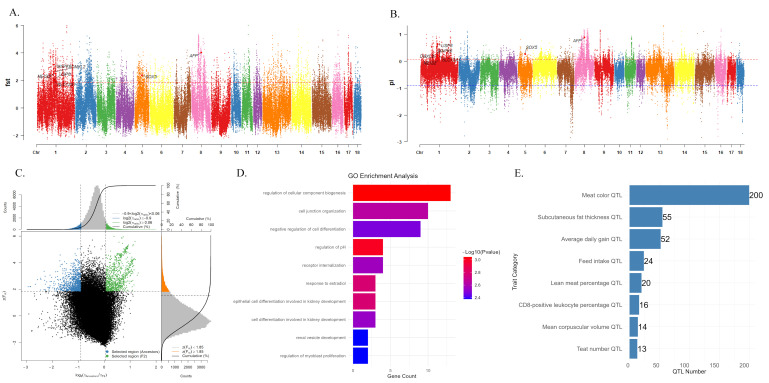 Figure 5
Peer Reviews
No public reviews on file for this paper yet. If you reviewed it on a platform where reviews are public (OpenReview, ICLR, NeurIPS, ICML), you can paste yours below so the community can read it here.
Videos
No videos yet. Explain this paper in a talk, walkthrough, or lecture? Add one.
Taxonomy
TopicsGenetic and phenotypic traits in livestock · Genetic Mapping and Diversity in Plants and Animals · Growth Hormone and Insulin-like Growth Factors