Association of Serum Glucose/Potassium Ratio with Injury Severity and Transfusion Requirements in Traumatic Pelvic Fractures: A Retrospective Cohort Study
Abdullah Alper Sahin, Yunus Emre Özbilen, Çağrı Akalın

TL;DR
This study finds that a blood test measuring glucose and potassium levels can help predict injury severity and blood transfusion needs in patients with pelvic fractures.
Contribution
The study introduces the glucose-to-potassium ratio (GPR) as a potential biomarker for early risk stratification in traumatic pelvic fractures.
Findings
A GPR cut-off of 34 was associated with higher injury severity scores and transfusion requirements.
GPR improved risk reclassification when combined with the Injury Severity Score (ISS), though ISS remained the sole independent predictor.
The GPR showed significant reclassification improvement (NRI = 0.627) despite not significantly increasing the AUC.
Abstract
Background: We evaluated the association between admission serum glucose-to-potassium ratio (GPR) and injury severity as well as early transfusion requirements in patients with traumatic pelvic fractures. Methods: This single-center, retrospective cohort study included 84 adult patients with isolated or predominantly pelvic fractures admitted between January 2020 and December 2024. Patients with concomitant non-pelvic skeletal fractures were excluded to isolate the metabolic response attributable to pelvic injury. GPR was calculated from admission serum glucose and potassium levels. Higher transfusion requirement (HT) was defined as ≥4 units of packed red blood cells within 24 h. Receiver operating characteristic (ROC) analysis identified the optimal GPR cut-off using the Youden index. Internal validation was performed using bootstrap resampling (1000 iterations), and model calibration…
Genes, proteins, chemicals, diseases, species, mutations and cell lines named across the full text — each resolved to its canonical identifier and authoritative record.
Click any figure to enlarge with its caption.
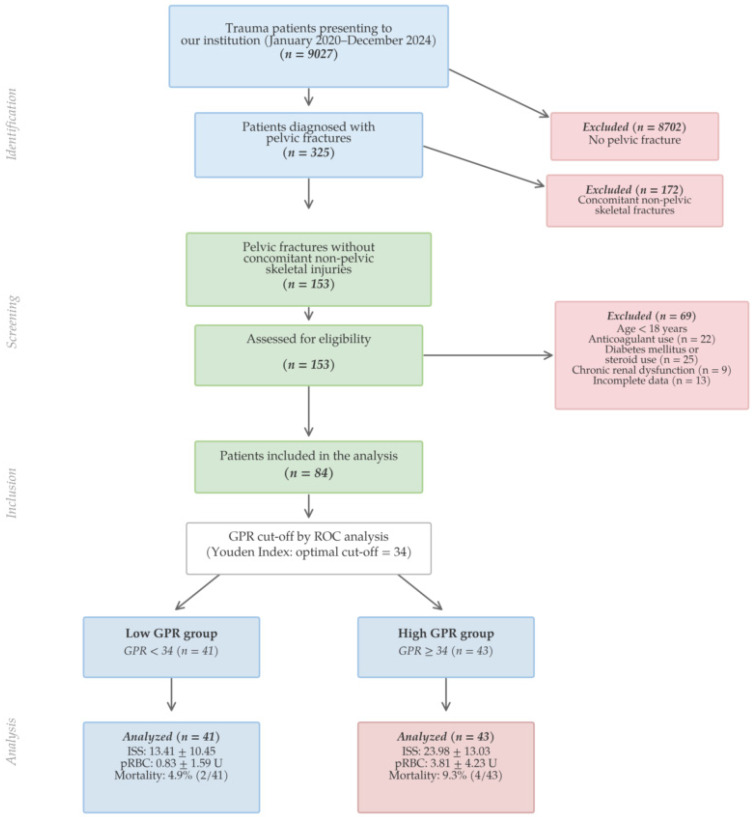 Figure 1
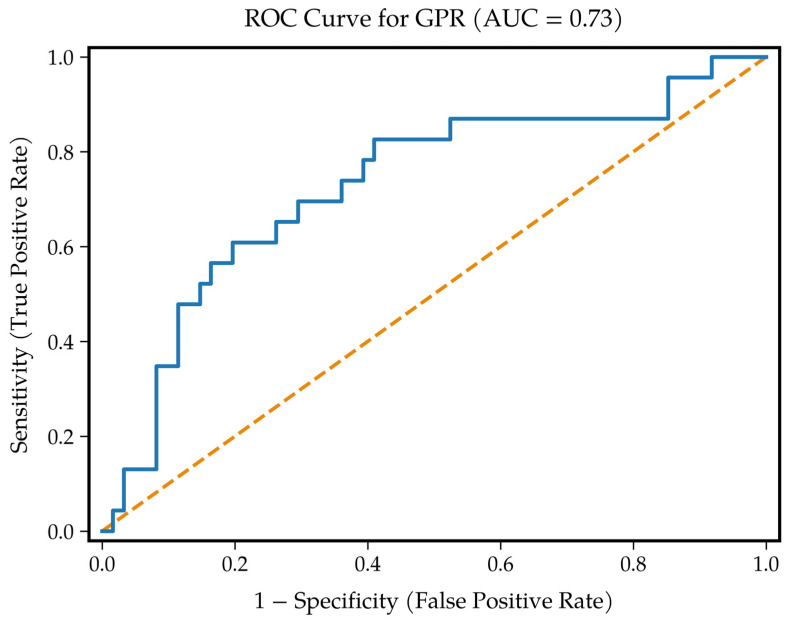 Figure 2
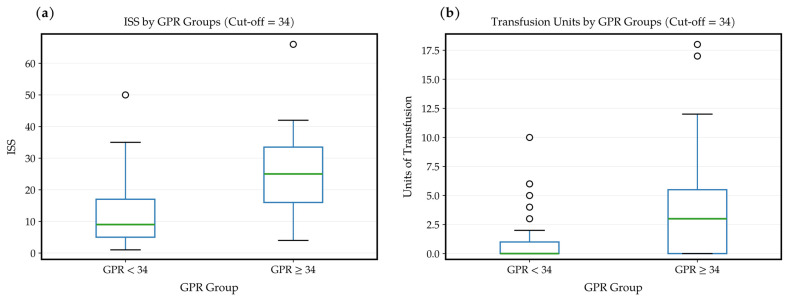 Figure 3
Peer Reviews
No public reviews on file for this paper yet. If you reviewed it on a platform where reviews are public (OpenReview, ICLR, NeurIPS, ICML), you can paste yours below so the community can read it here.
Videos
No videos yet. Explain this paper in a talk, walkthrough, or lecture? Add one.
Taxonomy
TopicsPelvic and Acetabular Injuries · Trauma, Hemostasis, Coagulopathy, Resuscitation · Hip and Femur Fractures