An Operator Analysis on Stochastic Differential Equation (SDE)-Based Diffusion Generative Models
Yunpei Wu, Yoshinobu Kawahara

TL;DR
This paper introduces a new method to speed up data generation in SDE-based models by using kernel methods to simplify complex computations.
Contribution
The novel integration of score-based reverse SDEs with kernel methods enables efficient eigenfunction approximation for faster sampling.
Findings
Sampling time for a single image on CIFAR-10 is reduced to 0.29 seconds.
The method transforms nonlinear computations into efficient linear operations.
Abstract
Score-based generative models, grounded in stochastic differential equations (SDEs), excel in producing high-quality data but suffer from slow sampling due to the extensive nonlinear computations required for iterative score function evaluations. We propose an innovative approach that integrates score-based reverse SDEs with kernel methods, leveraging the derivative reproducing property of reproducing kernel Hilbert spaces (RKHSs) to efficiently approximate the eigenfunctions and eigenvalues of the Fokker–Planck operator. This enables data generation through linear combinations of eigenfunctions, transforming computationally intensive nonlinear operations into efficient linear ones, thereby significantly reducing computational overhead. Notably, our experimental results demonstrate remarkable progress: despite a slight reduction in sample diversity, the sampling time for a single image…
Click any figure to enlarge with its caption.
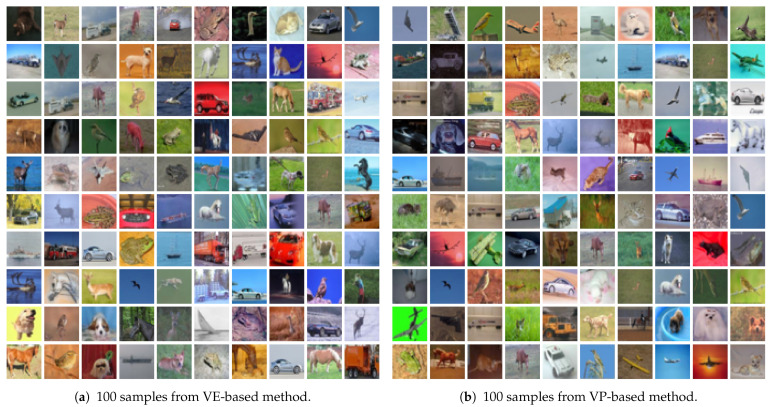 Figure 1
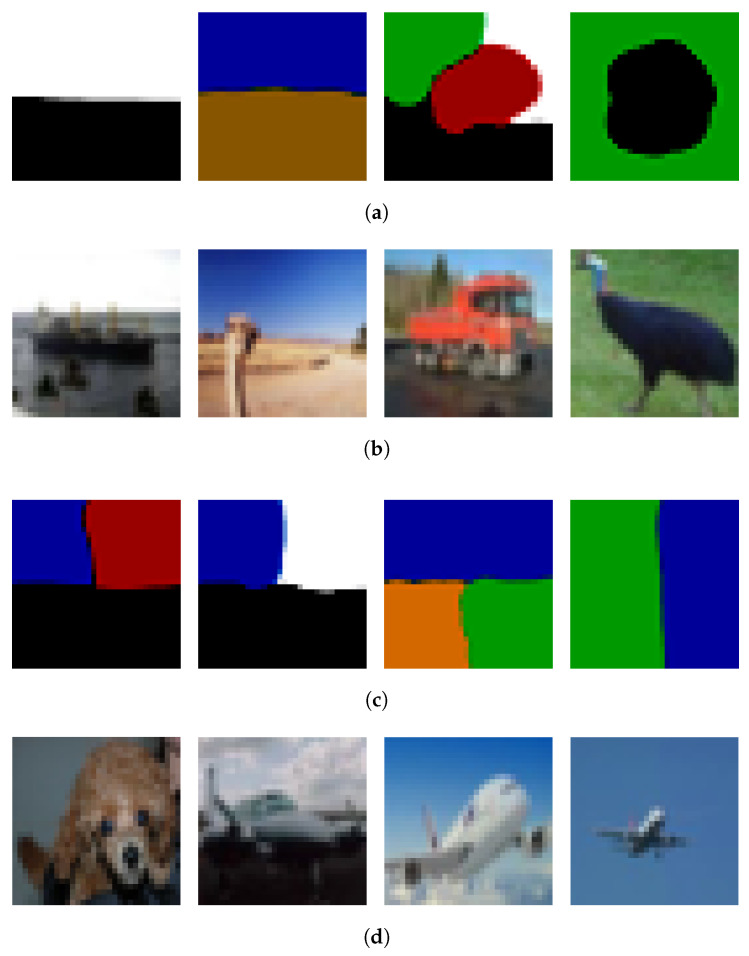 Figure 2
Peer Reviews
No public reviews on file for this paper yet. If you reviewed it on a platform where reviews are public (OpenReview, ICLR, NeurIPS, ICML), you can paste yours below so the community can read it here.
Videos
No videos yet. Explain this paper in a talk, walkthrough, or lecture? Add one.
Taxonomy
TopicsGenerative Adversarial Networks and Image Synthesis · Model Reduction and Neural Networks · Tensor decomposition and applications