Emerging Genomic and Immunological Correlates Defining Oligometastatic Trajectories in Intermediate/High-Grade Soft-Tissue Sarcomas
Alessandro Ottaiano, Francesco Sabbatino, Carmine Picone, Nadia Di Carluccio, Igino Simonetti, Annabella Di Mauro, Salvatore Tafuto

TL;DR
This paper explores how genomic and immune factors can help identify a specific type of soft-tissue sarcoma that spreads in a limited way, potentially guiding better treatment strategies.
Contribution
The paper introduces emerging genomic and immunological markers that define oligometastatic soft-tissue sarcomas and suggest their use in guiding treatment decisions.
Findings
Low genomic complexity and a B-cell-rich tumor environment are linked to better outcomes in oligometastatic sarcomas.
High ctDNA levels and immunosuppressive environments correlate with more aggressive metastatic behavior.
AI and machine learning can integrate multi-dimensional data to predict metastatic behavior in sarcomas.
Abstract
Soft-tissue sarcomas (STSs) comprise a rare, heterogeneous group of mesenchymal malignancies in which histologic grade remains the strongest determinant of outcome, metastatic risk, and therapeutic strategy. Intermediate/high-grade STSs exhibit a pronounced propensity for early distant relapse, yet growing evidence indicates that metastatic behaviour is not uniform. Within this spectrum, an oligometastatic phenotype, characterised by a limited number of metastases, often confined to the lung, has emerged as a clinically and biologically distinct state associated with more indolent metastatic kinetics and improved survival when treated with aggressive local interventions. However, the criteria that define true oligometastatic STSs remain unsettled, and prospective evidence is lacking. Emerging molecular and immunological correlates provide a potential framework for biological triage. Low…
Genes, proteins, chemicals, diseases, species, mutations and cell lines named across the full text — each resolved to its canonical identifier and authoritative record.
Click any figure to enlarge with its caption.
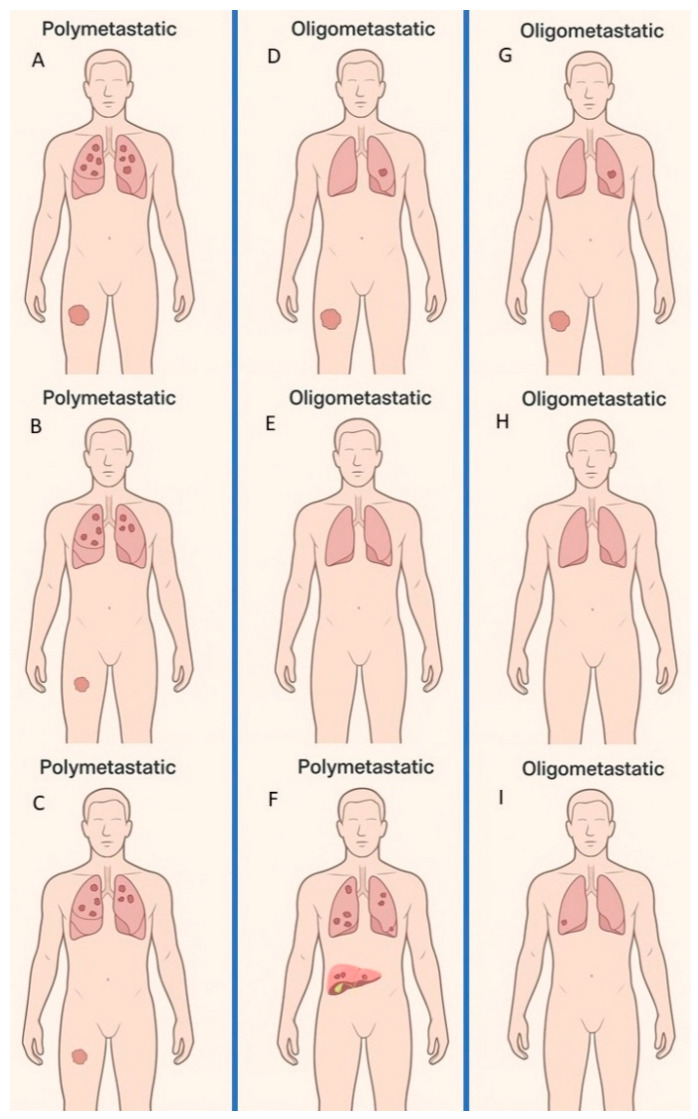 Figure 1
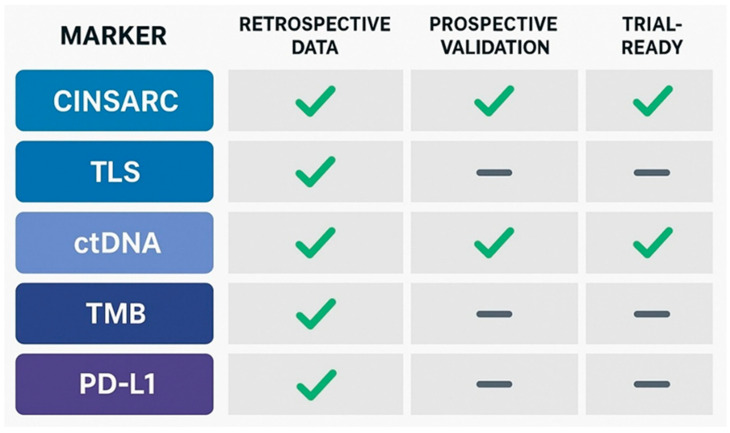 Figure 2
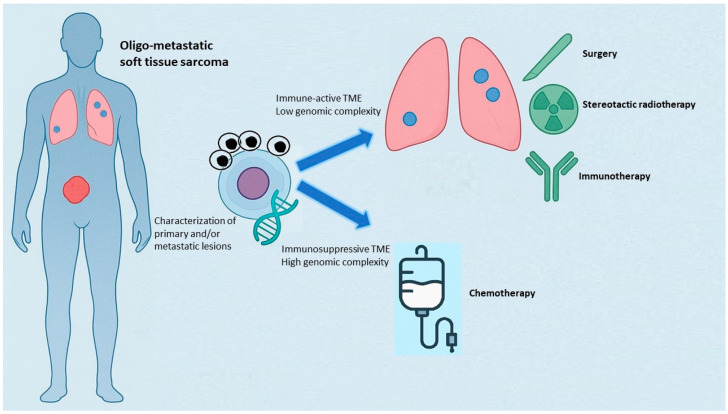 Figure 3
Peer Reviews
No public reviews on file for this paper yet. If you reviewed it on a platform where reviews are public (OpenReview, ICLR, NeurIPS, ICML), you can paste yours below so the community can read it here.
Videos
No videos yet. Explain this paper in a talk, walkthrough, or lecture? Add one.
Taxonomy
TopicsSarcoma Diagnosis and Treatment · Cancer Genomics and Diagnostics · Lung Cancer Diagnosis and Treatment