Sport-Specific Muscle Architectural Adaptations and Jump Performance in Preadolescent Rhythmic Gymnasts
Vasiliki Gaspari, Gregory C. Bogdanis, Ioli Panidi, Dimitra A. Kanna, Andreas Salagas, Anastasia Donti, Gerasimos Terzis, Olyvia Donti

TL;DR
Young rhythmic gymnasts have specific muscle adaptations that improve their jumping performance compared to other children.
Contribution
The study identifies sport-specific muscle architectural adaptations in preadolescent rhythmic gymnasts linked to enhanced jump performance.
Findings
Rhythmic gymnasts had longer biceps femoris fascicle length and greater muscle thickness compared to controls.
Gymnasts demonstrated higher jump height and power output normalized to body mass.
Muscle cross-sectional area of the gastrocnemius predicted jump power in gymnasts, while VL CSA and maturity predicted it in controls.
Abstract
Objective: We examined vastus lateralis (VL), gastrocnemius medialis (GM), gastrocnemius lateralis (GL), and biceps femoris (BF) muscle architecture and force–time parameters recorded during a countermovement jump (CMJ). Methods: Eighty-nine 9 year-old girls (43 rhythmic gymnasts and 46 recreationally active controls) were assessed in: (a) muscle architecture (fascicle length—FL; angle; muscle thickness; and anatomical cross-sectional area—CSA) using ultrasonography, (b) CMJ performance (maximum force—Fmax; rate of force development—RFD; jump height; and peak power) using force–time data, and (c) anthropometrics and body composition. Results: Rhythmic gymnasts exhibited greater BF fascicle length and muscle thickness than controls (7.84 ± 0.73 vs. 7.26 ± 0.75 cm and 1.76 ± 0.19 vs. 1.61 ± 0.22 cm, respectively, p < 0.001), while VL muscle CSA was larger in controls (p = 0.001). When…
Click any figure to enlarge with its caption.
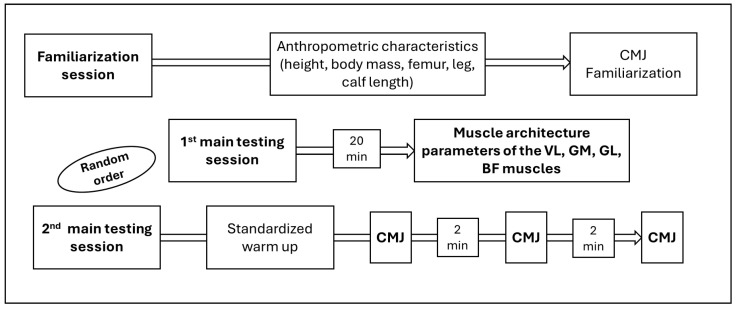 Figure 1
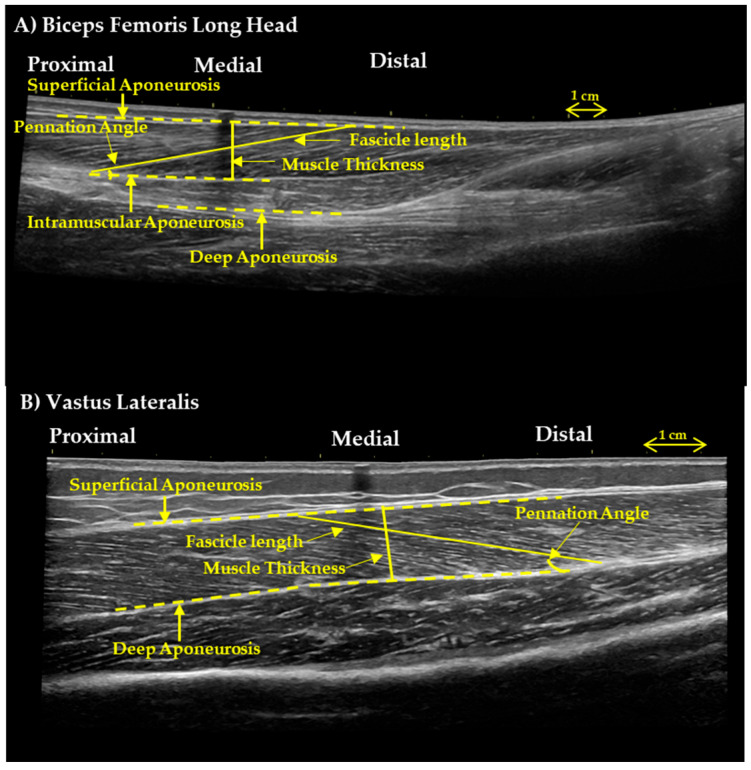 Figure 2
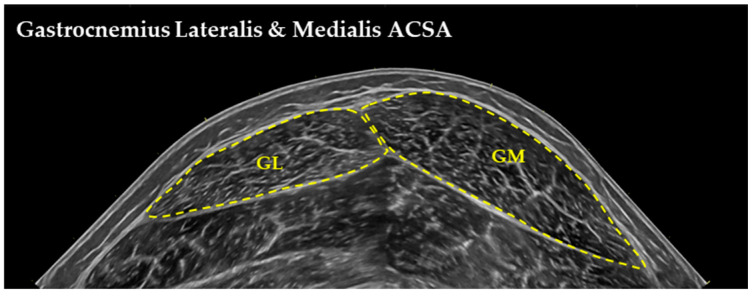 Figure 3
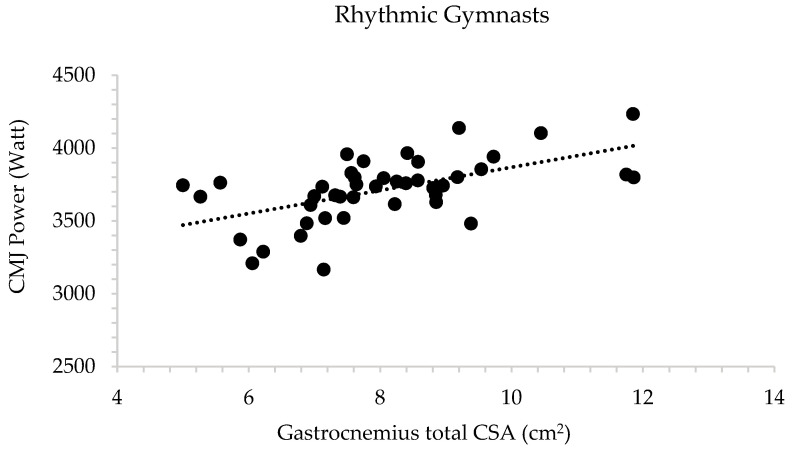 Figure 4
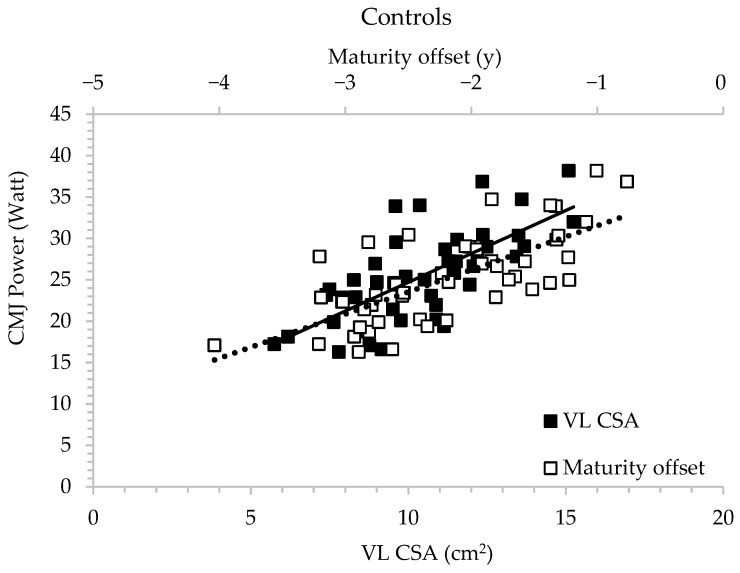 Figure 5
Peer Reviews
No public reviews on file for this paper yet. If you reviewed it on a platform where reviews are public (OpenReview, ICLR, NeurIPS, ICML), you can paste yours below so the community can read it here.
Videos
No videos yet. Explain this paper in a talk, walkthrough, or lecture? Add one.
Taxonomy
TopicsSports injuries and prevention · Sports Performance and Training · Lower Extremity Biomechanics and Pathologies