The Power of the Lorentz Quantum Computer
Qi Zhang, Biao Wu

TL;DR
This paper explores a new theoretical quantum computing model that can solve complex problems faster than traditional models.
Contribution
The paper introduces the Lorentz quantum computer and proves its equivalence to the complexity class P♯P.
Findings
LQC can solve NP-hard problems like maximum independent set in polynomial time.
LQC can simulate quantum computing with postselection but not vice versa.
The complexity class BLQP is shown to contain the entire polynomial hierarchy.
Abstract
We analyze the power of the recently proposed Lorentz quantum computer (LQC), a theoretical model leveraging hyperbolic bits (hybits) governed by complex Lorentz transformations. We define the complexity class BLQP (bounded-error Lorentz quantum polynomial-time) and demonstrate its equivalence to the complexity class P♯P (the class of problems solvable by a deterministic polynomial-time Turing machine with access to a ♯P oracle). LQC algorithms are shown to solve NP-hard problems, such as the maximum independent set (MIS), in polynomial time, thereby placing NP and co-NP within BLQP. Furthermore, we establish that LQC can efficiently simulate quantum computing with postselection (PostBQP), while the reverse is not possible, highlighting LQC’s unique “super-postselection” capability. By proving BLQP =P♯P, we situate the entire polynomial hierarchy (PH) within BLQP and reveal profound…
Click any figure to enlarge with its caption.
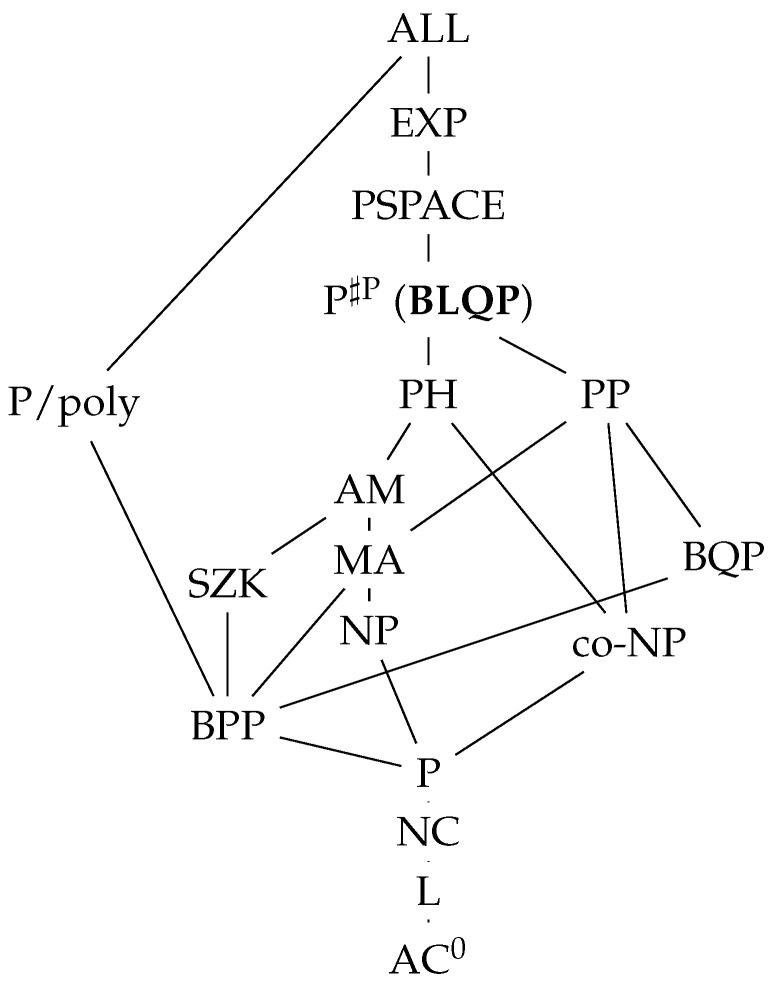 Figure 1
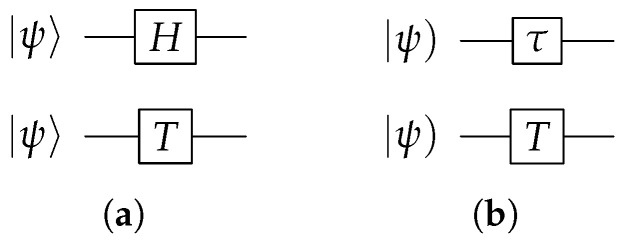 Figure 2
 Figure 3
 Figure 4
 Figure 5
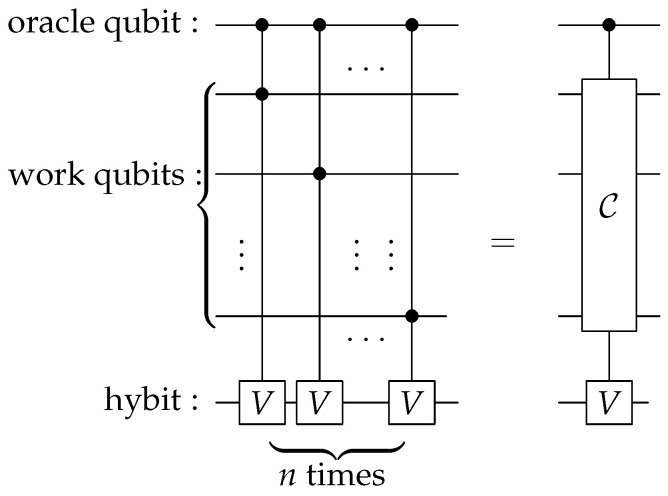 Figure 6
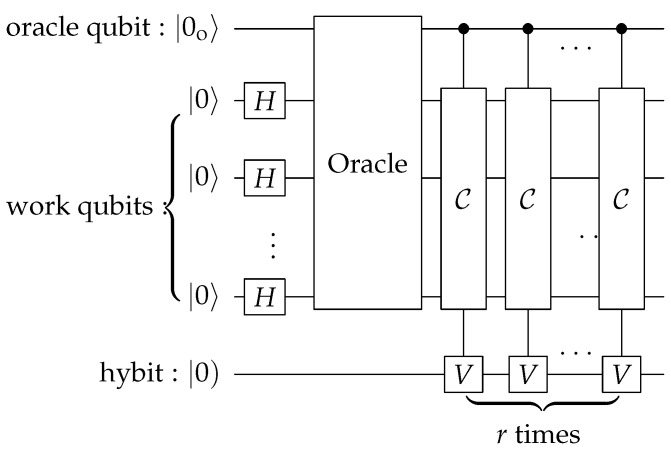 Figure 7
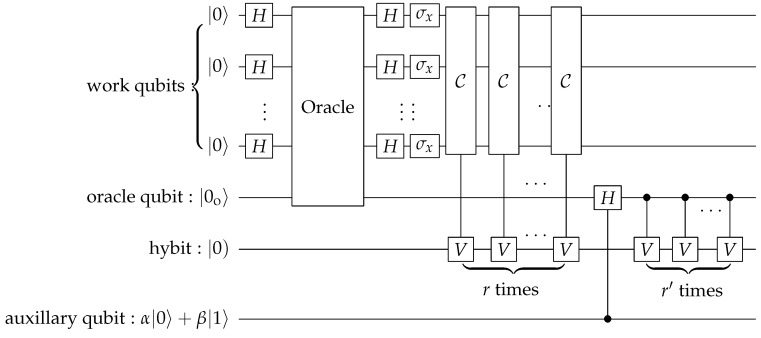 Figure 8
Peer Reviews
No public reviews on file for this paper yet. If you reviewed it on a platform where reviews are public (OpenReview, ICLR, NeurIPS, ICML), you can paste yours below so the community can read it here.
Videos
No videos yet. Explain this paper in a talk, walkthrough, or lecture? Add one.
Taxonomy
TopicsQuantum Computing Algorithms and Architecture · Quantum Mechanics and Applications · Computability, Logic, AI Algorithms