Liquid Biopsy in Gastrointestinal Cancers: Circulating Tumor DNA for Molecular Residual Disease Assessment and Early Treatment Monitoring
Kamil Safiejko, Marcin Juchimiuk, Jacek Pierko, Maciej Maslyk, Mateusz Mucha, Mariusz Koda, Luiza Konczuga-Koda, Sebastian Radej, Adem Akcakaya, Lukasz Szarpak

TL;DR
This paper reviews how blood-based tumor DNA testing can detect leftover cancer and track treatment response in gastrointestinal cancers, with strongest evidence in colorectal cancer.
Contribution
The study provides a comprehensive clinical synthesis of ctDNA's role in molecular residual disease detection and treatment monitoring across multiple gastrointestinal cancer types.
Findings
Postoperative ctDNA is a strong predictor of recurrence risk in colorectal cancer, guiding adjuvant treatment decisions.
ctDNA monitoring in metastatic colorectal cancer enables early response tracking and resistance detection.
ctDNA shows promise in gastroesophageal cancers but has limited sensitivity in pancreatic and biliary cancers due to low DNA shedding.
Abstract
Circulating tumor DNA (ctDNA) is a blood-based marker that may help doctors detect residual cancer after treatment and identify treatment failure earlier than standard imaging in gastrointestinal cancers. The strongest evidence currently comes from colorectal cancer, where postoperative ctDNA is a powerful predictor of recurrence risk and can guide adjuvant treatment decisions in selected settings. In gastroesophageal, pancreatic, biliary, and liver cancers, ctDNA is promising but less consistent because tumors often shed less DNA into the blood and test performance varies. Positive ctDNA results are usually clinically meaningful, while negative results must be interpreted cautiously. Broader routine use will require standardized testing, careful control of false positives, and trials showing improved patient outcomes. Background: Liquid biopsy using circulating tumor DNA (ctDNA) is…
Genes, proteins, chemicals, diseases, species, mutations and cell lines named across the full text — each resolved to its canonical identifier and authoritative record.
Click any figure to enlarge with its caption.
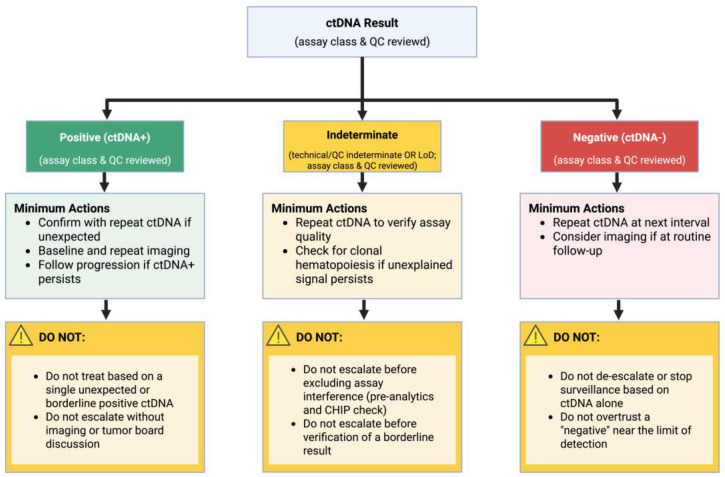 Figure 1
Peer Reviews
No public reviews on file for this paper yet. If you reviewed it on a platform where reviews are public (OpenReview, ICLR, NeurIPS, ICML), you can paste yours below so the community can read it here.
Videos
No videos yet. Explain this paper in a talk, walkthrough, or lecture? Add one.
Taxonomy
TopicsCancer Genomics and Diagnostics · Single-cell and spatial transcriptomics · Cancer Cells and Metastasis