Characterization of Polysaccharide-Based Composites Enriched with Zinc Oxide and Bacitracin for the Treatment of Infected Wounds
Alicja Macyk, Anna Kusibab, Dorota Ochońska, Monika Brzychczy-Włoch, Katarzyna Reczyńska-Kolman, Elżbieta Pamuła

TL;DR
This study develops wound dressings using gellan gum and sodium alginate enriched with zinc oxide and bacitracin to treat infected wounds effectively.
Contribution
The novel contribution is the development of a composite hydrogel dressing with enhanced antibacterial properties using zinc oxide nanoparticles and bacitracin.
Findings
The composite hydrogel samples showed water absorption exceeding 4000%, indicating excellent liquid absorbability.
Zinc oxide nanoparticles exhibited antibacterial activity against Staphylococcus aureus and Staphylococcus epidermidis when combined with bacitracin.
The GG/Alg+BAC+ZnO dressing is the most promising for treating infected and exuding wounds.
Abstract
This study aimed to manufacture and characterize highly porous dressings based on gellan gum (GG) and sodium alginate (Alg) hydrogels modified with zinc oxide (ZnO) and bacitracin (BAC) intended for infected and exuding wounds. ZnO nanoparticles (ZnO(n)) were 26 ± 4 nm in size according to atomic force microscopy (AFM), while the size of the microparticles (ZnO(m)) was 1.02 ± 0.01 µm according to laser diffraction measurements. Their relative surface areas were 39.16 m2/g and 4.56 m2/g, respectively. Microbiological studies showed that ZnO(n) exhibited antibacterial activity in contact with the Gram+ Staphylococcus aureus; thus, they were selected for embedding in a hydrogel matrix. Four types of composite hydrogel samples were manufactured: GG/Alg, GG/Alg+ZnO, GG/Alg+BAC, and GG/Alg+ZnO+BAC, which were subjected to freeze drying. The water absorption of all materials exceeded 4000%,…
Genes, proteins, chemicals, diseases, species, mutations and cell lines named across the full text — each resolved to its canonical identifier and authoritative record.
Click any figure to enlarge with its caption.
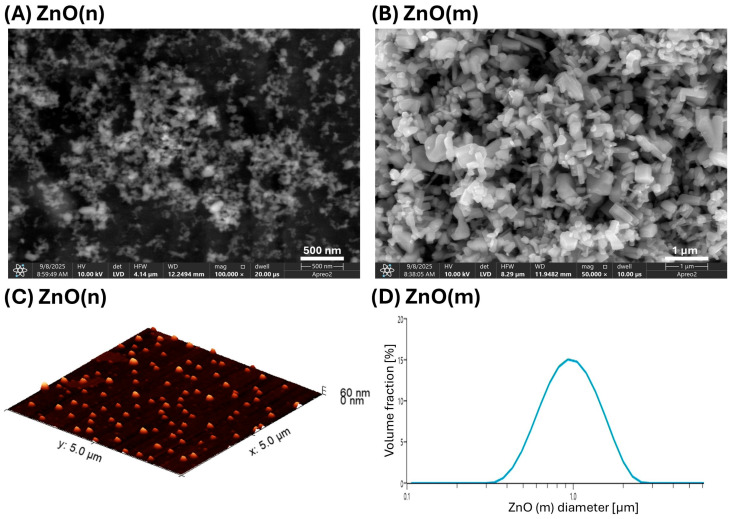 Figure 1
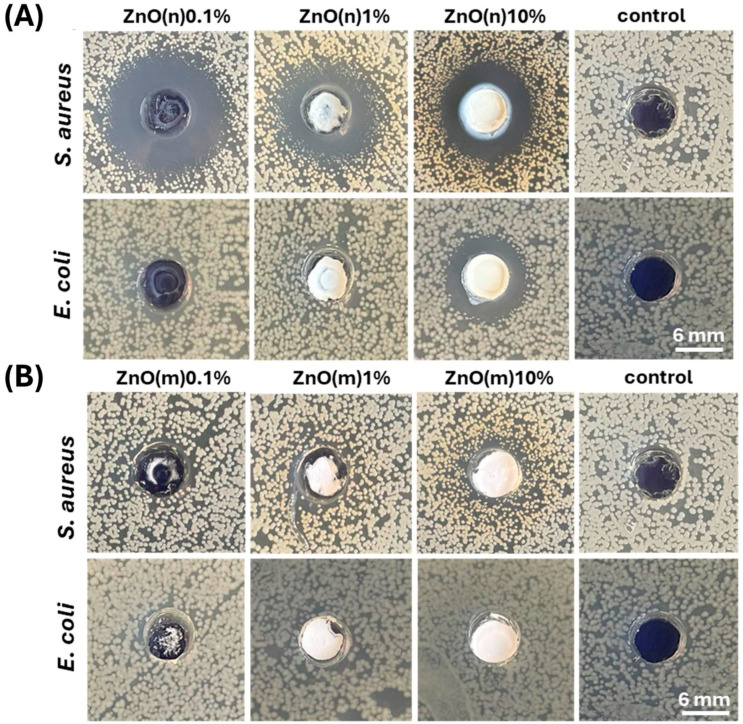 Figure 2
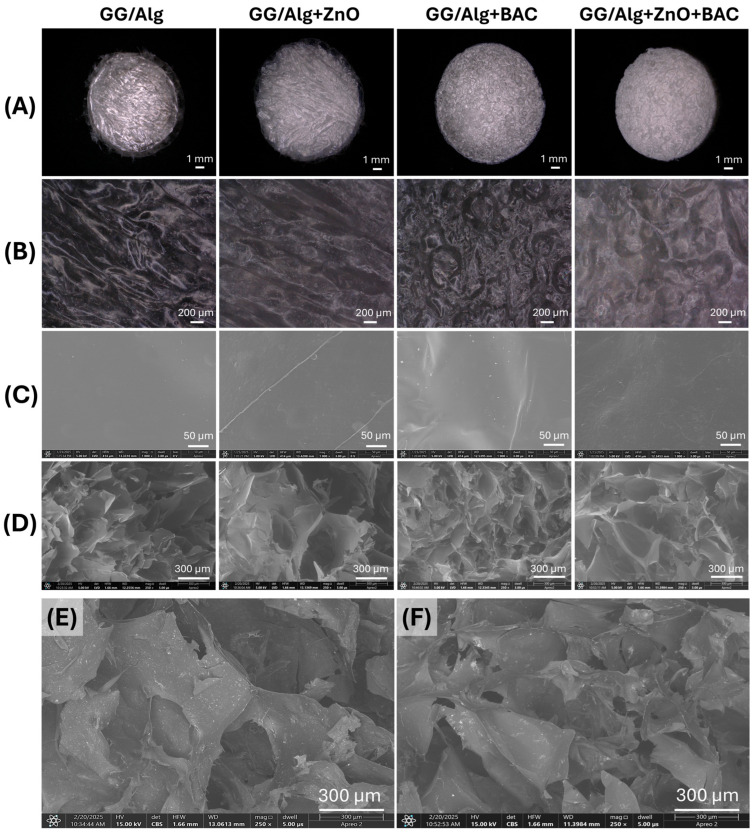 Figure 3
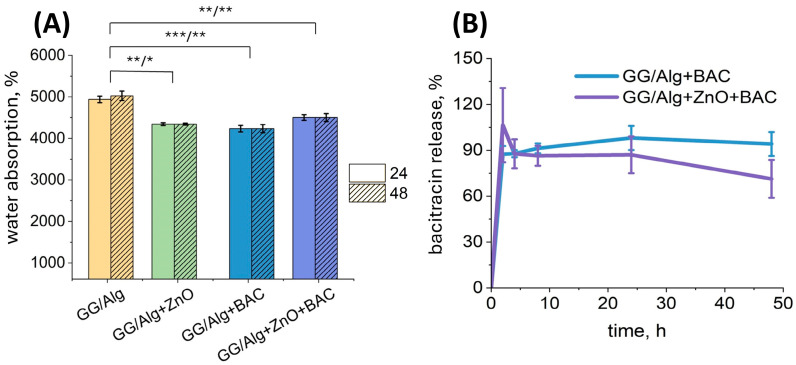 Figure 4
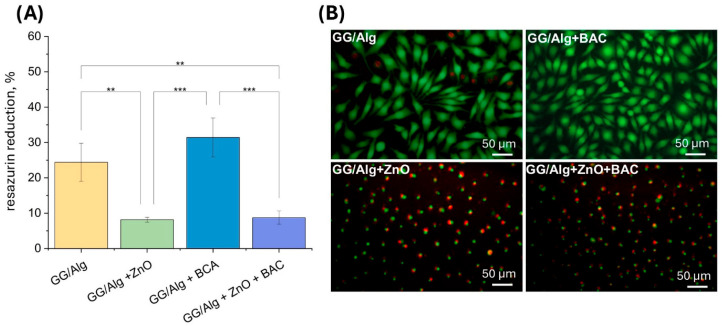 Figure 5
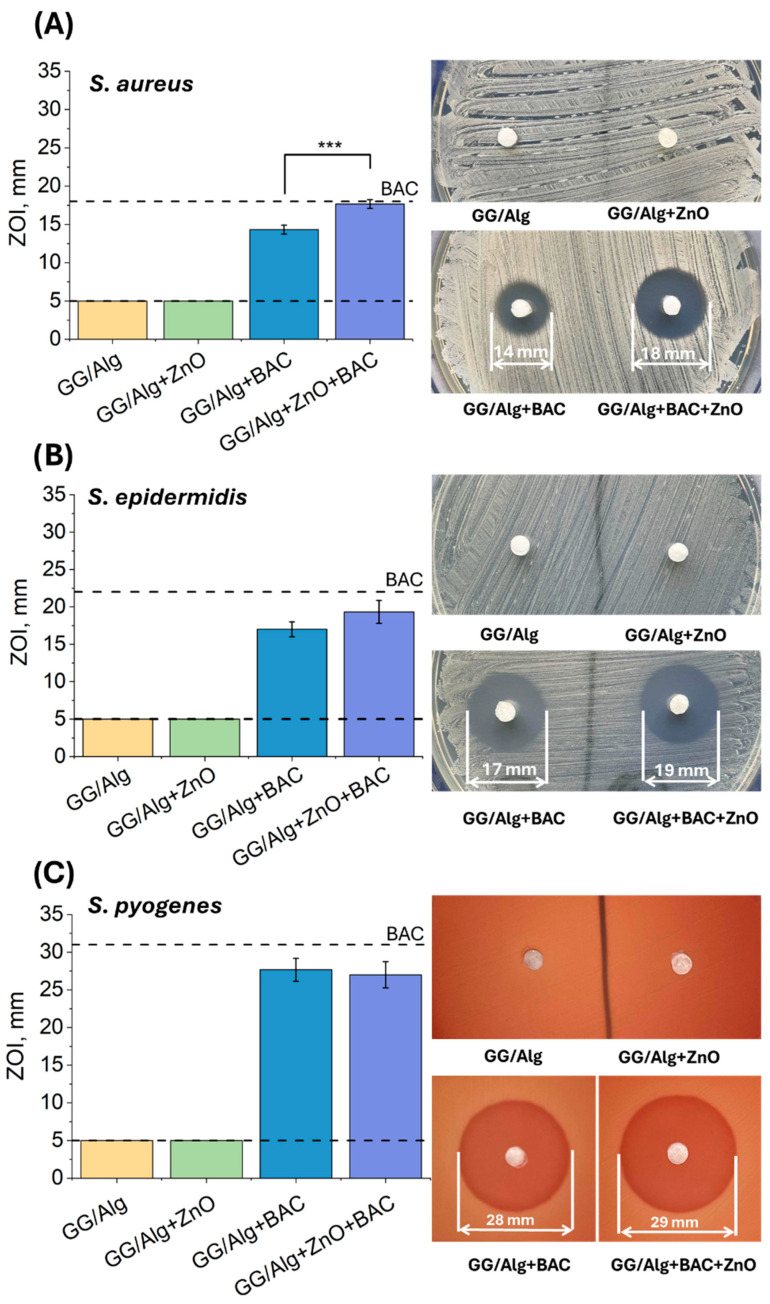 Figure 6
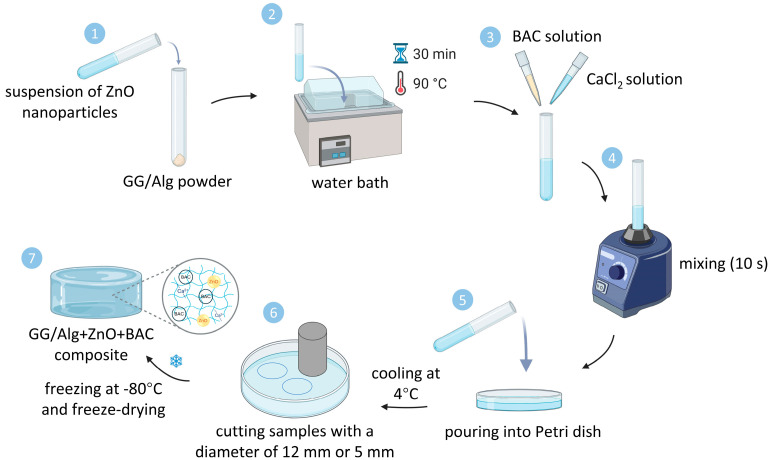 Figure 7
Peer Reviews
No public reviews on file for this paper yet. If you reviewed it on a platform where reviews are public (OpenReview, ICLR, NeurIPS, ICML), you can paste yours below so the community can read it here.
Videos
No videos yet. Explain this paper in a talk, walkthrough, or lecture? Add one.
Taxonomy
TopicsWound Healing and Treatments · Hydrogels: synthesis, properties, applications · Surgical Sutures and Adhesives