Psoriasis in Difficult-to-Treat Areas: A Multicentre, Real-World Retrospective Study Analyzing the Impact of Non-Invasive Imaging Techniques (Dermoscopy, Reflectance Confocal Microscopy and Optical Coherence Tomography) to Monitor the Effectiveness of Risankizumab in the Treatment of Plaque Psoriasis of the Legs
Annunziata Dattola, Raimondo Rossi, Giuseppe Rizzuto, Giacomo Caldarola, Eleonora De Luca, Viviana Lora, Domenico Giordano, Severino Persechino, Claudio Bonifati, Diego Orsini, Dario Graceffa, Arianna Zangrilli, Gianluca Pagnanelli, Paola Tribuzi, Annamaria Mazzotta

TL;DR
This study shows that non-invasive imaging techniques can effectively monitor how well risankizumab treats psoriasis on the legs.
Contribution
The study introduces the use of non-invasive imaging to track treatment response in psoriasis of the legs, a difficult-to-treat area.
Findings
Non-invasive imaging showed significant normalization of vascular patterns and skin architecture after risankizumab treatment.
Lesions with baseline haemorrhagic dots had a higher chance of complete clearance at Week 4.
Epidermal and stratum corneum thickness decreased significantly with treatment.
Abstract
Objectives: To evaluate the impact of non-invasive imaging techniques such as dermoscopy, reflectance confocal microscopy (RCM) and optical coherence tomography (OCT) to monitor the efficacy of risankizumab on plaque psoriasis of the legs by analyzing morpho-histological changes. Materials and Methods: Multicentre, real-world retrospective study involving 37 adults with moderate-to-severe plaque psoriasis. Assessments performed during routine visits at baseline, Week 4 and Week 12 included clinical response, dermoscopy, RCM and OCT. Results: Thirty-seven patients were included (mean age 52.1 years; 54% male; mean BMI 27.0 kg/m2). Dermoscopy showed progressive vascular normalization: at Week 12, 94.29% of lesions had minimal or no vascular pattern. White and yellow scales decreased significantly. On RCM, dilated vessels, inflammatory infiltrate, and papillomatosis progressively…
Genes, proteins, chemicals, diseases, species, mutations and cell lines named across the full text — each resolved to its canonical identifier and authoritative record.
Click any figure to enlarge with its caption.
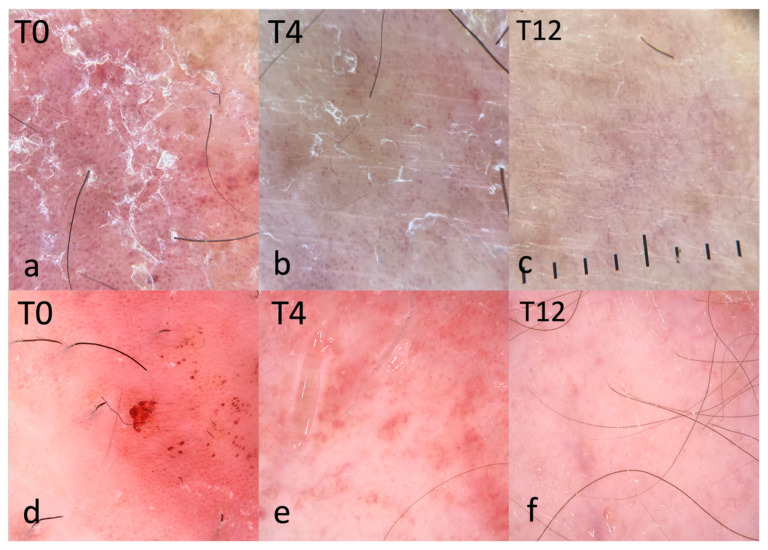 Figure 1
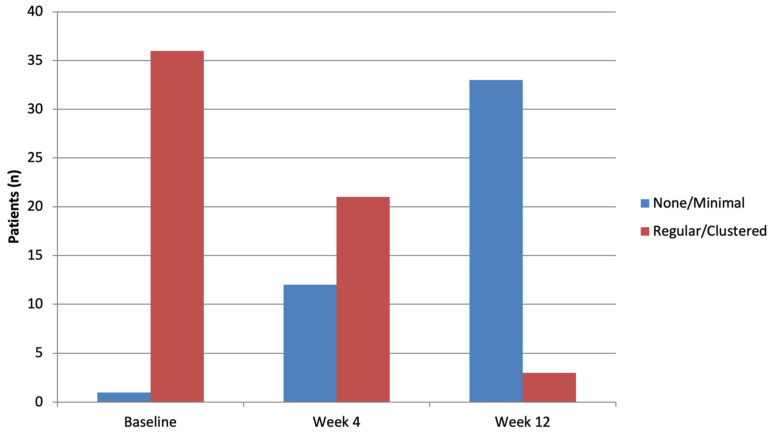 Figure 2
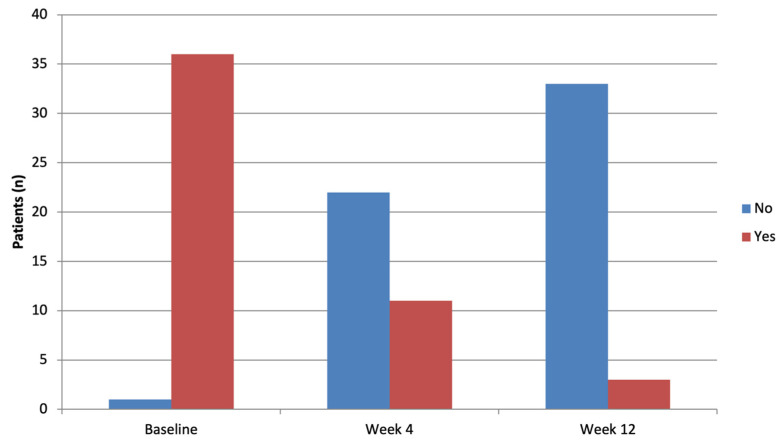 Figure 3
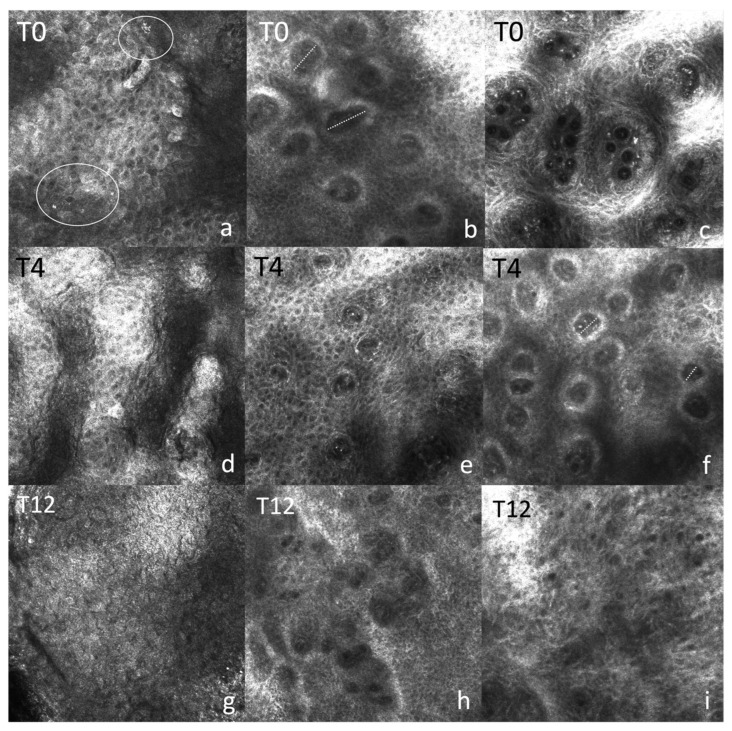 Figure 4
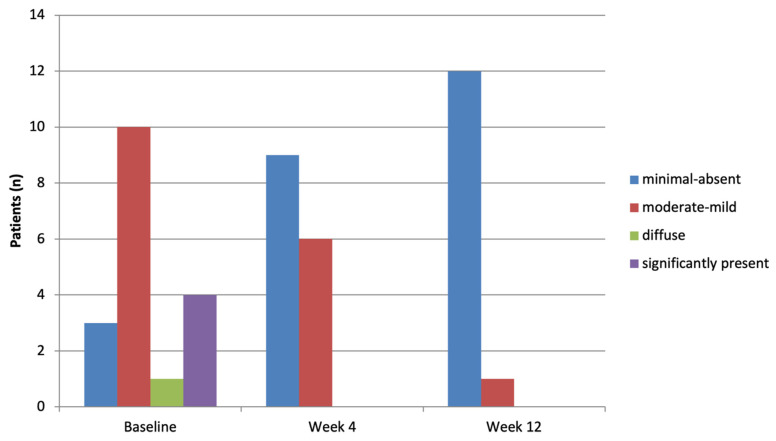 Figure 5
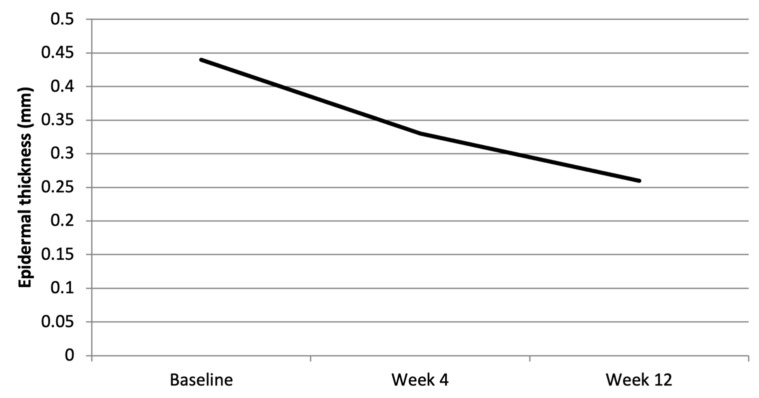 Figure 6
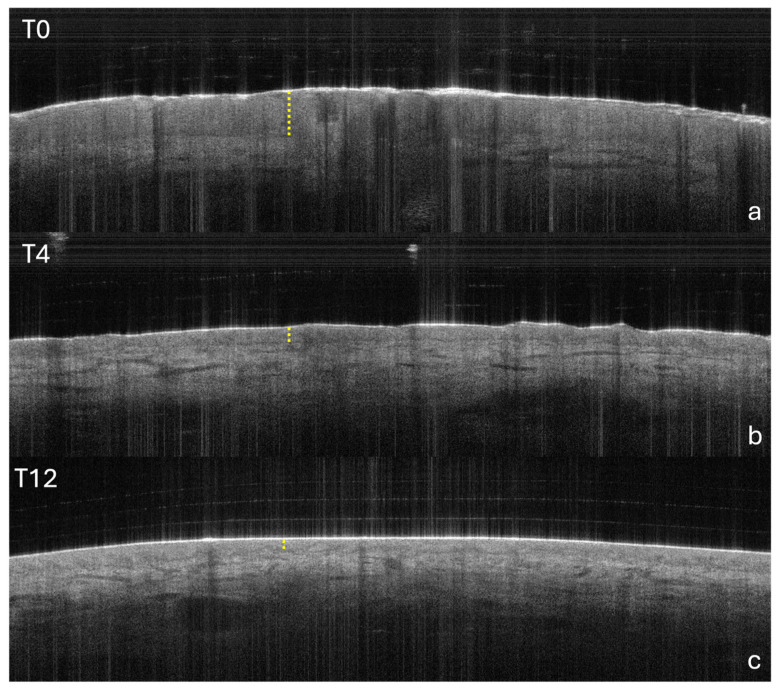 Figure 7
Peer Reviews
No public reviews on file for this paper yet. If you reviewed it on a platform where reviews are public (OpenReview, ICLR, NeurIPS, ICML), you can paste yours below so the community can read it here.
Videos
No videos yet. Explain this paper in a talk, walkthrough, or lecture? Add one.
Taxonomy
TopicsPsoriasis: Treatment and Pathogenesis · Spondyloarthritis Studies and Treatments · Dermatology and Skin Diseases