Maintenance Strategies in High-Risk Myeloma: A Multicenter Comparison of Bortezomib–Lenalidomide Versus Lenalidomide Alone: A USMIRC Multicenter Analysis
Sruthi P. Ramanan, Oyepeju F. Abioye, Shebli Atrash, Jianzheng Wu, Dinesh Pal Mudaranthakam, Anita Mazloom, Omar Alkharabsheh, Mansi R. Shah, Zahra Mahmoudjafari, Jordan Snyder, Muhammad Umair Mushtaq, Forat Lutfi, Jeries Kort, Al-Ola Abdallah, Prerna Mewawalla

TL;DR
This study compares two maintenance therapies for high-risk multiple myeloma after stem cell transplants and finds no significant survival benefit from adding bortezomib to lenalidomide.
Contribution
A multicenter real-world comparison of VR versus R maintenance in HRMM, highlighting the lack of significant efficacy improvement with the doublet regimen.
Findings
VR maintenance showed numerically longer PFS compared to R alone, but the difference was not statistically significant.
No treatment-related mortality occurred within 100 days post-transplant in either group.
The study emphasizes the need for novel maintenance strategies in high-risk multiple myeloma.
Abstract
Maintenance therapy plays a critical role in prolonging disease control and improving long-term outcomes in patients with high-risk multiple myeloma (HRMM). While lenalidomide maintenance following autologous stem cell transplantation (ASCT) has been shown to improve progression-free survival (PFS) and overall survival (OS) in multiple myeloma, these benefits are attenuated in patients with HRMM. Given that some centers employ doublet maintenance strategies despite the absence of a clearly established standard of care for HRMM, our multicenter analysis addresses an important gap in the current literature by comparing the efficacy and safety of doublet versus single-agent maintenance therapy, specifically bortezomib plus lenalidomide (VR) versus lenalidomide alone (R), in the post-transplant setting. Background: Lenalidomide maintenance after autologous stem cell transplantation (ASCT)…
Genes, proteins, chemicals, diseases, species, mutations and cell lines named across the full text — each resolved to its canonical identifier and authoritative record.
Click any figure to enlarge with its caption.
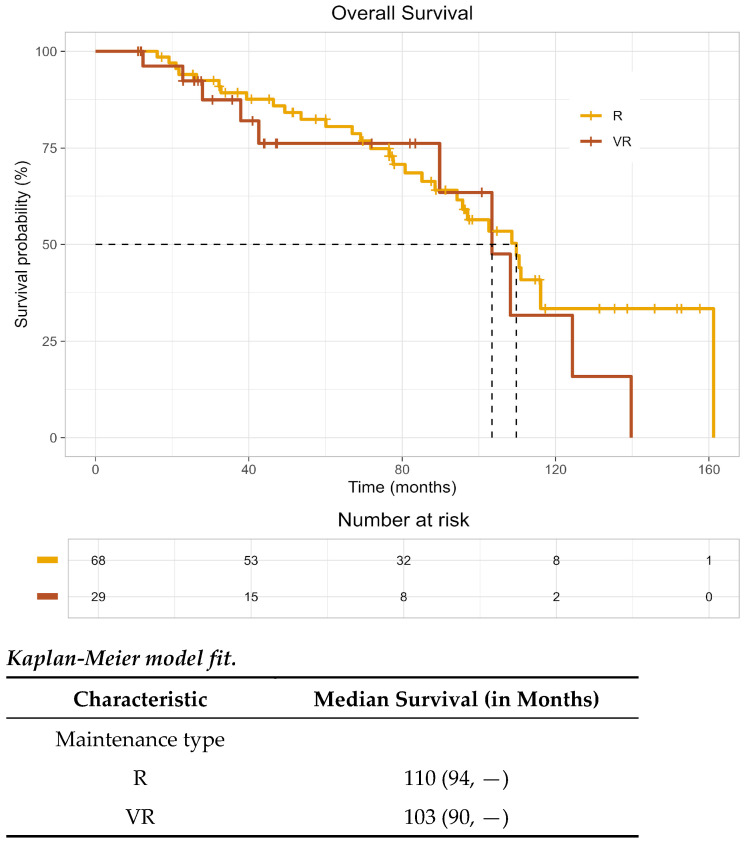 Figure 1
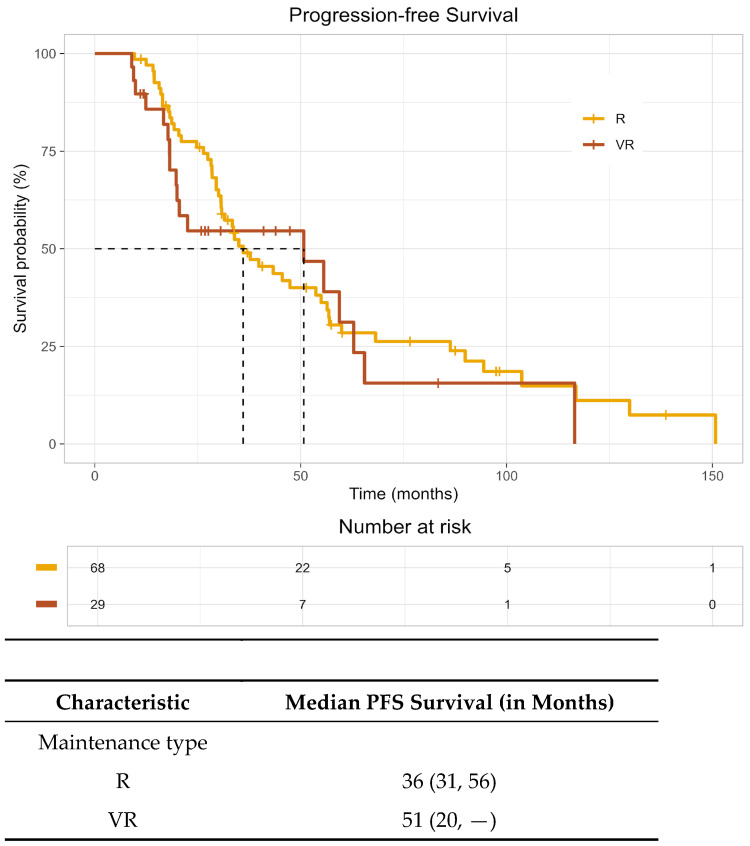 Figure 2
Peer Reviews
No public reviews on file for this paper yet. If you reviewed it on a platform where reviews are public (OpenReview, ICLR, NeurIPS, ICML), you can paste yours below so the community can read it here.
Videos
No videos yet. Explain this paper in a talk, walkthrough, or lecture? Add one.
Taxonomy
TopicsMultiple Myeloma Research and Treatments · Protein Degradation and Inhibitors · Cancer Treatment and Pharmacology