Characterization of Key Odorants in Jimo Huangjiu Using a Characteristic Aroma-Directed Screening Strategy
Hongtao Yu, Siman Zheng, Liuxi Chen, Juan Wang, Hongqin Liu, Jinglin Zhang, Mingquan Huang, Jihong Wu, Dongrui Zhao, Jinchen Li

TL;DR
This study identifies specific odorants responsible for the smoky and burnt-like aroma of Jimo Huangjiu, a Chinese alcoholic beverage.
Contribution
The study introduces a novel aroma-directed screening strategy to identify key odorants and their synergistic interactions in Huangjiu.
Findings
Pyrazines and phenolic compounds are identified as the main aroma markers in Jimo Huangjiu.
Synergistic interactions between nonanoic acid and phenolic compounds contribute to a Qu-like aroma.
Eleven specific odorant compounds were confirmed as key contributors to the unique aroma profile.
Abstract
Jimo Huangjiu (JMHJ), a Chinese geographical indication product from Shandong Province, is characterized by distinctive burnt-like and smoky aromas. However, the specific odorants responsible for these sensory attributes remain uncharacterized. In this study, the flavor characteristics of Jimo Huangjiu are characterized through static and dynamic sensory evaluation during the drinking process. This study identified the essential odorants of JMHJ through integrated sensomics analysis. Results revealed pyrazines and phenolic compounds as the characteristic aroma markers responsible for the unique smoky and burnt-like aroma of JMHJ. Ethyl 2-methylpropionate, 4-methylphenol, 4-ethyl-2-methoxyphenol, β-phenylethyl alcohol, 2-ethyl-6-methylpyrazine, 2-ethyl-3-methylpyrazine, 2-methylpyrazine, 2-methoxyphenol, 2-methylphenol, 2,3-dimethylpyrazine, and 2-hydroxy-3-methyl-2-cyclopentenone were…
Genes, proteins, chemicals, diseases, species, mutations and cell lines named across the full text — each resolved to its canonical identifier and authoritative record.
Click any figure to enlarge with its caption.
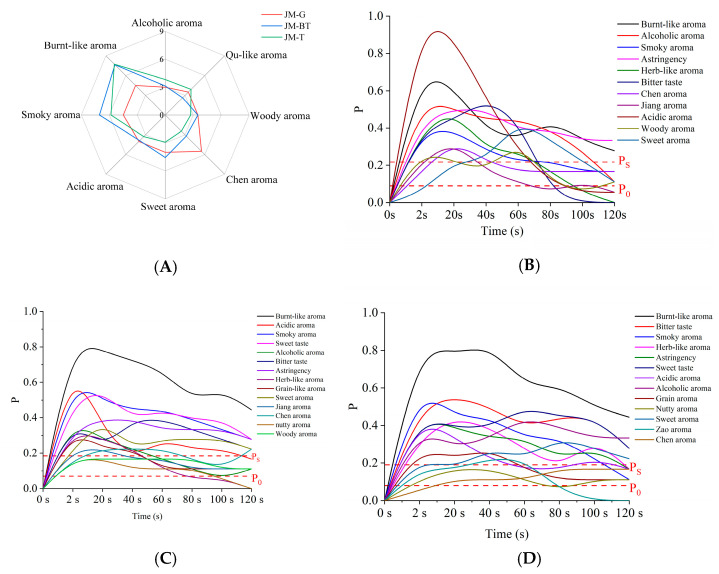 Figure 1
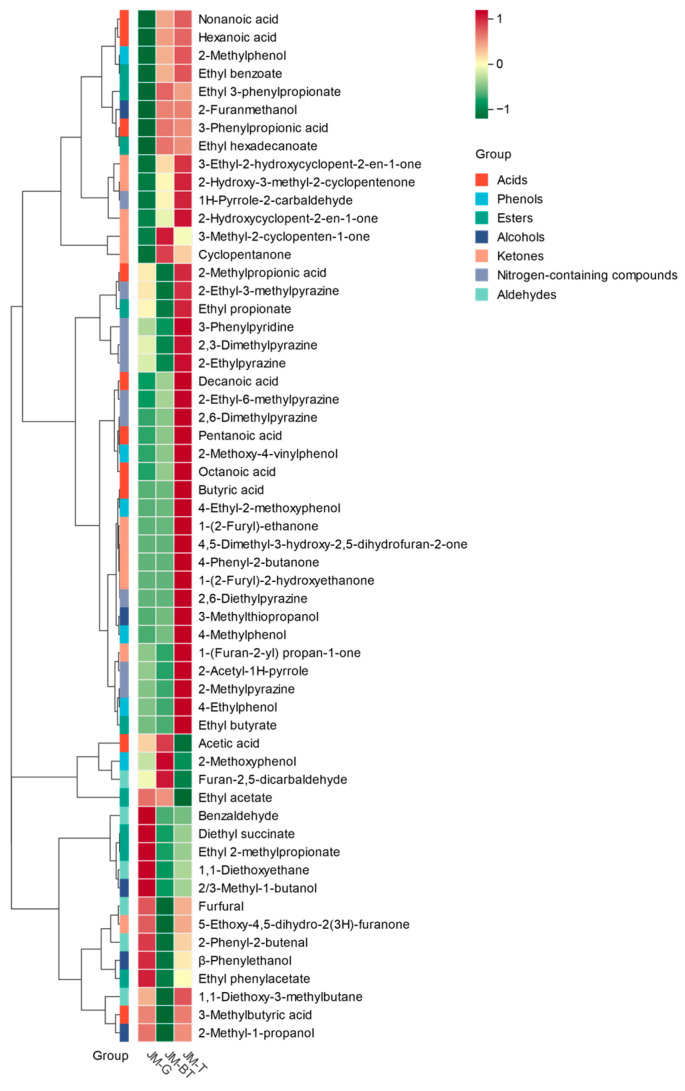 Figure 2
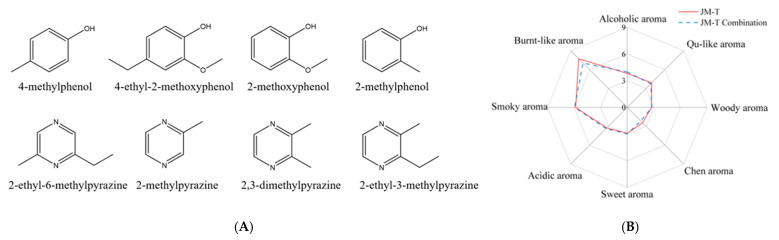 Figure 3
Peer Reviews
No public reviews on file for this paper yet. If you reviewed it on a platform where reviews are public (OpenReview, ICLR, NeurIPS, ICML), you can paste yours below so the community can read it here.
Videos
No videos yet. Explain this paper in a talk, walkthrough, or lecture? Add one.
Taxonomy
TopicsFermentation and Sensory Analysis · Olfactory and Sensory Function Studies · Advanced Chemical Sensor Technologies