Comparative Proteomic Profiling of Responses to Standard Systemic Treatment Regimens in Pancreatic Cancer
Amirsalar Mansouri, Olivia Hart, Sina Aslanabadi, Conner Hartupee, Dicle Yalcin, Garima Sinha, Chiswili Yves Chabu, Aleksandra Cios, Zetao Cheng, Sudhakar Ammanamanchi, Jovanny Zabaleta, John H. Stewart, John T. West, Mitesh J. Borad, Bolni Marius Nagalo, Jiri Adamec

TL;DR
This study compares how two pancreatic cancer chemotherapy regimens affect proteins in cancer cells, revealing distinct biological effects that could help guide treatment choices.
Contribution
The study identifies regimen-specific proteomic programs in PDAC cells treated with FOLFIRINOX or gemcitabine/nab-paclitaxel.
Findings
FOLFIRINOX suppressed ribosome biogenesis and mitochondrial translation in PDAC cells.
Gemcitabine/nab-paclitaxel disrupted mitotic cytokinesis and lipid signaling in PDAC cells.
FOLFNX-altered proteins aligned with favorable prognostic signatures, while GEMPAC-associated proteins were linked to adverse profiles.
Abstract
What are the main findings? FOLFIRINOX and gemcitabine/nab-paclitaxel induced distinct tumor-cell-intrinsic proteomic programs in PDAC cells.FOLFIRINOX suppressed ribosome biogenesis and mitochondrial translation, whereas gemcitabine/paclitaxel disrupted mitotic cytokinesis and lipid signaling. FOLFIRINOX and gemcitabine/nab-paclitaxel induced distinct tumor-cell-intrinsic proteomic programs in PDAC cells. FOLFIRINOX suppressed ribosome biogenesis and mitochondrial translation, whereas gemcitabine/paclitaxel disrupted mitotic cytokinesis and lipid signaling. What are the implications of the main findings? First-line PDAC chemotherapies are not biologically interchangeable despite having similar clinical efficacy.Regimen-specific molecular pathways provide a framework for developing predictive biomarkers of chemotherapy response. First-line PDAC chemotherapies are not biologically…
Genes, proteins, chemicals, diseases, species, mutations and cell lines named across the full text — each resolved to its canonical identifier and authoritative record.
Click any figure to enlarge with its caption.
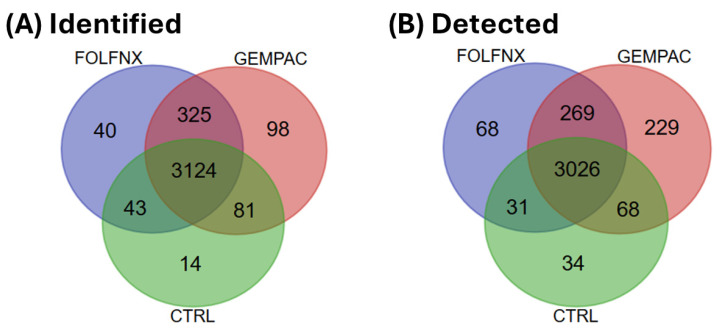 Figure 1
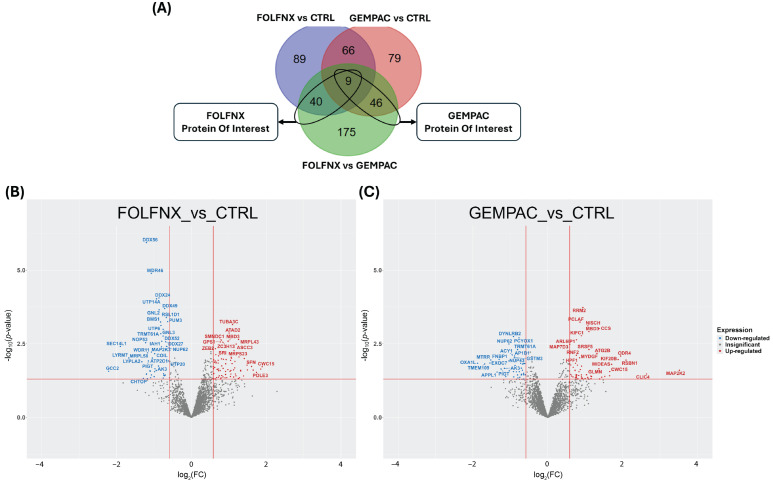 Figure 2
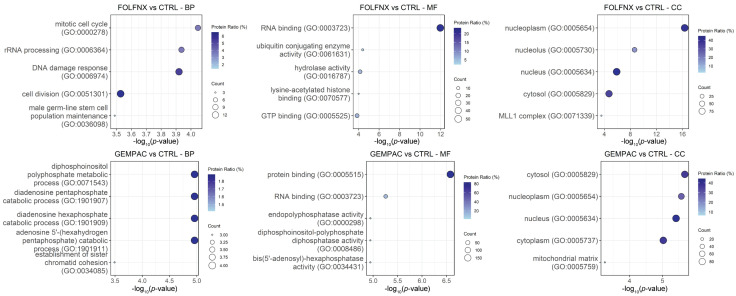 Figure 3
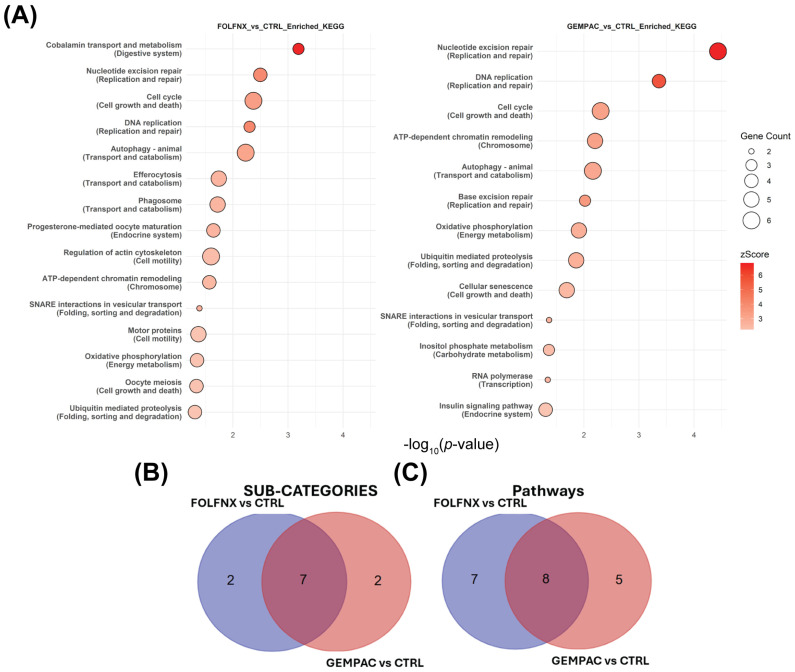 Figure 4
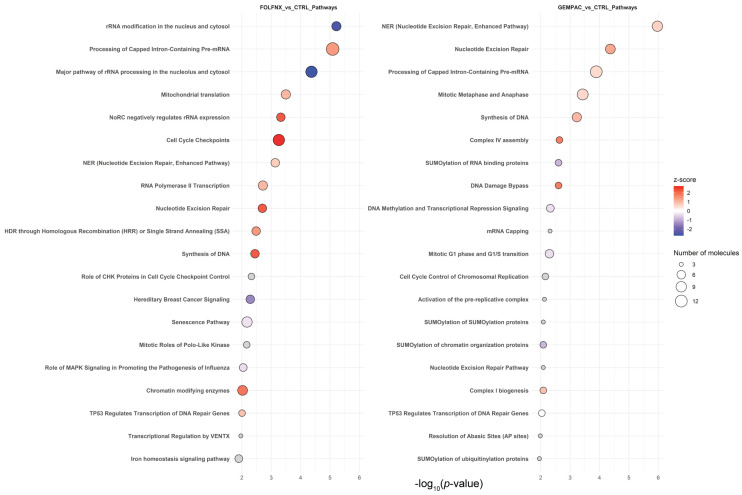 Figure 5
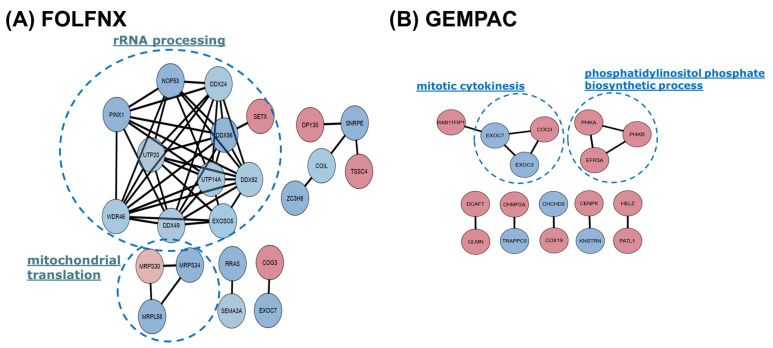 Figure 6
Peer Reviews
No public reviews on file for this paper yet. If you reviewed it on a platform where reviews are public (OpenReview, ICLR, NeurIPS, ICML), you can paste yours below so the community can read it here.
Videos
No videos yet. Explain this paper in a talk, walkthrough, or lecture? Add one.
Taxonomy
TopicsPancreatic and Hepatic Oncology Research · Advanced Proteomics Techniques and Applications · Clusterin in disease pathology