One-Tube RPA-CRISPR/Cas12a Assays for Rapid and Visual Detection of Pseudomonas fluorescens and Bacillus cereus
Changli Yang, Gaoke Wang, Xiaowu Zhou, Jie Song, Xu Luo, Hua Liu, Haijuan Zeng, Wenhui Wu, Xiaoyan Zhao, Jinbin Wang

TL;DR
This paper introduces a fast and safe method to detect two harmful bacteria in refrigerated foods using a single-tube CRISPR-based assay.
Contribution
The novel one-tube RPA-CRISPR/Cas12a assays reduce contamination risk and enable rapid on-site detection of B. cereus and P. fluorescens.
Findings
The assays achieved 100% agreement with PCR in 14 real-world food samples.
Detection limits were 5.1 × 10¹ copies/μL for B. cereus and 2.1 × 10¹ copies/μL for P. fluorescens.
The method is compatible with portable mini-centrifuges and provides results in 40 minutes at 37°C.
Abstract
Bacilus cereus and Pseudomonas fluorescens are major foodborne psychrotrophic bacteria posing global health and economic risks. B. cereus has a 23.8% food prevalence worldwide. P. fluorescens is a leading cause of spoilage in refrigerated products. Their rapid detection is crucial for food safety. However, existing detection methods often rely on open-tube operations, risking aerosol contamination. In this study, we developed two independent one-tube RPA-CRISPR/Cas12a visual detection assays for B. cereus and P. fluorescens. Using a physical separation design, the recombinase polymerase amplification (RPA) and CRISPR/Cas12a detection were pre-assembled in a single reaction tube. After incubation, a brief centrifugation combined the components for enclosed detection. This step is compatible with portable mini-centrifuges. The assays can be completed within 40 min at 37 °C, with results…
Genes, proteins, chemicals, diseases, species, mutations and cell lines named across the full text — each resolved to its canonical identifier and authoritative record.
Click any figure to enlarge with its caption.
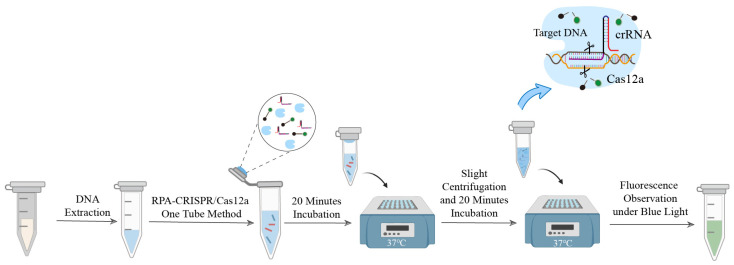 Figure 1
 Figure 2
 Figure 3
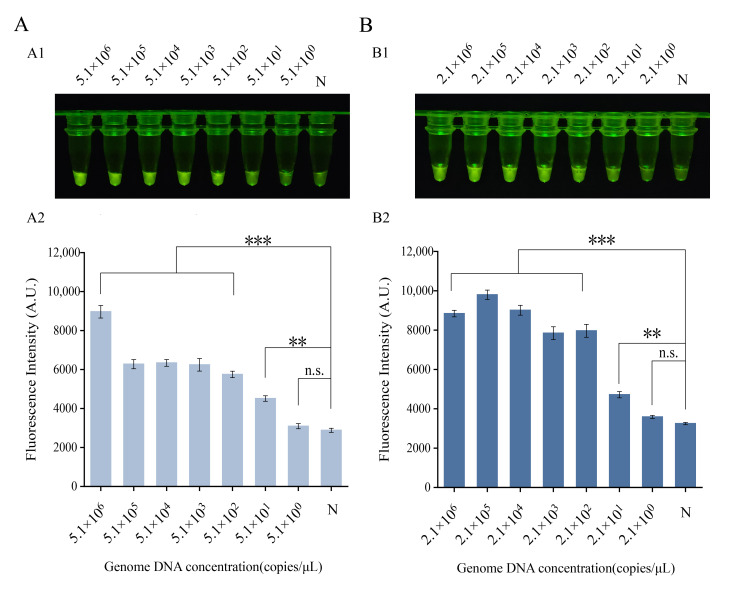 Figure 4
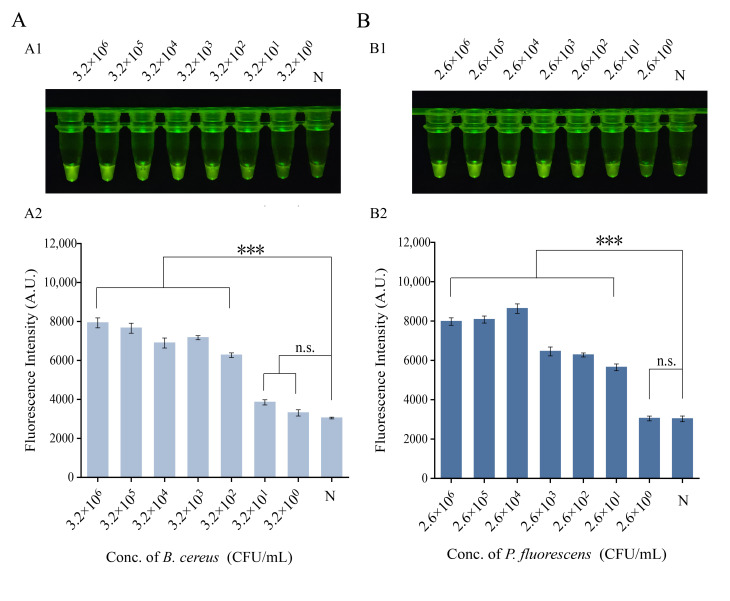 Figure 5
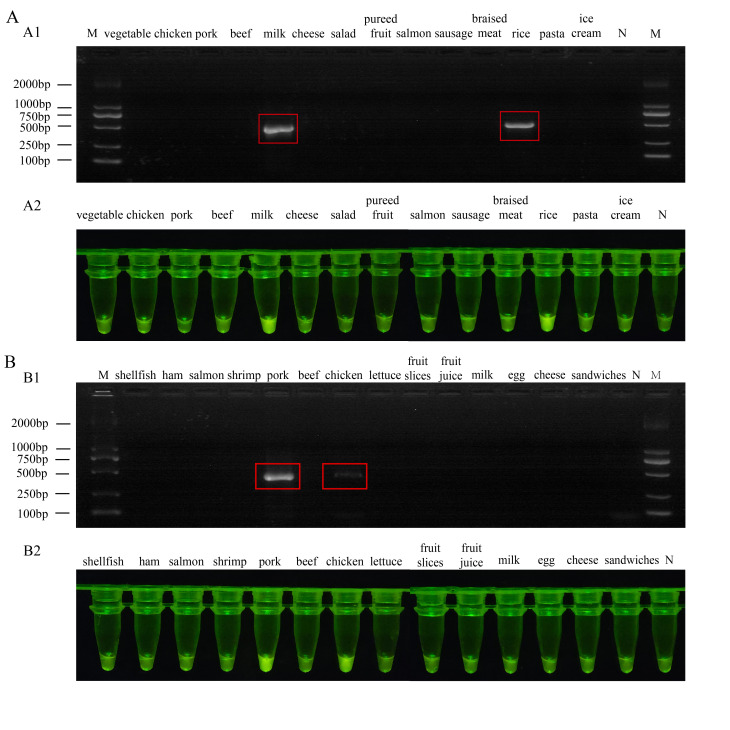 Figure 6
Peer Reviews
No public reviews on file for this paper yet. If you reviewed it on a platform where reviews are public (OpenReview, ICLR, NeurIPS, ICML), you can paste yours below so the community can read it here.
Videos
No videos yet. Explain this paper in a talk, walkthrough, or lecture? Add one.
Taxonomy
TopicsCRISPR and Genetic Engineering · Vibrio bacteria research studies · Biosensors and Analytical Detection