Human Endogenous Retroviruses and Epigenetic Regulators Are Dysregulated in Beckwith–Wiedemann Syndrome
Ilaria Galliano, Pier-Angelo Tovo, Cristina Calvi, Anna Pau, Anna Clemente, Paola Montanari, Stefano Gambarino, Alessandro Mussa, Massimiliano Bergallo

TL;DR
This study finds that genes from human endogenous retroviruses and epigenetic regulators are abnormally active in Beckwith–Wiedemann syndrome, suggesting broader epigenetic changes beyond known regions.
Contribution
The study reveals specific dysregulation of HERV genes and epigenetic regulators in Beckwith–Wiedemann syndrome, extending beyond canonical imprinted loci.
Findings
BWS samples showed significantly increased transcription of HERV-H and HERV-K compared to controls.
TRIM28 and SETDB1 were significantly overexpressed in BWS, regardless of molecular subtype.
SYN1 transcripts were higher in UPD(11)pat BWS samples compared to controls.
Abstract
Beckwith–Wiedemann syndrome (BWS) is an overgrowth disorder caused by genetic and epigenetic alterations at chromosome 11p15.5. Increasing evidence suggests that imprinting defects may be accompanied by broader epigenomic perturbations affecting repetitive elements such as human endogenous retroviruses (HERVs). We quantified the transcriptional levels of the HERV-H, HERV-K, and HERV-W-pol genes, the HERV-derived env genes, Syncytin-1 (SYN1) and Syncytin-2 (SYN2), and the epigenetic regulators, TRIM28 and SETDB1, in whole blood from children and adolescents with BWS, stratified by molecular subtype (ICR2 loss of methylation, n = 14; UPD(11)pat, n = 10), and compared with age-matched healthy controls using quantitative real-time PCR. The BWS samples showed significantly increased transcription of HERV-H and HERV-K relative to controls, whereas HERV-W was unchanged. The SYN1 transcripts…
Genes, proteins, chemicals, diseases, species, mutations and cell lines named across the full text — each resolved to its canonical identifier and authoritative record.
Click any figure to enlarge with its caption.
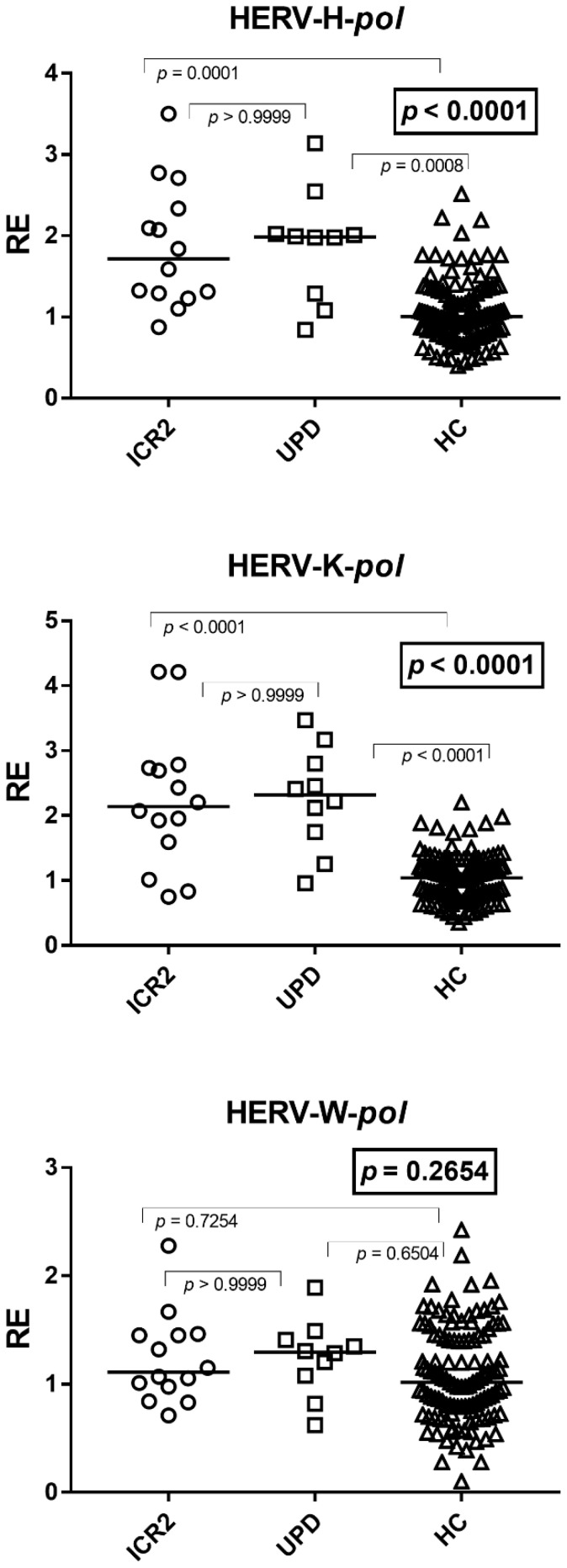 Figure 1
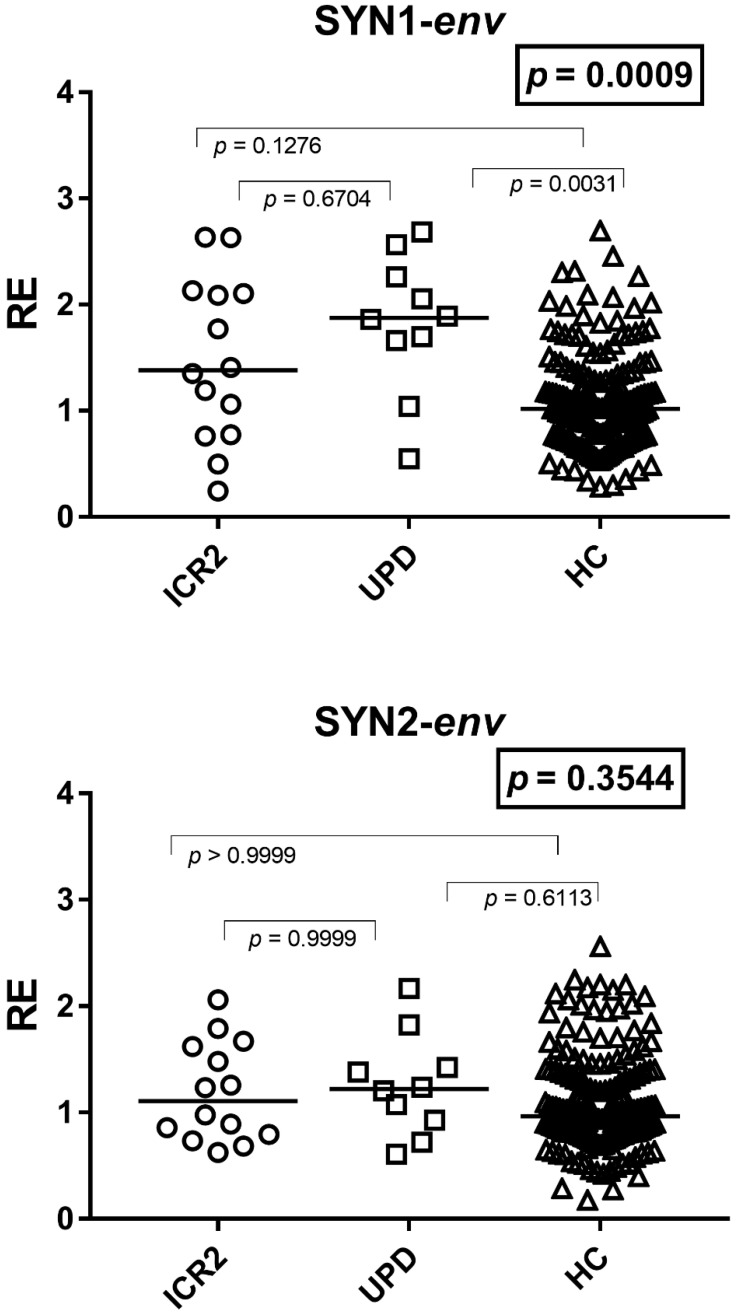 Figure 2
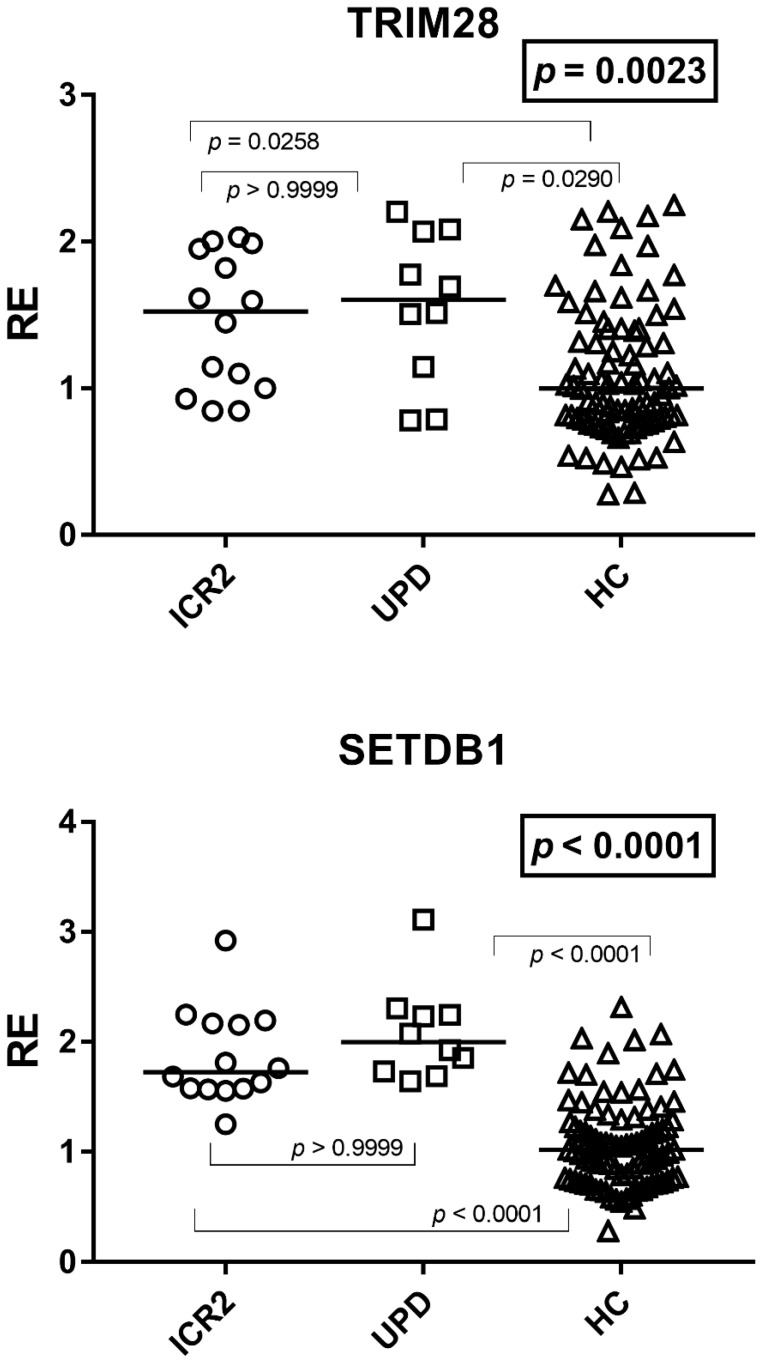 Figure 3
Peer Reviews
No public reviews on file for this paper yet. If you reviewed it on a platform where reviews are public (OpenReview, ICLR, NeurIPS, ICML), you can paste yours below so the community can read it here.
Videos
No videos yet. Explain this paper in a talk, walkthrough, or lecture? Add one.
Taxonomy
TopicsGenetic Syndromes and Imprinting · Epigenetics and DNA Methylation · Assisted Reproductive Technology and Twin Pregnancy