EPCR in Wound Healing: Mechanisms of Action and Therapeutic Potential
Hui Wang, Lyn March, Christopher J. Jackson, Marita Cross, Meilang Xue

TL;DR
This paper explores how the EPCR protein helps wounds heal by managing coagulation, inflammation, and tissue repair, and suggests it could be used for new therapies.
Contribution
The paper highlights EPCR's novel role in wound healing phases and its potential as a therapeutic target and biomarker.
Findings
EPCR supports wound healing by enhancing anticoagulation during haemostasis and modulating inflammation.
EPCR promotes tissue repair by aiding cell proliferation and regulating fibroblast activity via the TGF-β1/Smad3 pathway.
Future therapies may use EPCR-based strategies, including targeted delivery and personalized treatment approaches.
Abstract
The endothelial protein C receptor (EPCR) is an important component of the protein C (PC) system, recognised for its diverse roles in blood coagulation, inflammation, and stem cell regulation. Wound healing is a complex physiological process that can be divided into four distinct but overlapping phases: haemostasis, inflammation, proliferation and remodelling. Recently, EPCR has emerged as a key regulator in wound repair and regeneration. During haemostasis, EPCR enhances the conversion of PC to its activated form (APC) to optimise local and systemic anticoagulation. In the inflammatory phase, EPCR modulates immune cell activity, inhibits inflammatory factors, and maintains tissue barrier integrity. As the process transitions to the proliferative phase, EPCR promotes endothelial and epithelial cell proliferation, migration, neovascularisation and re-epithelization, and mediates the…
Genes, proteins, chemicals, diseases, species, mutations and cell lines named across the full text — each resolved to its canonical identifier and authoritative record.
Click any figure to enlarge with its caption.
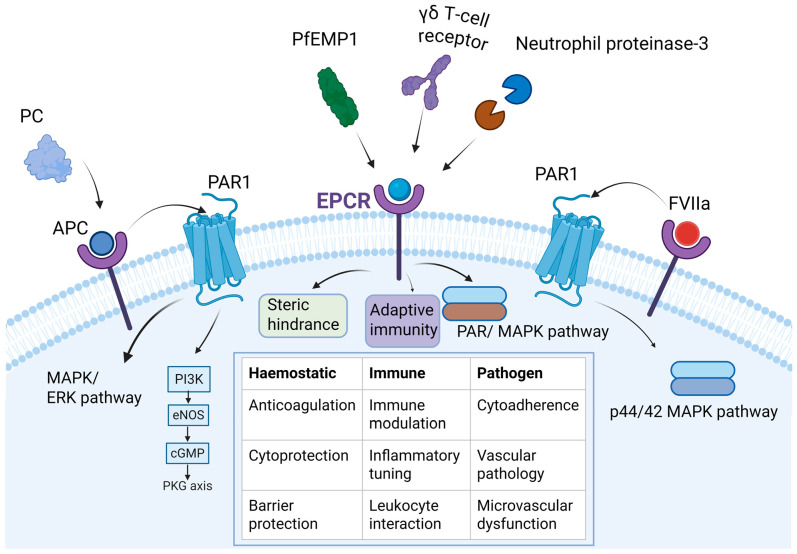 Figure 1
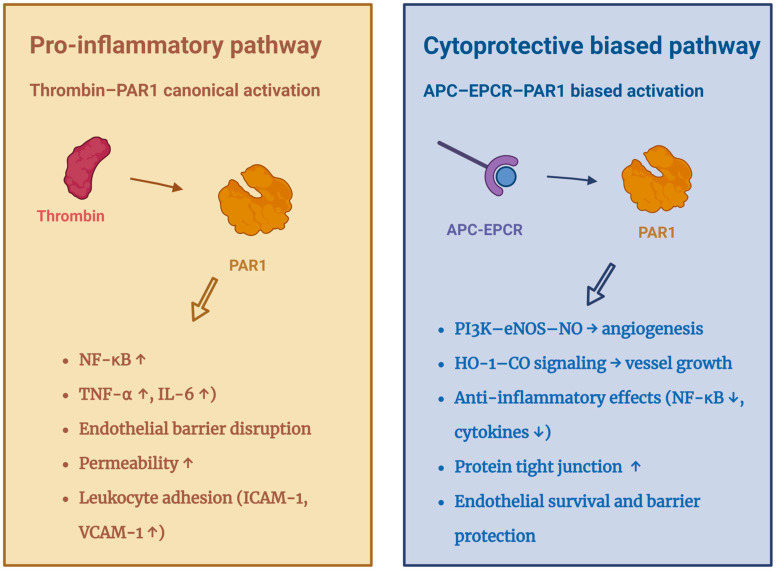 Figure 2
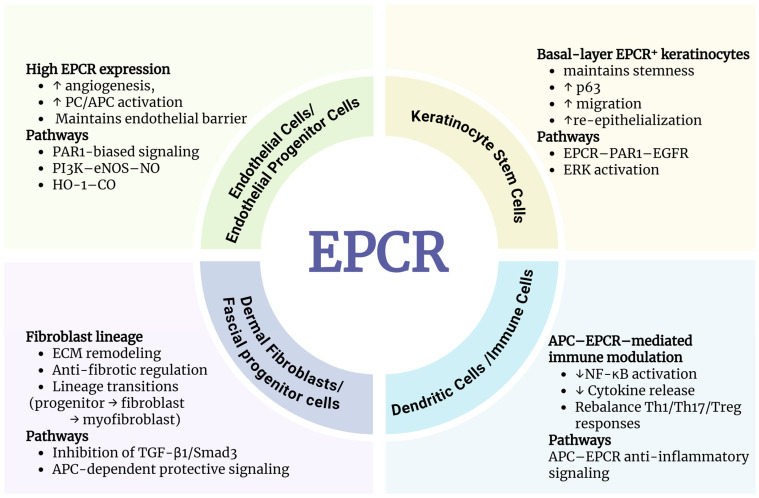 Figure 3
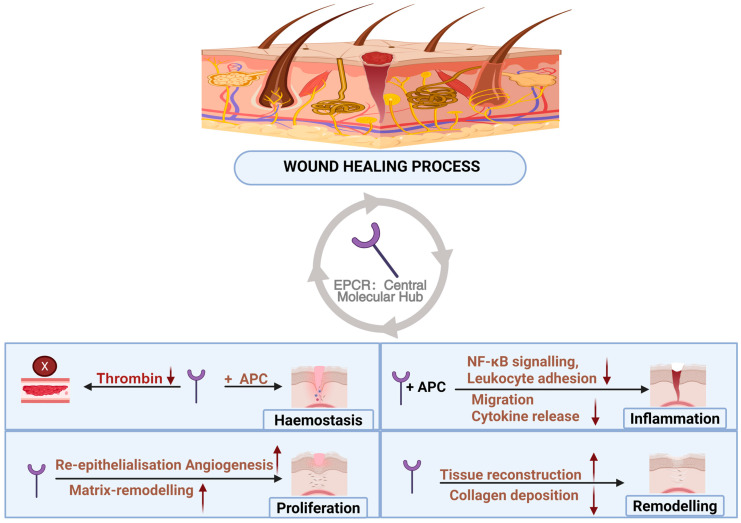 Figure 4
Peer Reviews
No public reviews on file for this paper yet. If you reviewed it on a platform where reviews are public (OpenReview, ICLR, NeurIPS, ICML), you can paste yours below so the community can read it here.
Videos
No videos yet. Explain this paper in a talk, walkthrough, or lecture? Add one.
Taxonomy
TopicsBlood Coagulation and Thrombosis Mechanisms · Trauma, Hemostasis, Coagulopathy, Resuscitation · Phagocytosis and Immune Regulation