Evaluation of electrocardiographic alterations before and after bariatric surgery
Shokoufeh Hajsadeghi, Aida Iranpour, Faranak Olamaeian, Ali Tayebi, Mahdis Gheitasi

TL;DR
This study found that bariatric surgery in severely obese patients led to significant improvements in heart-related measurements, including a reduced corrected QT interval.
Contribution
The study provides empirical evidence of electrocardiographic improvements following bariatric surgery in patients with severe obesity.
Findings
Bariatric surgery significantly reduced the corrected QT interval in severely obese patients.
Heart rate, blood pressure, and blood sugar levels also decreased significantly after surgery.
Body mass index and waist circumference were notably reduced six months post-surgery.
Abstract
Background: Obesity is a key risk factor for cardiac arrhythmia and sudden cardiac death. Additionally, morbid obesity is associated with an acquired elongation of the corrected QT interval, which could potentially lead to dangerous arrhythmias. In this study, we compare electrocardiography changes in patients with body mass index ≥40 before and after bariatric surgery. Methods: We enrolled 55 patients with severe obesity in this study. All patients underwent bariatric surgery; electrocardiography along with anthropometric data and laboratory tests before and at least six months after bariatric surgery were performed. Results: In total, 55 patients completed the study protocol (44 women and 11 men) and the mean age was 37.0 ± 10.5 years. Mean body mass index decreased from 46.7 ± 6.1 to 32.5 ± 5.1 (P < 0.0001) and the average variables of waist circumference, systolic and diastolic…
Genes, proteins, chemicals, diseases, species, mutations and cell lines named across the full text — each resolved to its canonical identifier and authoritative record.
Click any figure to enlarge with its caption.
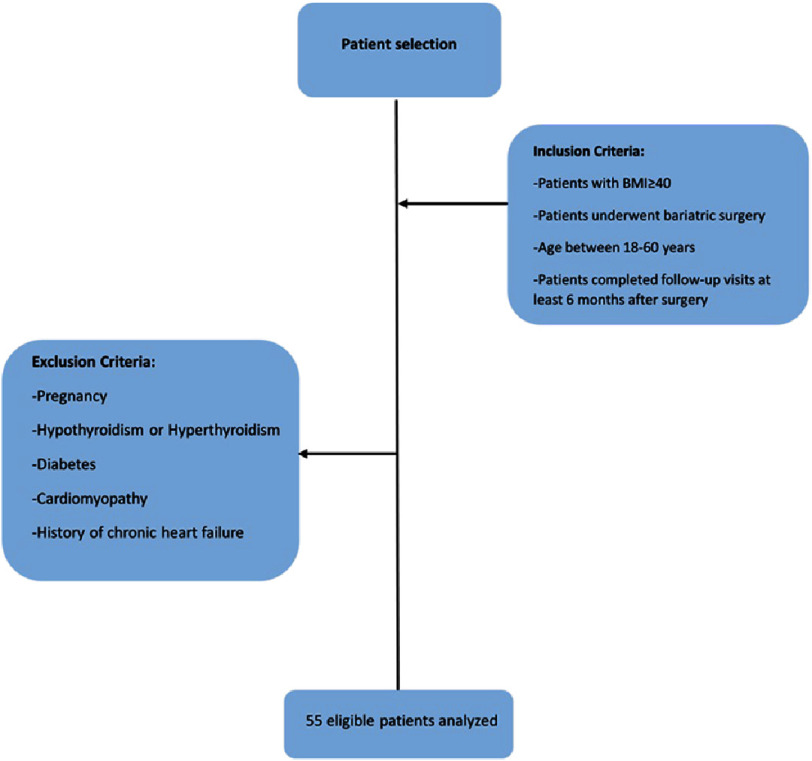 Figure 1
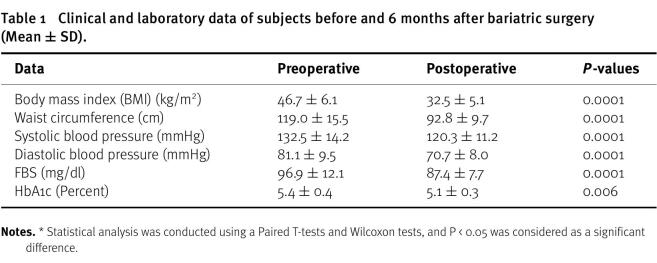 Figure 2
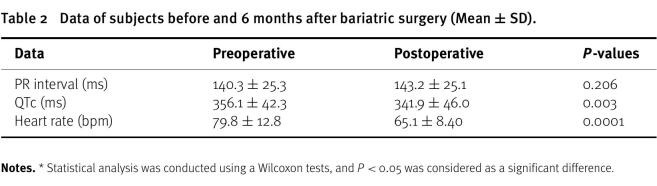 Figure 3
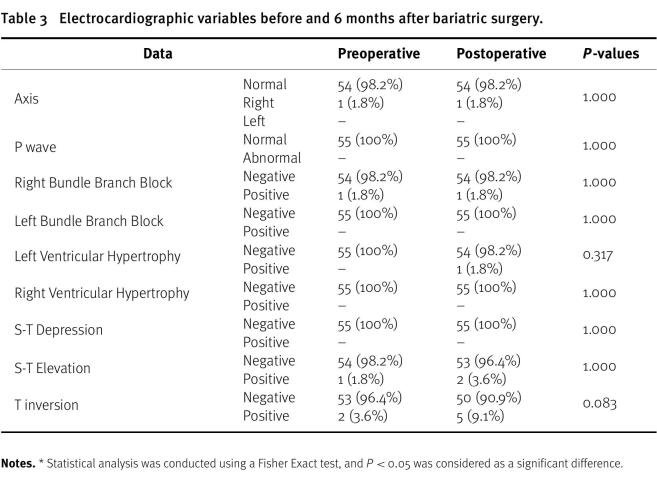 Figure 4
Peer Reviews
No public reviews on file for this paper yet. If you reviewed it on a platform where reviews are public (OpenReview, ICLR, NeurIPS, ICML), you can paste yours below so the community can read it here.
Videos
No videos yet. Explain this paper in a talk, walkthrough, or lecture? Add one.
Taxonomy
TopicsCardiovascular Function and Risk Factors · Cardiac Imaging and Diagnostics · Cardiovascular Disease and Adiposity