Mitochondrial Long Non-Coding RNAs in Gynecological Cancers: Pathogenic Signaling Pathways and Therapeutic Opportunities
Ioana-Stefania Bostan, Nicolae Gica, Mirela Mihaila, Marinela Bostan, Nicoleta Radu, Viviana Roman, Cristina-Elena Dinu-Pirvu, Valentina Uivarosi

TL;DR
This review explores how mitochondrial long non-coding RNAs contribute to gynecological cancers and may offer new diagnostic and therapeutic opportunities.
Contribution
The paper highlights the emerging role of mitochondrial lncRNAs in gynecological cancers and their potential as biomarkers and therapeutic targets.
Findings
Mitochondrial lncRNAs are involved in retrograde signaling and regulation of apoptosis in gynecological cancers.
Dysregulation of mt-lncRNAs contributes to tumor bioenergetic reprogramming and mitochondrial-nuclear communication.
These molecules show promise as diagnostic biomarkers and therapeutic targets in ovarian, cervical, and endometrial cancers.
Abstract
Understanding the complex molecular mechanisms behind gynecological cancers is crucial, as these diseases pose significant challenges to women’s health and are frequently diagnosed at advanced stages. Various genetic, epigenetic, and metabolic alterations play a vital role in tumor development, metastasis, and therapy. Exploring mitochondrial dysfunction and the role of lncRNAs may provide essential insights into how tumor cells evade apoptosis, alter their metabolic pathways, and adapt to stress. In gynecological malignancies, nuclear lncRNAs contribute to tumor progression, treatment resistance, and metastasis through mechanisms that include chromatin remodeling, microRNA modulation, and regulation of mitochondrial dynamics. More recently, the emerging role of mt-lncRNAs, derived from the mitochondrial genome, has attracted attention for their involvement in retrograde signaling,…
Genes, proteins, chemicals, diseases, species, mutations and cell lines named across the full text — each resolved to its canonical identifier and authoritative record.
Click any figure to enlarge with its caption.
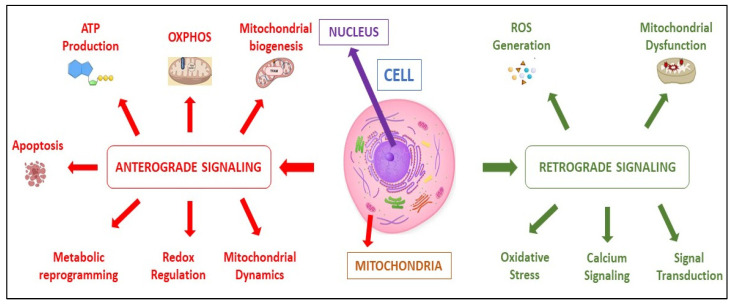 Figure 1
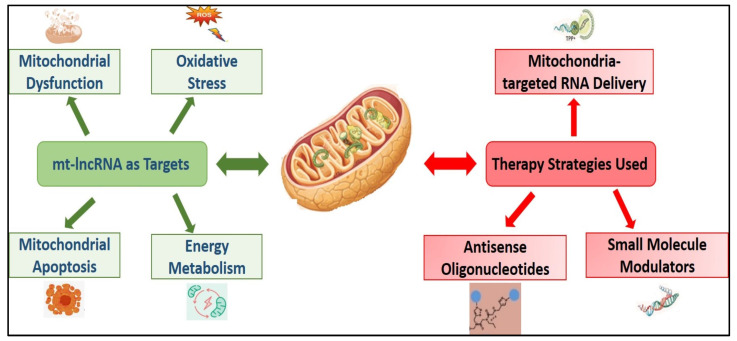 Figure 2
Peer Reviews
No public reviews on file for this paper yet. If you reviewed it on a platform where reviews are public (OpenReview, ICLR, NeurIPS, ICML), you can paste yours below so the community can read it here.
Videos
No videos yet. Explain this paper in a talk, walkthrough, or lecture? Add one.
Taxonomy
TopicsMitochondrial Function and Pathology · Cancer-related molecular mechanisms research · GDF15 and Related Biomarkers