Changes in the Structure of the Neuromuscular Junction and Muscle Fiber Types Following an Acute Injury Model Induced by Eccentric Contraction
Mariana Baptista, Jurandyr Pimentel Neto, Matheus Bertanha Fior, Isabella Gomes, Adriano Polican Ciena

TL;DR
This study examines how muscle injury from eccentric contractions affects neuromuscular junctions and muscle fiber types in rats.
Contribution
The paper introduces a novel experimental model using eccentric contractions to study acute muscle injury effects on neuromuscular junction structure.
Findings
Injury group showed presynaptic region alterations and increased Type I fibers at 0 hours.
Postsynaptic region disorganization was observed 24 hours after injury.
By 7 days, increased Type II fiber density and cross-sectional area indicated recovery.
Abstract
The neuromuscular junction (NMJ) is responsible for transmitting neural signals that trigger muscle contraction. Muscle injuries cause damage to cellular structures and trigger local inflammatory processes. In this context, eccentric contraction was used as an experimental model because it involves excessive stretching, generating mechanical stress. Twenty-five adult male Wistar rats were distributed into groups: Control (C) (n = 5) and Injury (I) (n = 20). The protocol was performed on a treadmill and consisted of 18 sets/5 min/16 m/min speed, with intervals, and with a negative incline (−16º). The analyses consisted of histochemical techniques, such as myofibrillar ATPase and immunofluorescence (calcium channels, synaptophysin and α-bungarotoxin). Group I-0H showed alterations in the presynaptic region and an increase in Type I fibers. I-24H presented disorganization in the…
Genes, proteins, chemicals, diseases, species, mutations and cell lines named across the full text — each resolved to its canonical identifier and authoritative record.
Click any figure to enlarge with its caption.
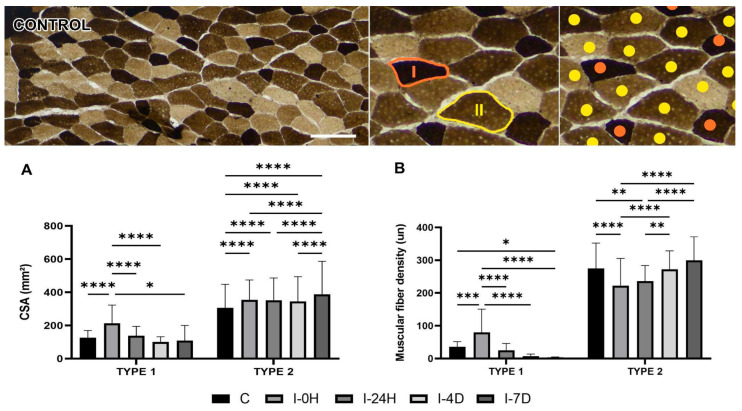 Figure 1
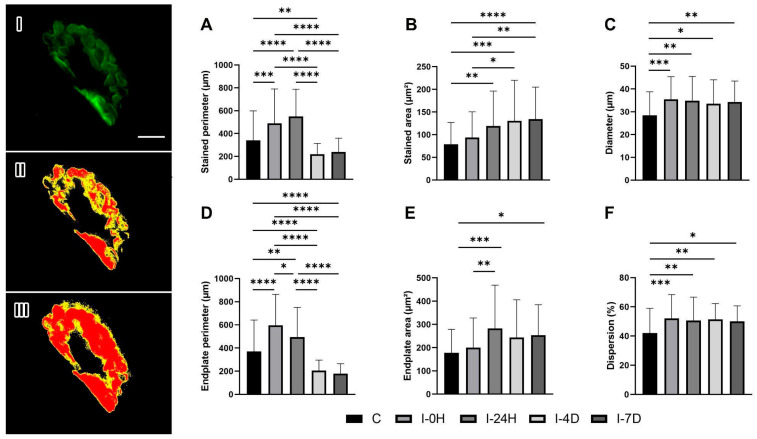 Figure 2
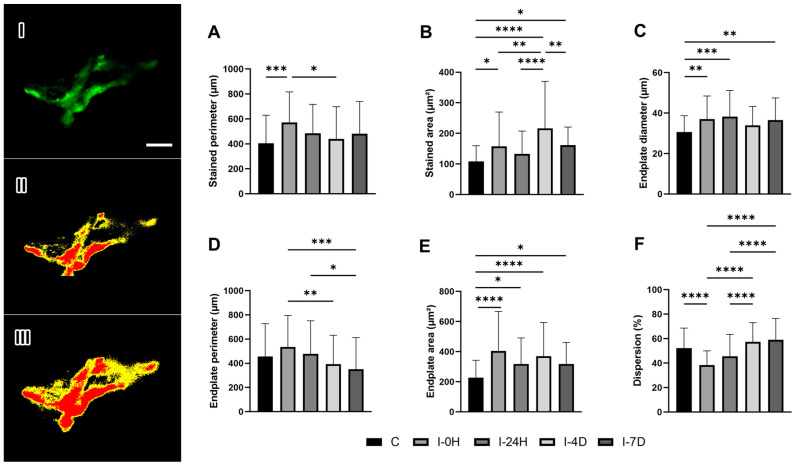 Figure 3
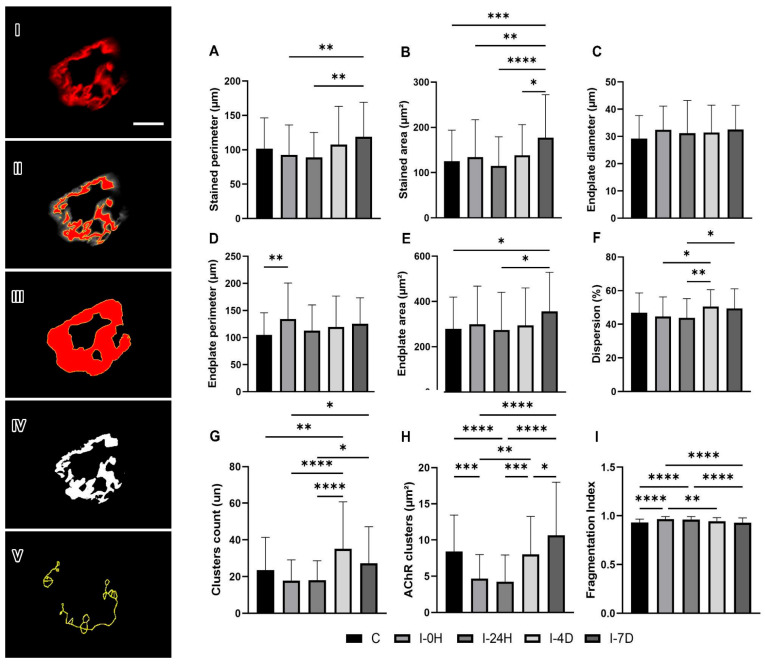 Figure 4
Peer Reviews
No public reviews on file for this paper yet. If you reviewed it on a platform where reviews are public (OpenReview, ICLR, NeurIPS, ICML), you can paste yours below so the community can read it here.
Videos
No videos yet. Explain this paper in a talk, walkthrough, or lecture? Add one.
Taxonomy
TopicsMuscle Physiology and Disorders · Ion channel regulation and function · Exercise and Physiological Responses