Vav-iCre-Mediated Deletion of TFAM Is Not Recoverable and Is Consistent with Embryonic Lethality
Rituparna Ghosh, Elina Shakur, Matthew J. Yousefzadeh

TL;DR
Deleting TFAM in immune cells causes embryonic death, showing its critical role in mitochondrial and immune health.
Contribution
Shows that TFAM deletion in immune cells is embryonically lethal, unlike SIRT6 deletion.
Findings
Vav-iCre-mediated TFAM deletion in immune cells leads to embryonic lethality.
SIRT6 deletion in immune cells is viable and does not cause embryonic death.
Mitochondrial genome maintenance is essential for immune system development.
Abstract
Genome stability is the cornerstone of cellular health, and imbalances can cause a number of outcomes, including aging, cancer, and other pathologies. DNA damage is a strong driver of both cellular senescence and mitochondrial dysfunction, two other key hallmarks of aging. Both nuclear and mitochondrial genome instability have been shown to drive aging in the hematopoietic system, which then propagates to non-lymphoid tissues, enhancing morbidity and mortality. The loss of TFAM, a key regulator of mitochondrial DNA replication and nucleoid stability, in T cells has been shown to cause mitochondrial dysfunction, leading to premature immune aging and eventual systemic aging. We sought to investigate whether the loss of TFAM in all immune cells would have a comparable or stronger effect on both the immune system and parenchyma. To address this, we attempted to generate Vav-iCre+/−;…
Genes, proteins, chemicals, diseases, species, mutations and cell lines named across the full text — each resolved to its canonical identifier and authoritative record.
Click any figure to enlarge with its caption.
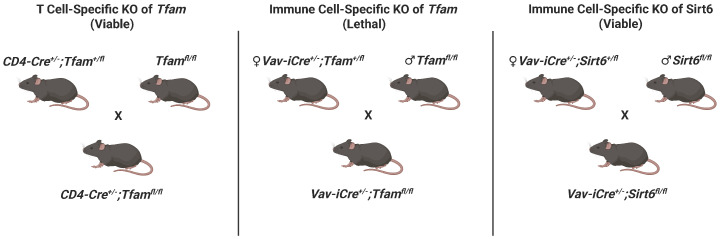 Figure 1
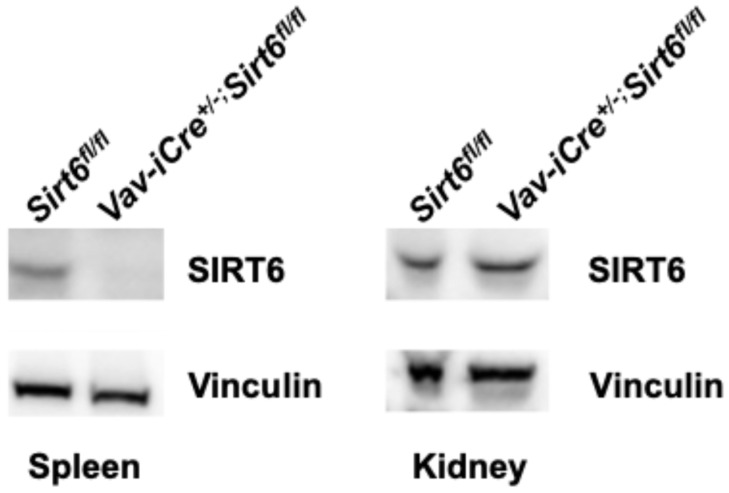 Figure 2
Peer Reviews
No public reviews on file for this paper yet. If you reviewed it on a platform where reviews are public (OpenReview, ICLR, NeurIPS, ICML), you can paste yours below so the community can read it here.
Videos
No videos yet. Explain this paper in a talk, walkthrough, or lecture? Add one.
Taxonomy
TopicsSirtuins and Resveratrol in Medicine · Mitochondrial Function and Pathology · Genetics, Aging, and Longevity in Model Organisms